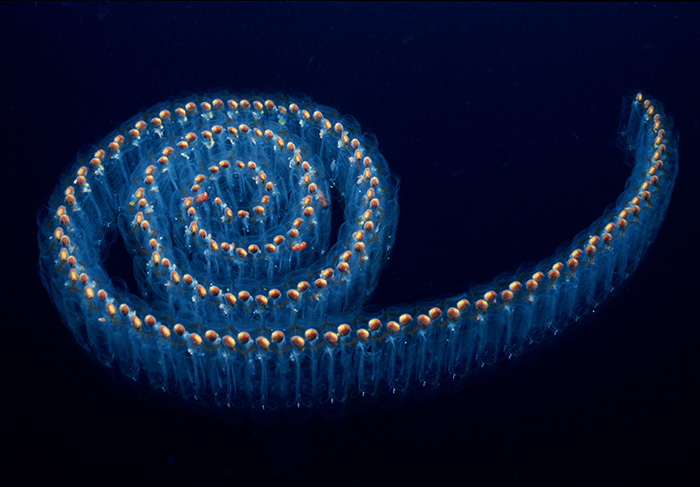
Have you ever heard of a salp? Probably not, but they are organisms that we should all probably be a lot more aware of!
Salps are planktonic tunicates. What does that mean? Tunicates are members of the phylum Chordata (the same phylum that you and I are in), and are actually pretty closely related to us. The Tunicates are sister taxa with the Vertebrates, but they themselves have no vertebra, and instead form one of the two groups of invertebrate chordates (Cephalochordata is the other in case you were wondering).The ~42 species of Salp, all in the family: Salpidae, are unusual for tunicates in that they are planktonic, meaning that they float in the water column instead of attaching themselves to rocks or boats or piers like the majority of tunicates do.
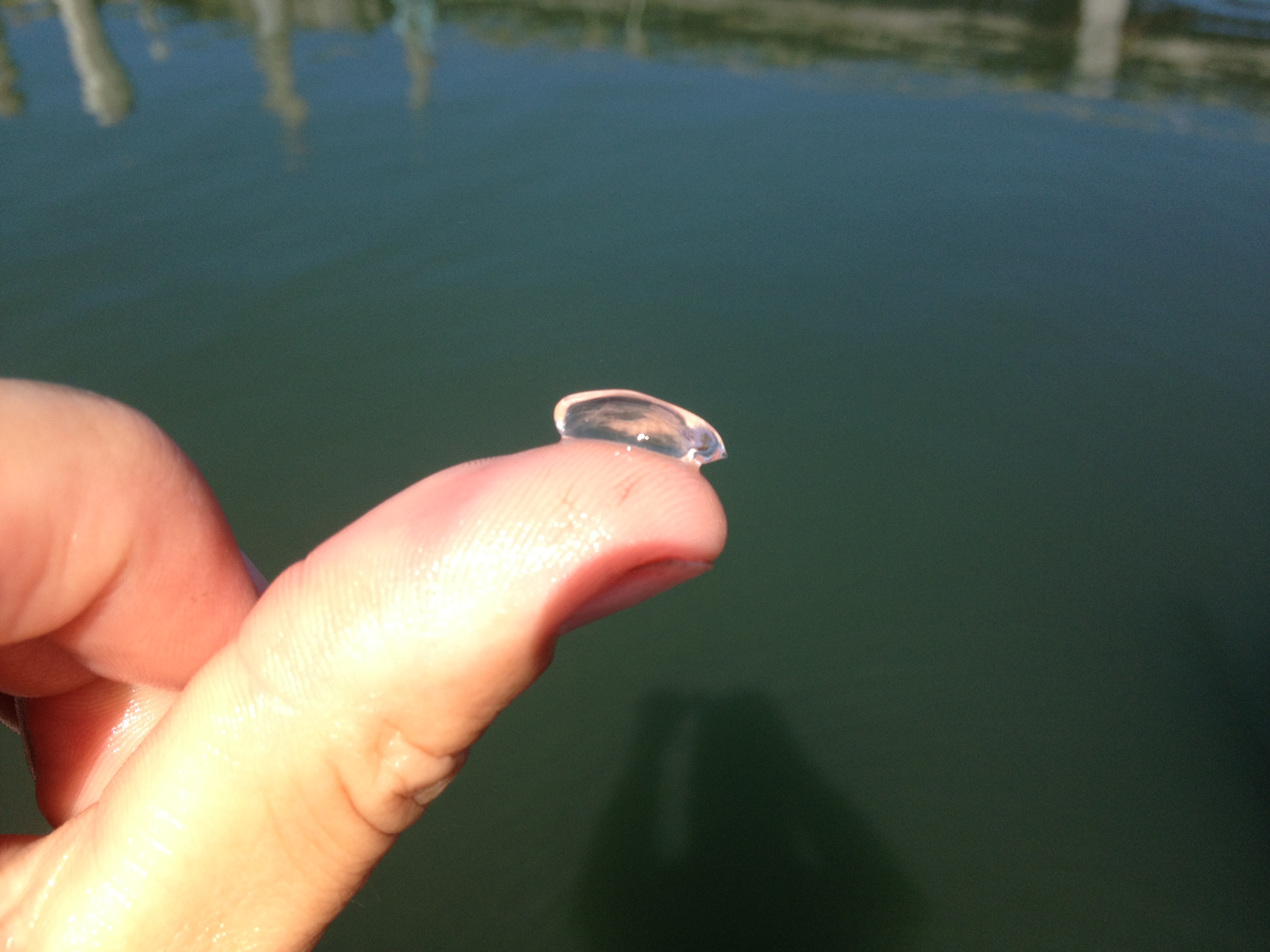
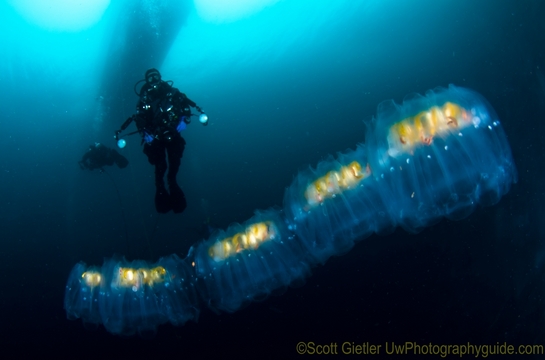
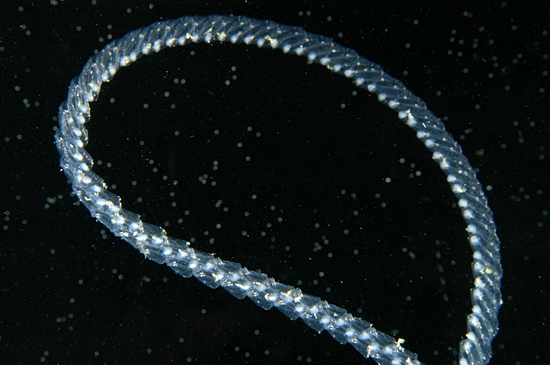
Salps range in size from only a couple of centimeters long, or over 30 centimeters. They live singly or in colonies (often called ‘chains’), and which they take depends on what stage in their life cycle they are in. When they single, they are reproducing asexually by budding off clones that then drift away in the ocean currents. When they are colonial, they are reproducing sexually. During this stage, the colony can form quite complex and beautiful shapes, usually in the from of a spiral, that can get quite large.
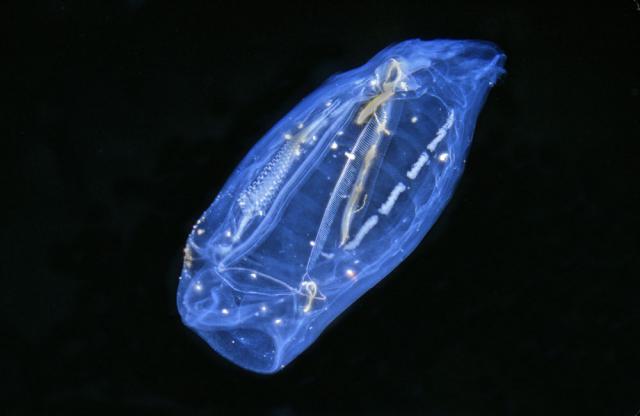
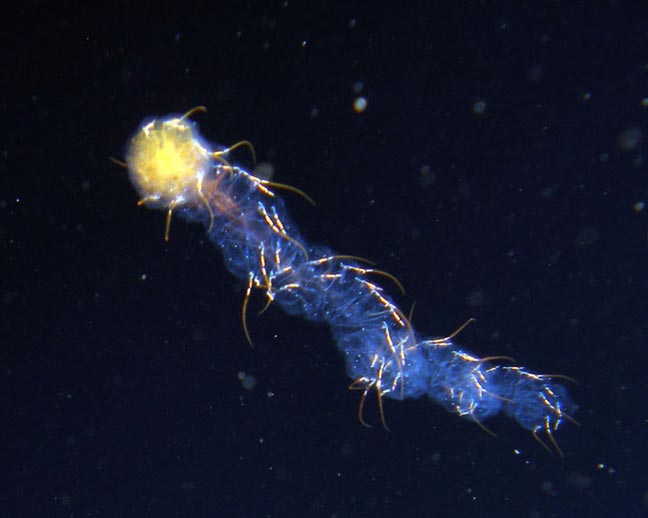
Like other tuncates, Salps are filter feeders. They pulse muscles in their outer layer of tissue which draws water through their body. As the water passes over their pheryngeal gills, the salp is able to filter out small food particles, such as plankton, from the water before expelling the water out into the ocean again. The filter pump of a salp is so efficient, and salps are so numerous, that they actually play a prominent role in filtering the waters of the world’s oceans. By acting as major filter units, they also can play an important role in filtering pollutants out of ocean water. This makes salps a good canary-in-the-coal-mine group of organisms to monitor in order to track levels of oceanic pollution.
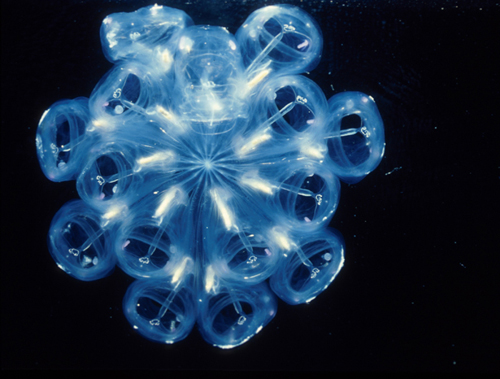
Another major role that salps play due to their planktonic life style large numbers, is their role in ocean food webs and also to the carbon cycle as a whole. When phytoplankton is abundant, salps can quickly reproduce to take advantage of the large food source. However, slps can sometime become clogged with food. The dead salp bodies, and salp fecal remains, drift to the ocean floor providing significant amounts of nutrients to a part of the world that is very nutrient poor, and also replenishing the ocean’s biological pump. Some portion of this dead matter will not be cycled back to the surface, but instead become sequestered in the sediment at the bottom of the ocean. This is one of the main ways that oceans can change the amount of carbon in the atmosphere, so changed in salp numbers may very well have an effect on global climate change!
Pretty amazing for an animal with no bones!
 theethogram.com