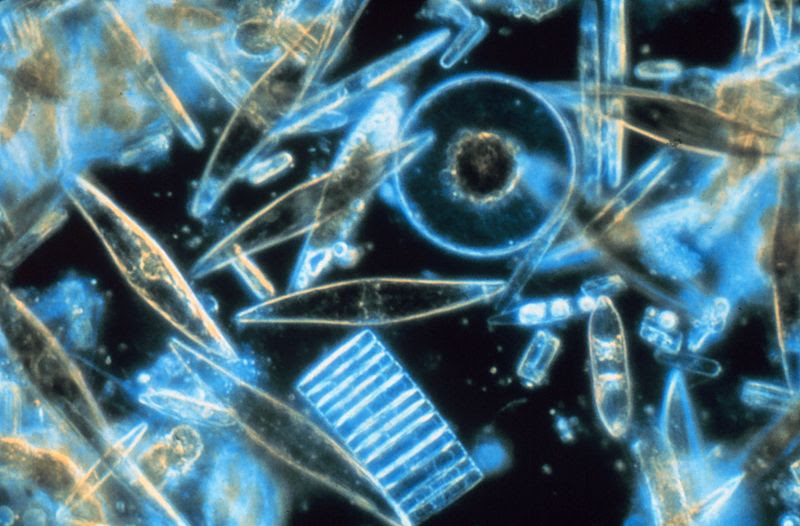
“Looks good! Except. What is ‘phytoplankton’?”
I chuckled as I read the text message from my editor, once again surprised at my oversight. I had just sent her my latest article on whale feeding habits, and as per usual, her text reminded me that I took some forms of scientific knowledge for granted. I am a marine biologist, and so terms like “plankton” are simply part of my daily vocabulary (plankton, by the way, are the thousands of tiny organisms – drifters – that float throughout our world’s oceans; “phytoplankton” specifically refers to the plants among these). I am also in pursuit of my PhD, which means that most of my current community consists of folks who have a high level of education and strong scientific background. And yet communicating research to non-scientists has become a passion of mine. While I understand that doing so requires a different perspective, I am aware that I have much to learn.
Enter my editor. When I began writing more about both my experiences and science in general, I realized something important: I didn’t know what my audience wouldn’t know. Can I use the word biotelemetry without explaining that it basically means putting transmitters on fish? And what about the word “transmitters”? Do folks who don’t live by the water know what it is like to spend days on a boat, or should I explain that, too? How much detail does an explanation of the scientific process require? Do people even care? To answer these questions, I needed someone, who was decidedly not a scientist, to review what I was writing. And I knew just the person.
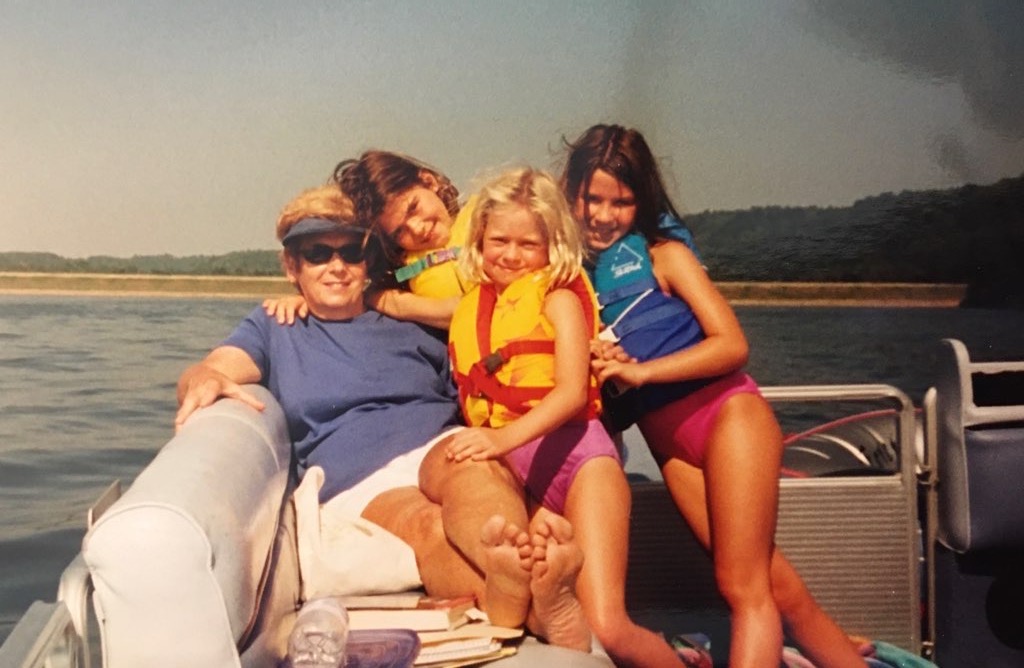
My grandmother is an avid reader. She and I have bonded over books as far back as I remember, and she has always enjoyed hearing and asking questions about my schoolwork. At 87 years old, she is mentally very sharp – as demonstrated by her ability to use her iPhone as well as most millennials. More importantly for my purposes, Grandma has a high-school education, and she’s not afraid to admit what she doesn’t know. Because of all of these traits, my grandmother has been my editor since before I started grad school. It is the best decision I ever made as a science communicator, though I didn’t realize this until recently.
I began science writing in college. In pursuit of both a Biology and an English degree, I thought I would be ideally suited to interpret academic findings to the rest of the world. I loved it all – doing the research, writing about the research, presenting about and mentoring based on the research. Furthermore, I certainly believed (and still do) that too few academics take the time to break down their results for what we generally refer to as the “broader public.” That bothered me. A writer/researcher, I myself had relied heavily on science communicators to learn about my current field as a marine biologist (after all, I was raised in Ohio, hundreds of miles from the nearest ocean). And still, even I couldn’t understand the methods of the scientific papers I was reading half of the time. But, as someone who studies sharks, a historically misrepresented animal, I was also wary of journalists who present scientific information in the media. Even the most well-intentioned writer can miss critical information if they are not scientifically trained. And, more often than not, sensationalism is what really sells a story (just take a look at Jaws). As a result, I still maintain that researchers should take the time to make sure that their results are shared in a meaningful and impactful way, whether that means fact-checking pieces written by others or writing their own. However, during this early phase in my career, I assumed there wasn’t much more to learn on this topic. Science communication really just took one form: write an interesting story, break down difficult concepts, and share broadly.
This past spring, after years of working on The Ethogram, managing my own blog, and writing in a formal capacity for Mystic Seaport, I read two revelatory books that forever shifted this understanding: the Master Communicator’s Handbook (by Theresa Erickson and Tim Ward) and If I Understood You, Would I Have This Look on My Face? (by Alan Alda). [Note: many of the ideas I discuss below are derived from these pieces]. From these, I gleaned that I was doing some good things. I tried not to leave my audience on the “North Pole of Jargon” by only using specialized terminology (although as my editor Grandma reminded me in her phytoplankton example, I did not always succeed). I was active in trying to reach different groups of people through different media – social media, blogging, and in person. I engaged with my audience during presentations, asking them questions and trying to start a dialogue. If nothing else, I was at least consciously trying to reach out beyond the academic bubble. But here was the big question:
If I was honest with myself, how much did I really consider my audience?
The answer was, well, complicated. I had Grandma on my side, so that was a step in the right direction. That meant I usually had an audience in mind when I was writing. But was it the right audience? Was I tailoring my message to be most impactful to the people who needed or wanted to hear it? Or (more likely) was I just throwing my general message out into the world, hoping folks would be motivated to read it and maybe look up the definitions of words they didn’t know? In reading these books, I’ve come to realize that when it comes to science communication, there are two kinds: the selfish and the selfless. And I was doing the former.
This was a hard pill for me to swallow. I am at least active in sharing my research and that of others. So how does that make me selfish? I was unaware of (or maybe ignoring) the central tenet of communication: the audience comes first. I had bought in to this idea of the “broader public” as the folks I wanted to address, but in my current opinion, that was a lazy practice (see more below). Only maybe a dozen times had I Googled my audience or asked about the demographic of the groups to whom I was presenting. On my computer I had multiple iterations of the two same basic talks: “Public” or “Conference/Scientific”. That was it. I’m even more ashamed to admit that I very rarely deviated from some form of prepared script during any presentation, outreach or otherwise. It didn’t matter if the students I was teaching were falling asleep – on I would drone, because the details I had prepared were “very important”. If this sounds like you, or something you have experienced, you are certainly not alone. In fact, I am frequently surprised by the amount of jargon I see as scientists adopt a scientific presentation for a public one. I have also been one of those students in the lecture hall wondering why we were off on a tangent that didn’t seem relevant to us, or the course itself. I am still that member of a conference who is afraid to ask clarifying questions for fear of seeming out my league. And yet, even though I have experienced that barrier between speaker and audience, I have fallen into the habits that create it. I have been guilty of being a selfish science communicator. My priorities have been backwards: message first, audience second.
In light of this realization, I had to think about what it means to reprioritize. How can I put my audience first? How do I become more selfless? I have come to think about it this way.
Who?
I want my audience to not only receive my message, but also to be able to interpret it and understand it in such a way that they can share it with others (a concept fittingly known as a “meme”). Indeed, I want them to be motivated to do so. Step one in this process: figuring out to whom you are speaking. As an important aside here, children are very different from lawyers, and from high schoolers, and from my grandmother. And yet while this seems obvious, scientists still tend to lump them into the same “broader public” category. So, whether it’s searching the internet or asking your audience directly, I recommend figuring out who they actually are, not who you perceive they are. This will also help when it comes to choosing the tools or platform you will use to create your message, because it will provide important insight into where your particular audience finds information.
What?
Then comes step two: understanding what they want to know. My grandma, for example, loves to hear about the sharks I study. She will ask why it is important to protect them, what behaviors they exhibit when I see them out in the wild, and how I study them. She does not care about how one might assess foraging efficiency in an obligate ram filter feeder (see what I did there?). That is okay. She does not need to know these things; if I delve into them because I want her to know how smart I am, or because these are the thoughts that consume me as a PhD student, she will likely tune me out. It is possible that she will do the same to the rest of the information that may be otherwise relevant to her. Mission incomplete as a science communicator.
Why?
Step three is very similar: understand why they want to know. As animal behaviorists, we understand the concept of an animal’s umwelt (its perceptual world). For example, sharks do not see or hear or feel the same way that squirrels do. Similarly, every human experiences the world in a different way. They have unique perspectives (frames) through which they interpret events. They also prioritize what they want to hear based on these frames. I’m fortunate to have a grandmother who loves me deeply and will therefore read anything I write in its entirety, no matter the topic. But it would likely be a very different situation if I approached a group of architects in Ohio to talk about shark conservation in the Pacific, without any link to their daily lives (trust me – I’ve tried). Of course, to understand their frames, I need to know who they are and what they might want to know. All of these steps work in synchrony to help form a connection with your audience. And forming a connection, both personally and topically, with your audience is the key to being a selfless science communicator.
How?
Only after we have worked to understand our audience – who they are, why they are listening to us, what they want to know – can we complete step 4: creating a meaningful message. As scientists, we are well-trained to focus on our message. However, this can come at the cost of isolating our audience. Your message can be wonderfully formed and beautifully written, but it will fall on deaf ears if it can’t be easily digested. A good rule of thumb here is to keep it simple: nobody, not even an expert in your field, minds when you define what you mean. In fact, it’s actually really challenging to do so, as I’ve learned after years of trying to explain scientific terms to my grandmother. What people do mind is when we scientists wax eloquent about little details relevant largely to our own projects. Be concise and think bigger picture. Start with your main takeaway, and consistently remind your audience of it. Don’t be afraid to be playful and fun. Weave your main points into stories to allow folks to picture what you mean, even if they have no background reference. Play on emotions whenever possible – even as the memory of the message itself fades, humans tend to remember how it made them feel. In general, think of your message as a tether connecting you to your audience; the better the grasp of both speaker and receiver on this tether, the stronger that connection will be. Make your message easy to grasp.
These steps seem a structured map to a success story. And while I cannot take credit for their development, I am certainly grateful to have found them. However, I am under no delusion that a completely selfless style of communication is going to be easy. Speaking from experience, this requires both hard work and a willingness to extend beyond your comfort zone. Ironically, as researchers we become so focused and near-sighted with regard to our projects, but we often slack when it comes to doing the same for an audience. Similarly, we very rarely change our message depending on the audience’s reaction. Generally speaking, we have a message, and we are there to deliver it, no matter what. There are likely several reasons for this. Publicly sharing information is challenging in the best of circumstances. It makes us vulnerable to criticism. Being able to share information effectively and adaptively on the fly, on the spot, is a different level of difficulty. And for some, it’s simply not worth the discomfort. Not all researchers believe that science communication is part of their job description, and they will receive no judgement from me. From my perspective, however, if we are going to invest the time in communicating our work, it is worth doing well. Selfish science communication is output for the sake of CV (academic resume) or for a paragraph on a grant application. Selfless science communication is about creating an impact.
Alexandra McInturf (@AGMcInturf) is a fourth year PhD candidate in the Animal Behavior Graduate Group at UC Davis, and the current editor-in-chief of The Ethogram. Her work focuses on animal movement and sociality, particularly in sharks and their relatives. She is passionate about marine conservation and science communication. Throughout her research career, she has written popular science pieces for both formal and informal platforms, all of which can be found on her website.
[Editor: Allison Lau]
 theethogram.com