Picture the sleepy town of Pacific Grove, California in the 1950s; fog melts across the seashore, blurring the outlines of the wetsuit-less surfers at Lover’s Point enjoying the steady wave break despite extra chilly waters of the Monterey Bay. Harbor seals pop their bulbous heads out of the water, peering through the dense marine layer, and nestled between the cypress and pine trees of Stanford University’s Hopkins Marine Station, only one piece of Dr. Isabella Aiona Abbott’s legendary seaweed cake remains at a visiting scientist’s potluck. Yes, seaweed. Also known as kelp, macroalgae, or in Dr. Abbott’s native Hawaiian language, limu.
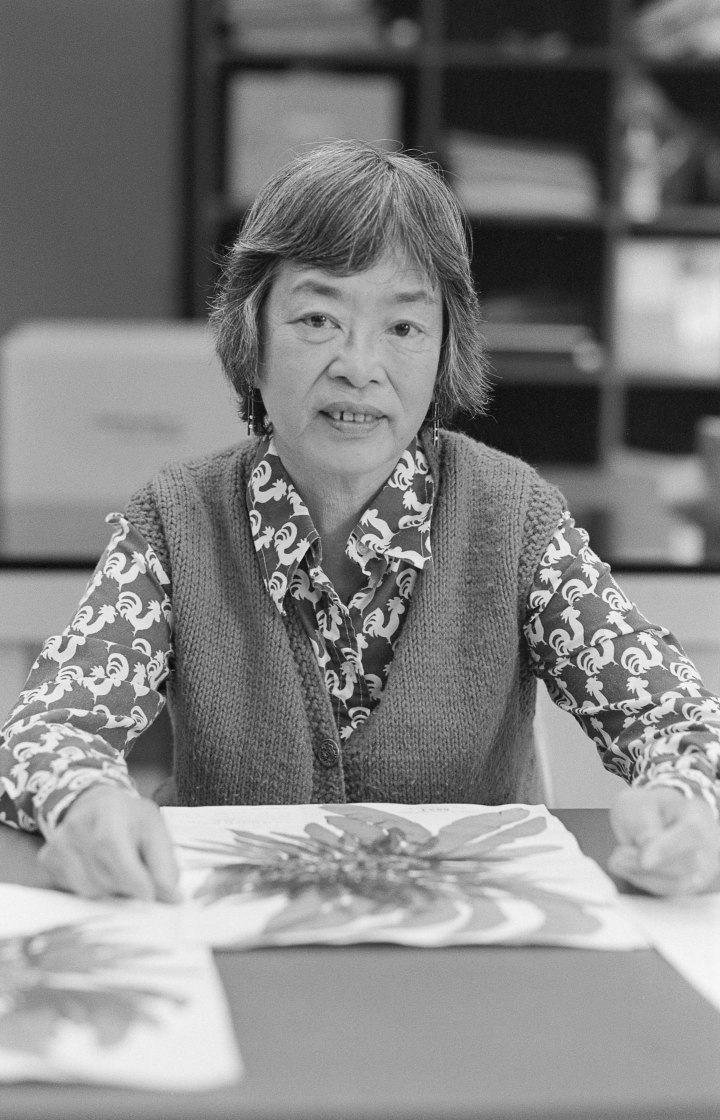
Isabella Aiona Abbott, known as the “First Lady of Limu”, was the first Native Hawaiian woman to receive a PhD in science. She is regarded as the world’s leading expert on algae in the Pacific Ocean, identifying more than 200 species of algae over the course of her three-chapter career. She was known for her wonderful hospitality towards students and colleagues, and her kelp-centric culinary skills, including the coveted seaweed cake, featured in the 1987 issue of Gourmet Magazine. But this ethnobotanist’s story doesn’t start with seaweed cake, it starts in Waikīkī in the 1920s.
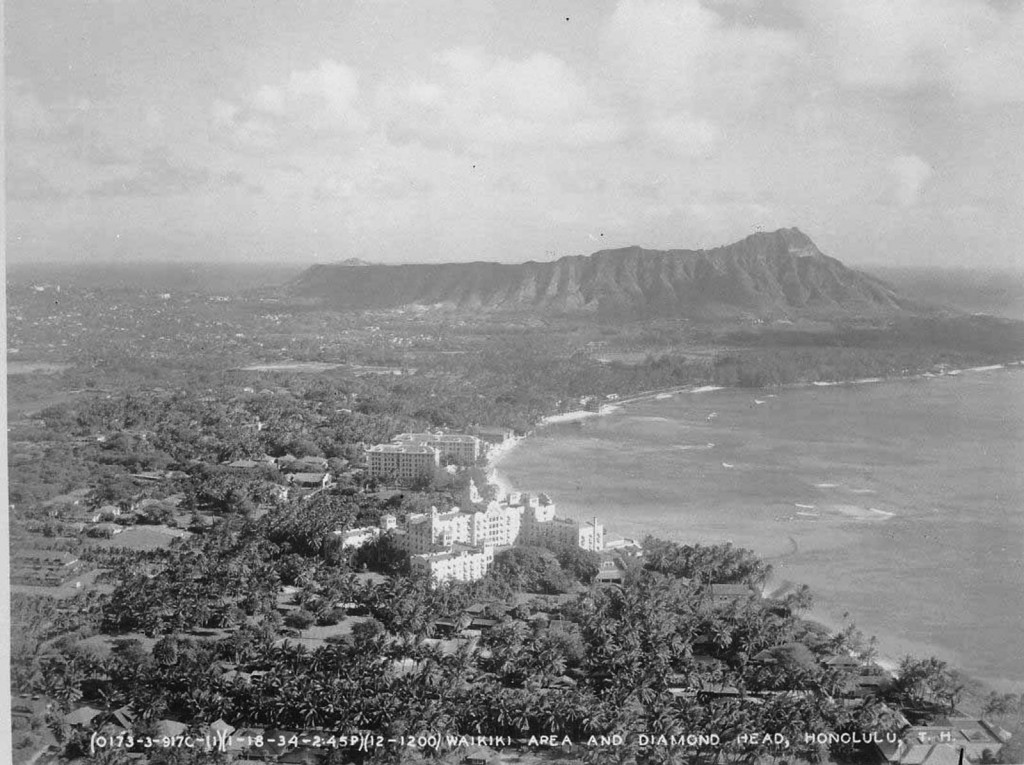
Isabella Kauakea Yau Yung Aiona Abbott was born June 20th, 1919 in Hāna, Maui to Loo Yuen Aiona and Annie Kailihou. The only girl of eight children (six from her father’s previous marriage), her father appreciated his daughter’s sharp intellect, moving inter-island from Maui to Oahu so that Aiona Abbott could access the best schools Hawaii had to offer. Starting at a young age, her Native Hawaiian mother, a schoolteacher, would take Aiona Abbott to the shores of Waikīkī in Honolulu, long before it was a concrete mosaic of hotels with sunscreen-slathered tourists swarming its beaches. Wading into the warm, salty water, “Izzie” (as she was known by friends and family) began absorbing her mother’s cultural, culinary, and scientific knowledge of 70 edible species of limu:
Limu līpoa’s (Dictyopteris plagiogramma) golden brown leaves waving in the calm, subtidal areas of the coast boast a characteristic fragrance and a spicy flavor that is excellent in stews.
Limu pālahalaha (Ulva fasciata), or sea lettuce, has delicate green leaves and are found on old coral heads. It can be eaten fresh, but is usually better in soups.
Limu wāwa‘iole (Codium edule) has a dark green, spongy surface and is the best when pounded with fresh octopus, but requires intense cleaning since it grows as a mat across intertidal and subtidal reef rubble.
Limu huluhulu waena’s (Grateloupia filicina) delicate, bushy branches grows on rocks covered with fine sand and requires gentle, but thorough cleaning to remove sand. It is best served finely chopped and salted with a variety of meats.
To Aiona Abbott, scientific and cultural knowledge were one in the same. As author Shannon Wianecki explains it, “taxonomy, the naming and classification of life forms, is the foundation of Western biology and has parallels in Hawaiian tradition. Early Hawaiian botanists assigned plants names that relayed information about species’ growth forms or habitat preference.” Aiona Abbott credits her love and knowledge of seaweed to her mother, and this combined with the educational support from her father, led Isabella Aiona Abbott down a prestigious academic path, graduating high school from Kamehameha School in 1937, a private school for students of Hawaiian ancestry. She then started her undergraduate degree in botany (the study of plants) at University of Hawai‛i at Mānoa, sitting next to her future husband Don Abbott on her first day of class, thanks to the alphabetical order seating charts. Both students focused on marine sciences, Don on marine invertebrates and Isabella on marine algae. After graduating together in 1941 and marrying in 1943, the two became an academic power couple, supporting each other through master’s degrees and receiving doctorates from the University of California, Berkley; Don Abbott in zoology and Isabella Aiona Abbott in algal taxonomy in 1950. Dr. Aiona Abbott was the first Native Hawaiian woman to earn a doctoral degree in a scientific field.
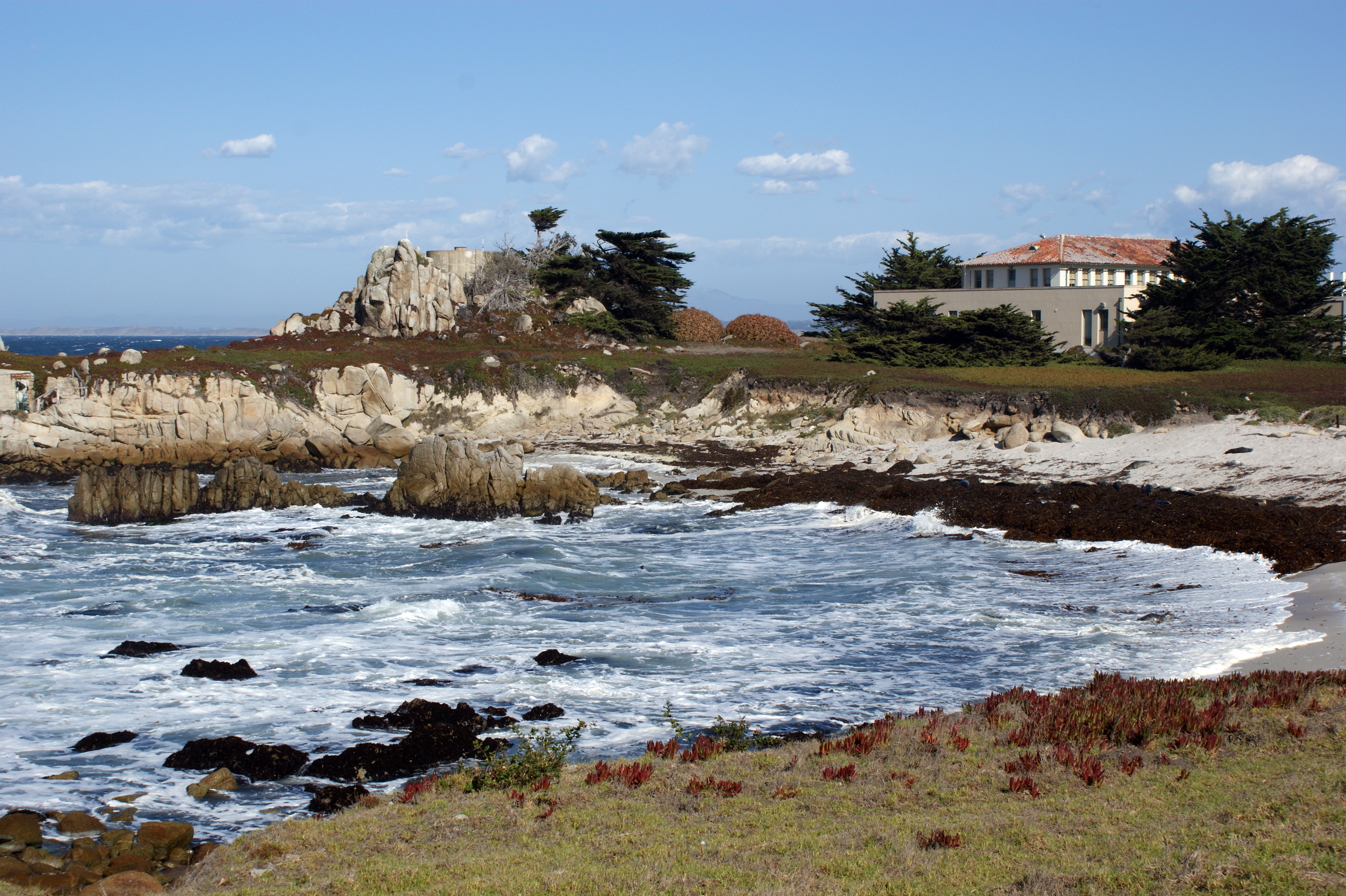
For any female PhDs of the time, academic jobs were rare, and so it was perhaps no surprise that despite having the same credentials, her husband Don received six job offers and secured a position at Stanford’s Hopkins Marine Station in Pacific Grove, California, but Dr. Aiona Abbott didn’t receive a single offer. However, this didn’t hinder Dr. Aiona Abbott’s passions in the slightest. For the next 10 years she acquainted herself with the local algae species of the Monterey Bay and refined her seaweed culinary skills, while raising their child Annie Abbott. With her husband’s position at Hopkins Marine Station, the Aiona Abbott household became a hub for researchers, local and visiting; the marine science community in Pacific Grove grew accustomed to spending time “talking story”, making kelp pickles, and eating delicious food, including Dr. Aiona Abbott’s seaweed cake (recipe below!).
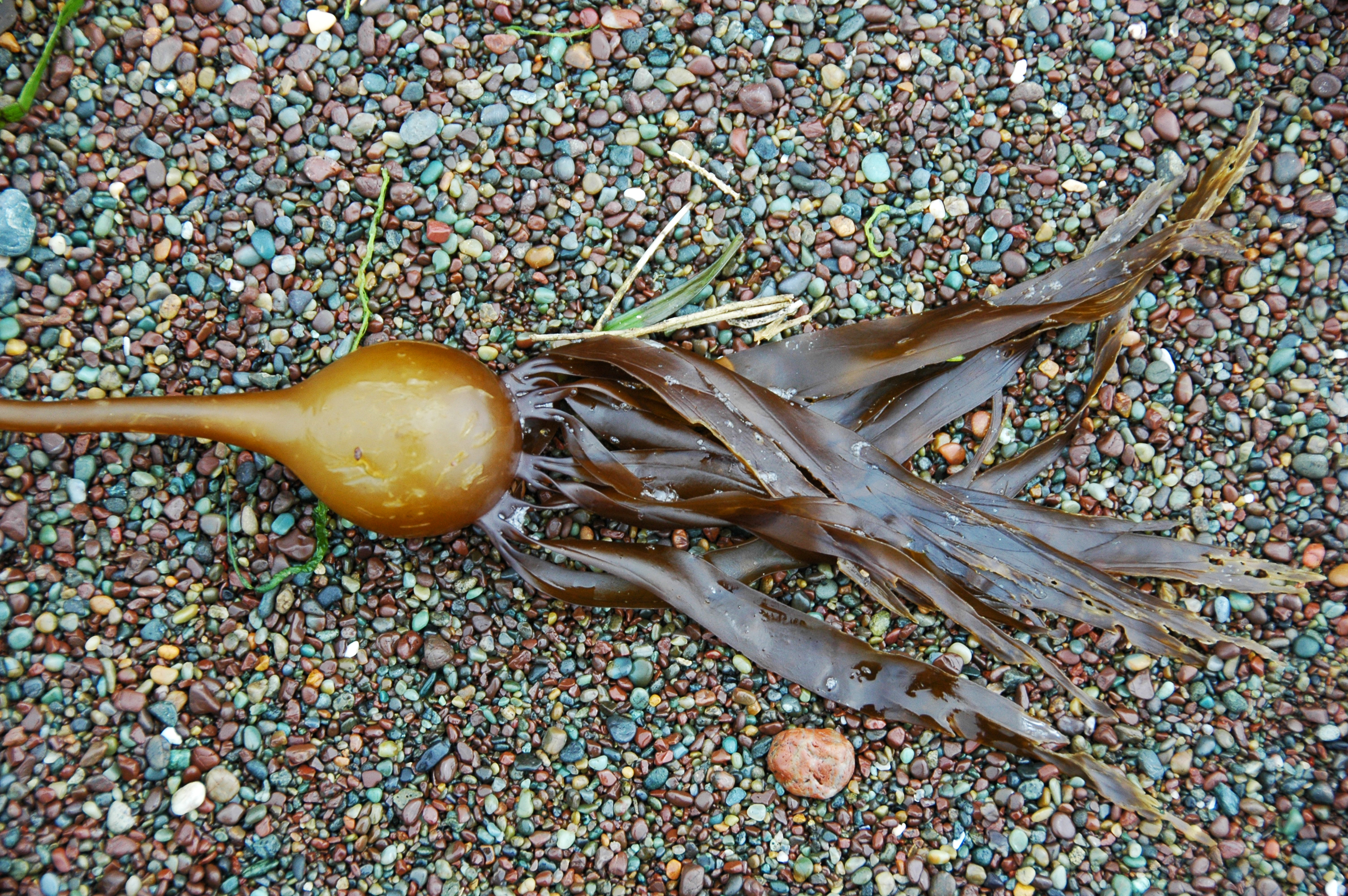
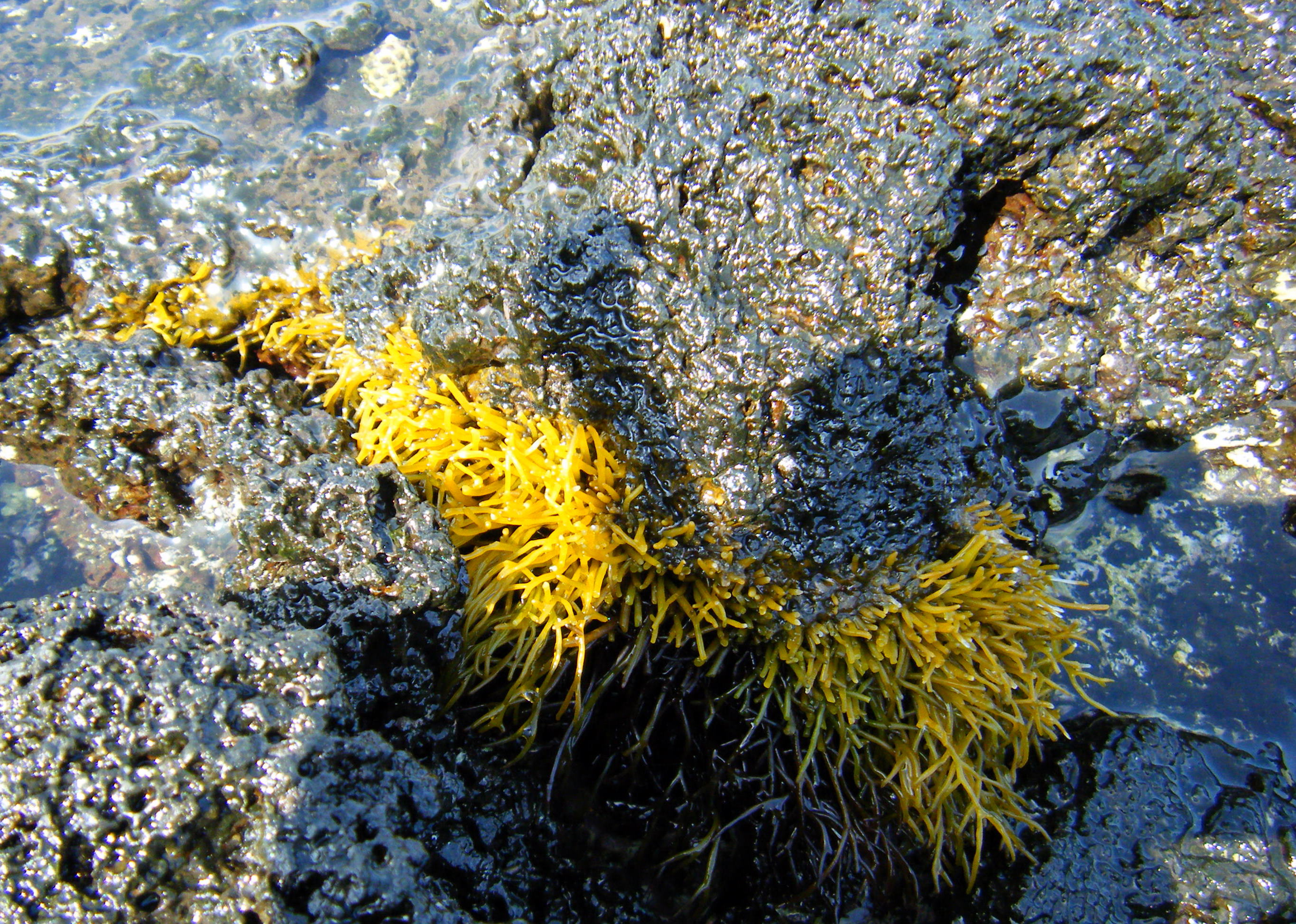
Bull kelp found in California (left, Source) or ogo algae in Hawaii (right, Source) is the key ingredient for seaweed cake.
Despite a decade hiatus from academia, Dr. Aiona Abbott never distanced herself from her marine botany research and in 1960 she was finally offered a lecturer position at Hopkins Marine Station teaching students how to identify various marine plant species. Her intimate familiarity of the California algae and sea grasses led her to co-publish the book, Marine Algae of California that included the identification of 55 new species and an entirely new genus of red algae that co-author George Hollenberg named after her, Abbottella [1]. Another decade of lecturing, publishing her own research, and either authoring or updating all foundational books on marine algae of California, she became the 1st person of color to receive full professorship at Stanford University and the 1st female professor in the Biology department in 1972. Throughout her tenure, she battled breast cancer, mentored numerous young marine scientists, and identified 200 new algal species, including Peleophycus, penned for Pele, the Hawaiian goddess of volcanoes, because the plant resembled lava underwater.
Her fierce dedication to her scientific field was matched by her deep appreciation for her Hawaiian ancestors and their culture. Dr. Aiona Abbott found herself exploring ethnobotany, the scientific study of relationships between plants and humans. She realized that Native Hawaiians were keen naturalists, understanding marine plants intimately yet not receiving acknowledgement from the Western scientific community. Thus, she began interviewing kūpuna (Hawaiian for elders) to document their rich traditional ecological knowledge. In a later interview Dr. Aiona Abbott explained that this documentation is necessary “so that Hawaiians are not put in second- or third-class status of Native people who don’t know anything. Hawaiian culture is unbelievably sophisticated.” Documenting oral histories helped her unearth historical uses for native plants and how they can be used in daily life, as well as traditional Hawaiian methods for the cultivation and harvest of limu. The results of her work culminated into two popular books, Limu: An Ethnobotanical Study of Some Hawaiian Seaweeds in 1974 and La’au Hawai’i: Traditional Hawaiian Uses of Plants in 1992 [2-3].
Dr. Aiona Abbott and her husband Don decided to trade the foggy eastern Pacific coast for the sunny island chain in the middle of the Pacific, retiring to Hawai‛i in 1982. Although, “retirement” may be considered a loose term as Dr. Aiona Abbott began what could be called a 2nd career, placing all her focus toward ethnobotany. She began teaching traditional Hawaiian usage of plants at University of Hawai‛i at Mānoa where she continued working until her passing in 2010. During the last several decades of her life, she continued to inspire her students, providing a supportive environment to explore scientific and cultural endeavors, committed to recording traditional ecological knowledge and passionate about revitalizing the relationship that humans have with their natural ecosystems. Her hands-on ethnobotany classes were so successful that they led to the development of an undergraduate degree in the subject.
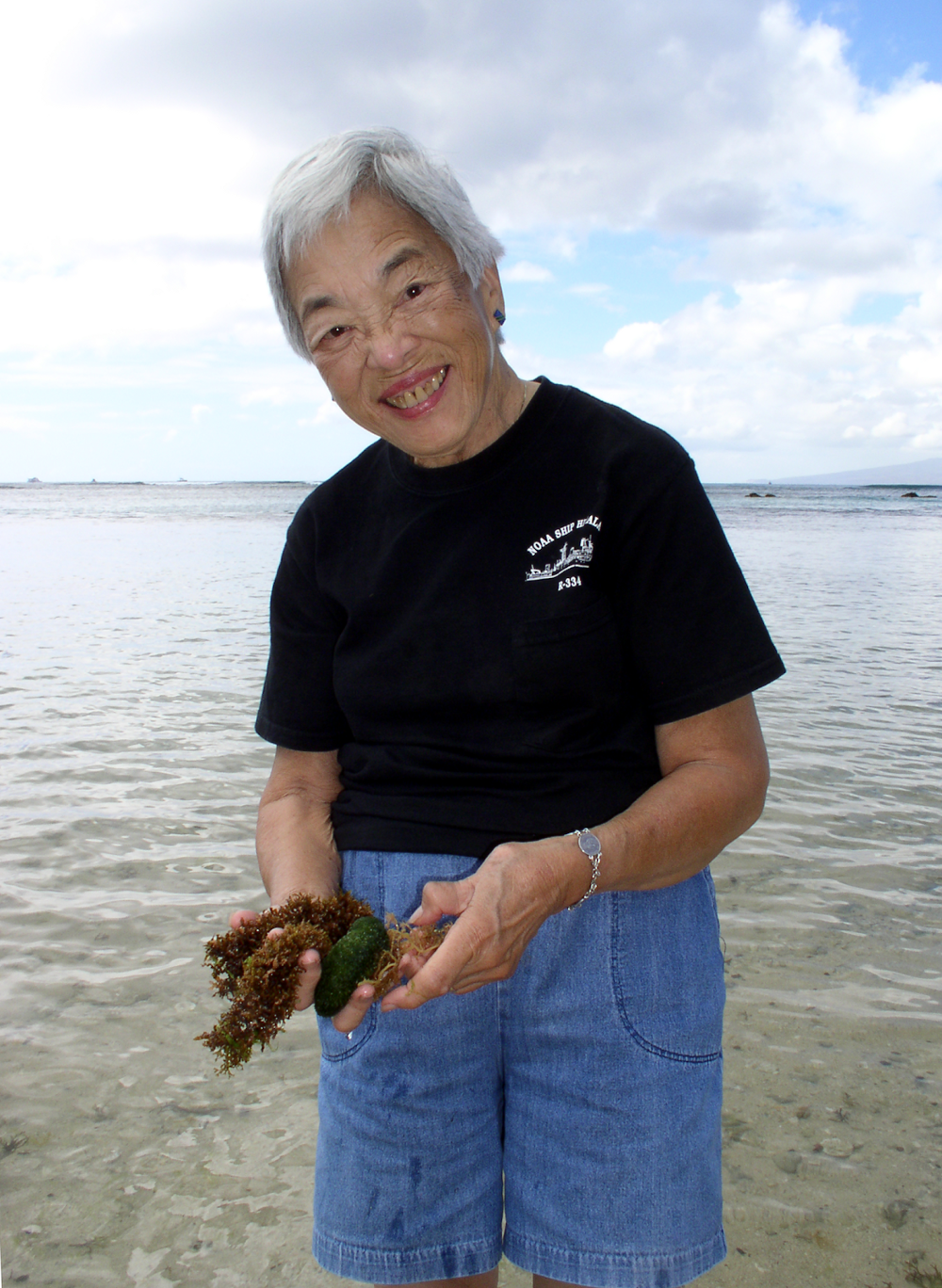
More than her publications and numerous contributions to science, Dr. Aiona Abbott’s embodiment of science, culture, and passion makes her a science hero full of kuleana (responsibility for her community) and mana wahine (girl power). As her colleague Dr. Celia Smith puts it, “to be a Hawaiian in her mind meant that you were already a scientist. It’s not two things, you were already a scientist.” Dr. Isabella Aiona Abbott spent her life showing others that moving fluidly through the interconnectedness of culture, science, and hobbies brings together the best knowledge, community, and respect for each other, our history, and our environment.

WANT TO LEARN MORE ABOUT THIS SCIENCE HERO?
Have a Young Explorer that would benefit from knowing this Science Hero? Head over to the Sci Hero column on Animal Adventure Thursdays for printable Sci Hero Trading Cards featuring the Sci Hero’s “origin story” and super powers.
Check out Dr. Aiona Abbott’s interview with Leslie Wilcox of PBS Hawaii.
Read Shannon Wianecki’s and Jennifer Crites’ engaging tributes to Dr. Isabella Aiona Abbott.
Watch the University of Hawai‛i at Mānoa’s Lifetime Achievement tribute to the First Lady of Limu.
Listen to HerbRally Podcast’s episode about Dr. Aiona Abbott’s traditional ecological plant knowledge.
Dr. Isabella Aiona Abbott’s “Seaweed Cake”
A recipe originally designed to use Nereocystis (commonly known as bull kelp) that is common in central California and northward. In Hawaiʻi, either Eucheuma species from Kāneʻohe Bay or ogo may be used.
1. Cream well 1 ½ cups salad oil, 2 cups sugar; add 3 eggs, one at a time, beating well after each addition.
2. Add 2 cups grated carrots, 2 cups grated Eucheuma or 2 cups coursely chopped ogo, 1 cup crushed, drained pineapple, or 1 cup fresh grated coconut.
3. Sift together 2 ½ cups sifted flour, 1 teaspoon baking soda, 1 teaspoon salt, 1 teaspoon cinnamon. Mix all together. Add 1 cup walnuts if desired.
4. Bake in oblong pan or loaf pan at 350 degrees 45-50 minutes.
5. Serve plain or with buttercream frosting. A moist cake which keeps very well.
WANT TO READ DR. AIONA ABBOTT’S PUBLICATIONS?
[1] Aiona Abbott, I & Hollenberg, G.J. (1976). Marine Algae of California. Stanford University Press.
[2] Aiona Abbott, I. (1974). Limu: An Ethnobotanical Study of Some Edible Hawaiian Seaweeds. Pacific Tropical Botanical Garden.
[3] Aiona Abbott, I. (1992). Lā’au Hawai’i: traditional Hawaiian uses of plants. Bernice Pauahi Bishop Museum Press.
For a comprehensive list of her publications, check out Stanford’s Seaside page.
Karli Chudeau is a graduate student in the Animal Behavior Graduate Group and a part of the UC Davis Coastal Marine Sciences Institute. She is interested in conservation management and assessing animal welfare in wildlife rehabilitation settings. Her current research examines how we can use behavioral management interventions, such as environmental enrichment, to improve reintroduction success with seals. She is also an avid ocean nerd.
Additional References:
Bense, D. (2019, March 14). A celebration of women’s history and Dr. Isabella Aiona Abbott. Ho’oulu: A UH Maui College Publication. http://maui.hawaii.edu/hooulu/2019/03/14/a-celebration-of-womens-history-and-dr-isabella-aiona-abbott/
Johnston, H. (2021, May 3). Marine botanist Isabella Aiona Abbott and more women to know this Asian American and Pacific Islander Heritage Month. Because of Her Story. https://womenshistory.si.edu/news/2021/05/marine-botanist-isabella-aiona-abbott-and-women-know-asian-american-and-pacific-islander-heritage
Nogelmeier, P. (2011). Isabella Kauakea Yau Yung Aiona Abbott: The Hawaiinuiakea Monograph. I Ulu I Ke Kumu, pp. 80-84.
Smith, C., Thomas, B., Winter, K., & Hirono, M.K. (2019). First Lady of Limu: Memories of an Inspiring Mentor and Botanist. Ka Pili Kai, 2(1), 12-19.
Utacia Krol, D. (2017, September 1). Isabella Aiona Abbott becoming the “First Lady of Limu”. Winds of Change: American Science And Engineering Society. In https://woc.aises.org/content/isabella-aiona-abbott-becoming-%e2%80%9cfirst-lady-limu%e2%80%9d
[Edited by Allison Lau]
 theethogram.com