If you ever find yourself in the beautiful island wilderness of Papua New Guinea you may start to hear what sounds like a band of yodelers echoing through the lush forest. Yodeling is performed by people across the world, but on this island, it’s much more likely that you have come across a pair of New Guinea Singing Dogs (Figure 1a and 1b). These canines live up to their namesake!
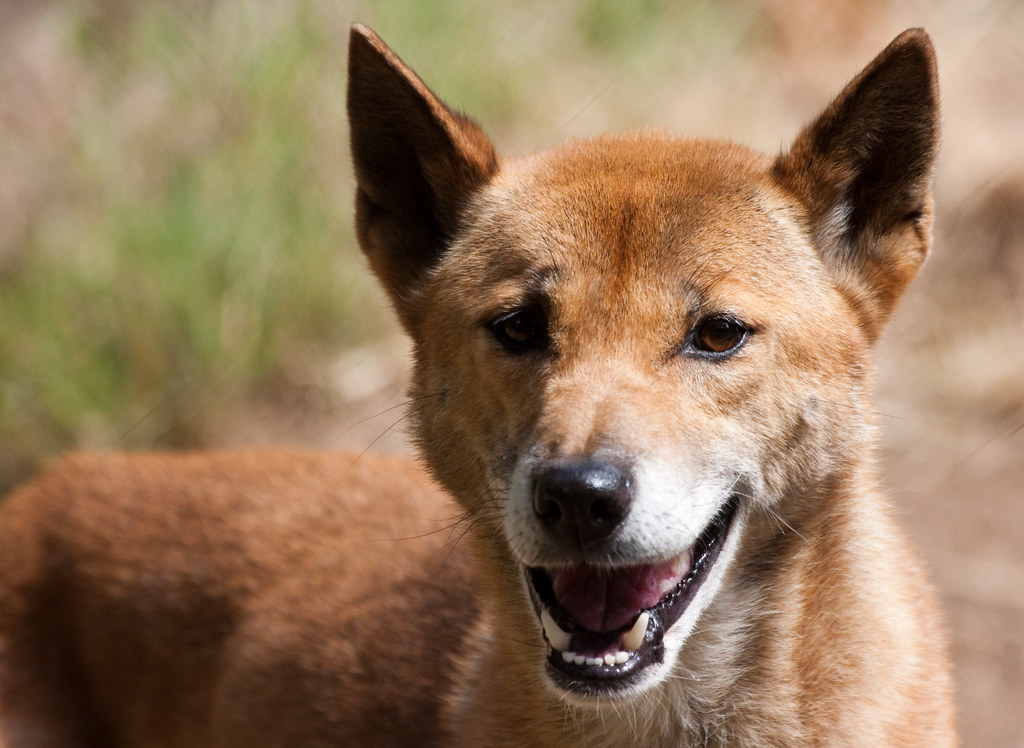
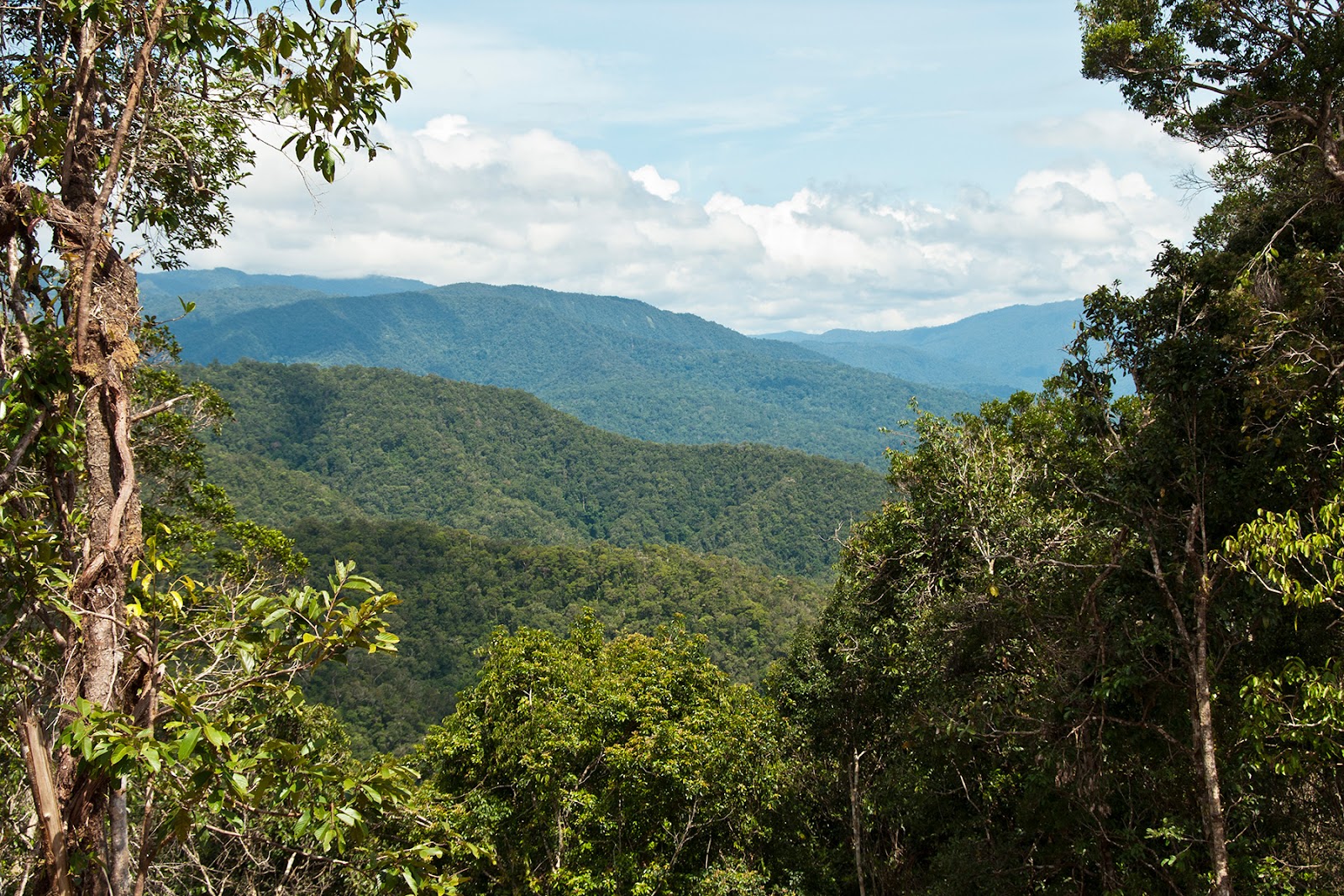
Figure 1: New Guinea singing dog and the forest of New Guinea. The island of New Guinea has the largest diversity of plant species in the world [1]. Photo source:
Long thought to be a feral domesticated dog, the New Guinea singing dog is actually most closely related to the Dingo, a species of wild dog indigenous to Australia [2]. Singing dogs have a lot of cultural significance in New Guinea (which is the name for the island originally called Papua before Western colonists arrived). They once were hunting companions, and according to elders, human hunters cared deeply for their canine partners. [3]. On their own, these dogs are extremely successful predators. They are unafraid of larger prey, having been recorded attacking cassowaries and New Guinea harpy eagles (some of the most ferocious birds in the animal kingdom) [4] (Figure 2). They will often linger around fruit trees, waiting to ambush the prey who feed there. Adult dogs can be as fierce to one another as they are to their prey. Singing dogs show high levels of aggression towards members of their species during the mating season, sometimes even fighting to the death [5].
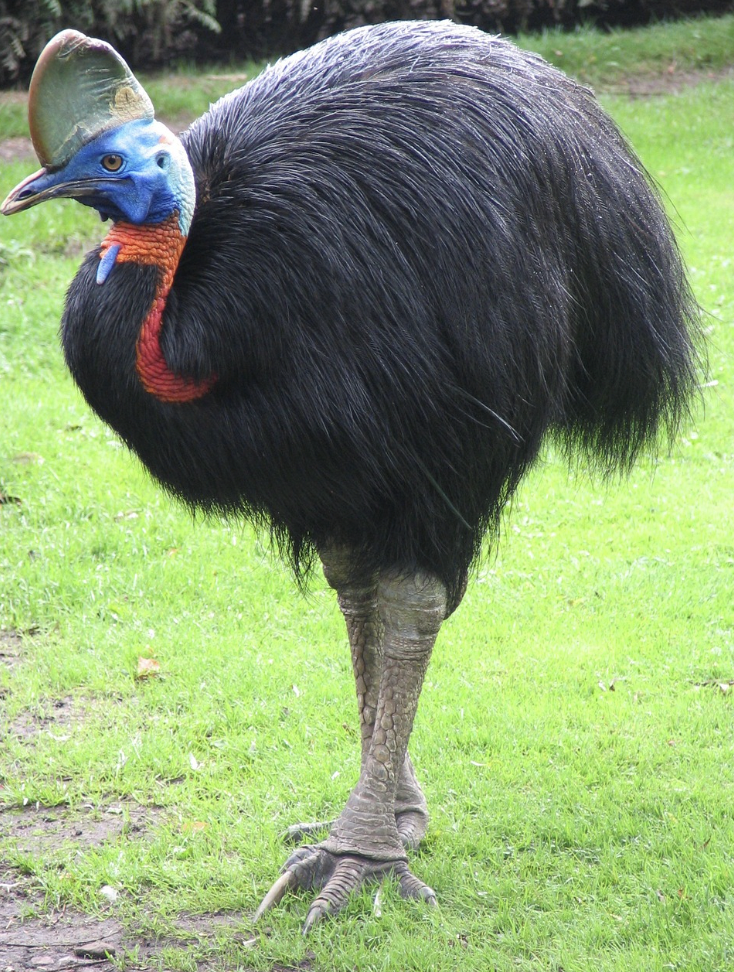
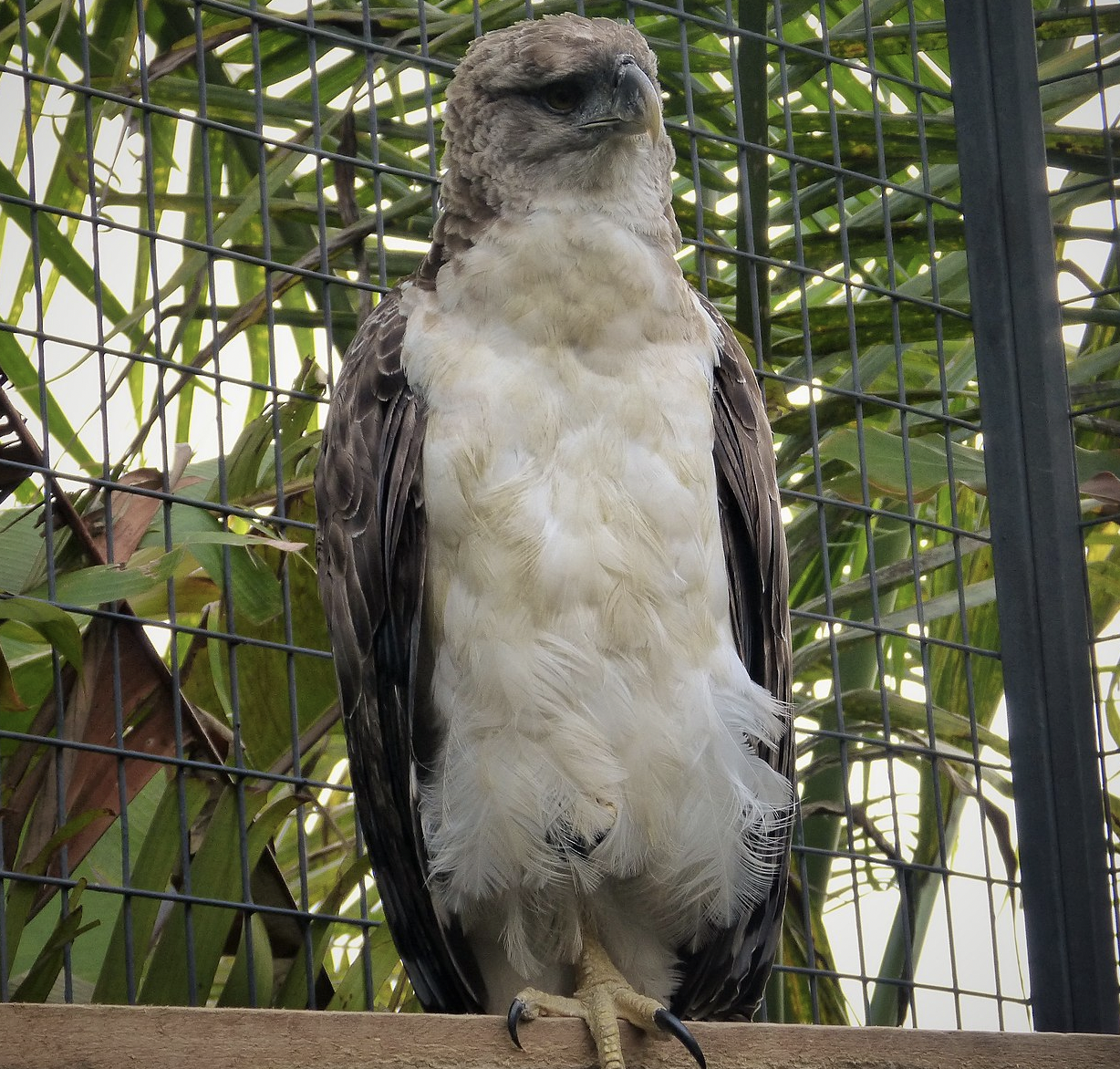
Figure 2: The fearsome prey of the singing dog: cassowaries and Harpy’s eagles. Photo 1 source: Photo 2 source:
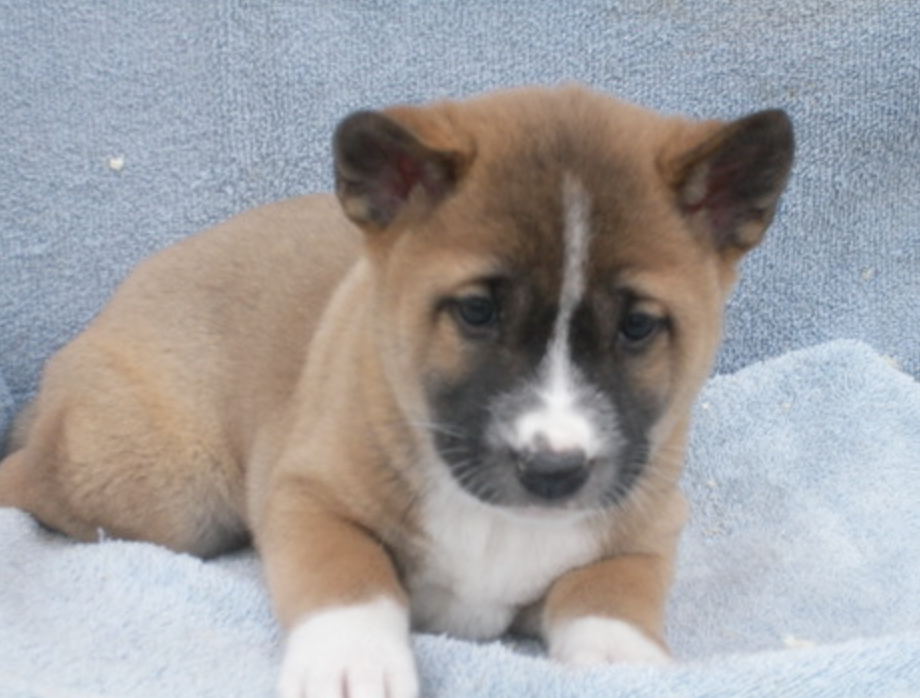
Female New Guinea Singing Dogs have an annual breeding season, and the average length of pregnancy is 63 days [6], which is very comparable to the domesticated dog. Puppies are born only at 260 grams (about the same weight as a tomato), but gain 50 grams per day in their first month of life [7] (Figure 3).
Their most famous trait, their characteristic “singing,” can be easily differentiated from other canids’ vocalizations with a few distinctions. First, the calls start with a very sharp increase in pitch, and end with high frequencies [8]. The calls are not typically long-lasting, and can be performed by multiple dogs at a time. For this reason, they are probably using it to communicate to one another when spaced far apart [ref]. Check out this unique call in the Youtube video below:
Up until very recently it was thought that only 200-300 New Guinea singing dogs were still alive today – all cared for in captive facilities as part of conservation breeding programs, with no confirmed sightings in the wild for over 50 years. However, starting in 2016 an expedition to the New Guinea highlands found, tracked, and monitored 18 wild dogs in the mountainous highlands of the island! They sing just like the captive New Guinea singing dogs, and indeed, genetics confirmed that the extremely rare and elusive New Guinea highland wild dogs do come from the same population as the singing dogs [9]!
Still, many mysteries still remain about the Singing Dog’s origins. How did the Singing Dog’s ancestors reach the island of New Guinea in the first place? Unlike wolves and other wild dogs, Singing Dogs don’t seem to form packs. Why do these dogs lead such different social lives, and could this difference help explain what they are saying to each other through their unique “singing”? If we listen closely, perhaps we’ll hear an answer.
Written by: Isabelle McDonald-Gilmartin (she/her) is an animal behavior PhD candidate and a part of the Center for Animal Welfare at UC Davis. She currently studies the abnormal behaviors of dairy cattle, and how abnormal behaviors are related to animal welfare. Isabelle is also interested in teaching and mentorship of students of all ages. When she’s not working with her cows, she enjoys spending time with her dog, reading, and watching scary movies.
References:
[1] Rodrigo Cámara-Leret et al. New Guinea has the world’s richest island flora. Nature August 5, 2020. DOI: 10.1038/s41586-020-2549-5
[2] Koler-Matznick, J., Koler-Matznick, J., Yates, B. C., & Bulmer, S. 2007. The New Guinea singing dog: its status and scientific importance. Australian Mammalogy, 29(1), 47. https://doi.org/10.1071/am07005
[3] Bulmer, R., 1968. The strategies of hunting in New Guinea. Oceania 38: 302-318.
[4] Bino, R. 1996, Notes on behavior of New Guinea singing dogs (Canis lupus dingo). Science in New Guinea 22: 43–47.
[5] Voth, I. (1988). Social behavior of New Guinea dingoes (Canis lupus f. familiaris): expressive behavior, social organization and rank relationships. PhD(Vet.) thesis, Ludwig Maximilian University, Munich.
[6] Koler-Matznick, J., Brisbin, I. L. Jr & Feinstein, M. (2001). An ethogram of the New Guinea singing dog, Canis hallstromi. Central Point, OR: New Guinea Singing Dog Conservation Society
[7] Koler-Matznick, J., Brisbin, I. L., Feinstein, M., & Bulmer, S. 2003. An updated description of the New Guinea singing dog ( Canis hallstromi , Troughton 1957). Journal of Zoology, 261(2), 109–118. https://doi.org/10.1017/s0952836903004060
[8] Corbett, L. 2004. “Dingo” (PDF). Canids: Foxes, Wolves, Jackals and Dogs. International Union for Conservation of Nature and Natural Resources.
[9] Surbakti, S., Parker, H. G., McIntyre, J. K., Maury, H. K., Cairns, K. M., Selvig, M., … & Ostrander, E. A. (2020). New Guinea highland wild dogs are the original New Guinea singing dogs. Proceedings of the National Academy of Sciences, 117(39), 24369-24376.
Edited by Jacob Johnson and Alice Michel.
 theethogram.com

