The temperature reads 103°F. Northern California is facing yet another heat advisory. You find yourself sitting by a burbling stream. Your feet dangle in the wonderfully icy water which tumbles over the rocky stream bed. Speckled across the smooth, algae-slicked stones are many small pebbles. The pebbles appear to be moving, mysteriously powered by something other than the current. You peer into the water, past your rippling reflection, transfixed. Slowly but surely, those pebbles—actually, small clusters of many pebbles stuck together—are meandering. You can’t help but grin.
This stream is crawling with caddisfly larvae!
These larvae, belonging to the insect order Trichoptera (an umbrella for over 40 caddisfly families), are among the most bizarre and fascinating invertebrates to inhabit freshwater environments, ranging from cascading rivers to stagnant puddles, all across the world [1]. Caddisflies spend most of their lives in the aquatic larval stage, in some cases, for up to two years [2]. The adults, nocturnal and moth-like (except for their hairy tricho– wings –ptera), live only for about a month [4].
Caddisfly larvae are skilled aquatic architects. They are equipped with modified salivary glands [1] that secrete sticky silk—almost like double-sided water-proof tape. This silk is used to “glue” together pebbles, grains of sand, twigs, pieces of leaves, snail shells, and even seeds to construct an incredibly diverse array of structures. Some larvae craft protective wearable cases or “shells” (similar to a hermit crab or turtle), just like the pebble cases you may have witnessed beneath the flowing waters of a chilly stream [1][3][4]. Others build net-like webs out of sticky silk to catch food chunks or other critters flowing downstream [5].


This caddisfly silk is made of a tough, fibrous protein with astounding strength and stretch [6]. Its silk can be pulled up to twice its length (much like a rubber band!) and when released, slowly returns to its original state [7]. These properties make caddisfly-built structures more dynamic and resilient to quick movements [8]. When the water current tugs, the silk fibers stretch and billow amenably. When a caddisfly larva loses its grappling hook footing and tumbles with the current, the threads of silky glue compensate, holding portable cases together [4].
These silk-dependent structures and others are what enable caddisfly larvae to live in such varied environments, from tumbling streams to plant-choked ponds. Caddisfly species use their ingenuity to protect themselves, blend into their surroundings, find food, stabilize themselves against shifting currents, and obtain precious oxygen [1][3].
Many caddisfly larvae cobble together silk-bound conglomerations from environmental debris. They do this to build safety retreats—much like a disguised hideout—and portable cases that offer protection from predators [3]. These fixed and portable shelters also help to protect the larvae’s soft and vulnerable abdomen [7] from abrasive materials that make up their habitat [4]. Wearable cases can vary in shape and size. Some are tubular, many are domed (almost like a saddle), and others, composed mostly of silk, are reminiscent of a purse [6][9]. Different species tend to have unique preferences for case-building materials, which can be useful for species identification [10][11]. The substrate larvae choose to use—whether pebbles, twigs, or leaves—help disguise them from predators like fish and aquatic birds [1][9].

Larvae continually add to their cases as they are damaged or outgrown. When the seasons change, they’ll swap in seasonally-appropriate materials, allowing them to better blend in with their surroundings [4]. Some artists have formed “collaborations” with caddisfly larvae, providing them with precious metals and stones as building materials for their creations.
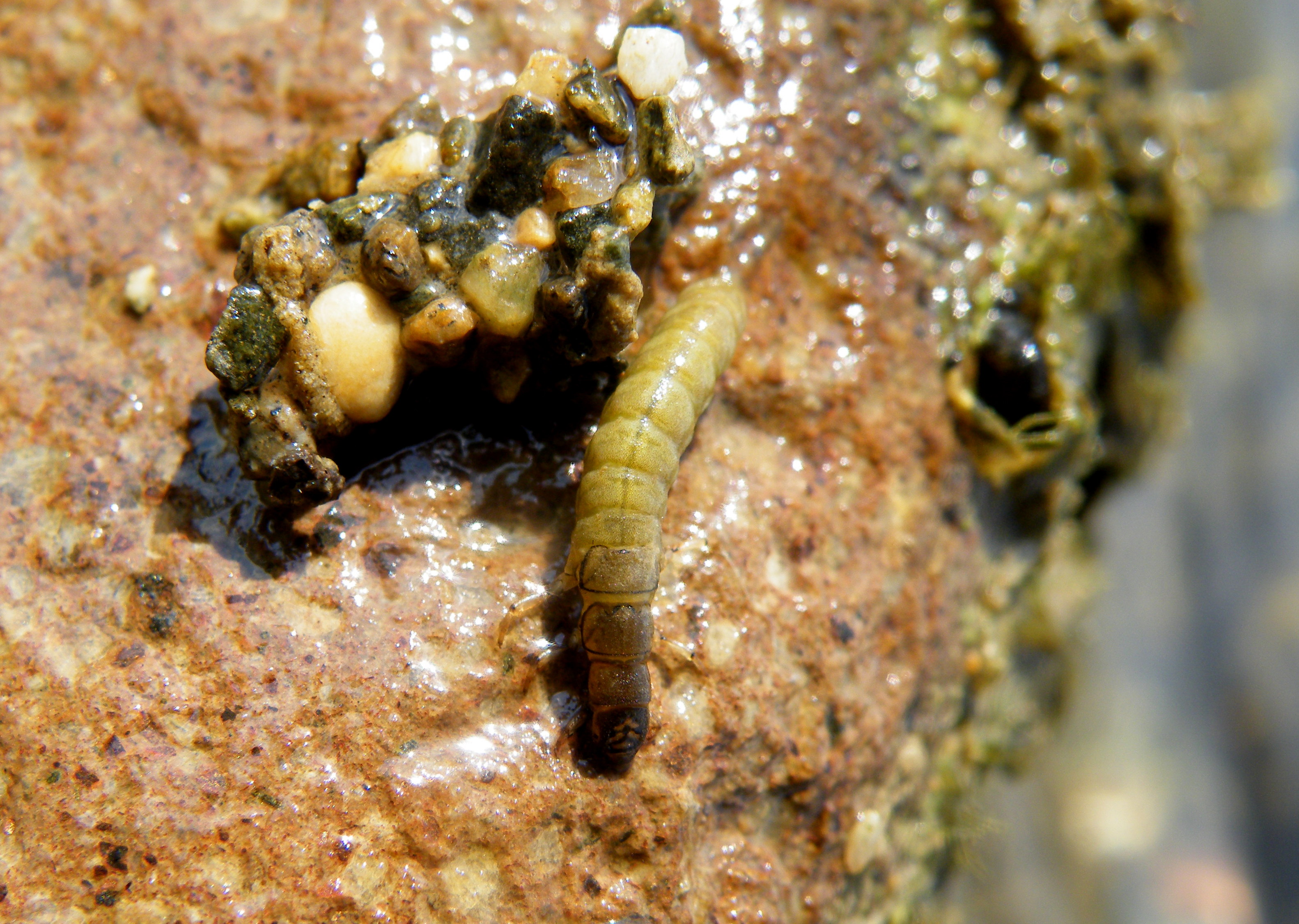
Feeding strategies vary widely in Trichoptera larvae [12]. Many caddisfly larvae are “scrapers,” using their mouthparts to peel up algal growth on underwater logs or rocks [2]. Meanwhile, others use their silk-weaving skills to spin trumpet-shaped underwater filtration nets. These finely meshed nets act as sieves, collecting plant matter and other bits of detritus for the larvae to eat [5].
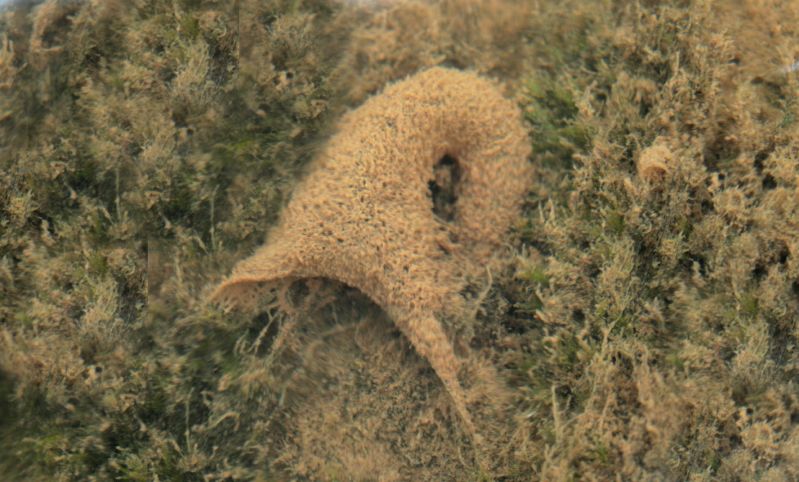
Similarly, some larvae construct webs, likened to those of spiders. Imagine a maze of finely woven strands, threading from rock to rock, almost like the impossible tangle of a laser beam security trap in a spy movie. These underwater webs entrap bits of organic material. The larvae will crawl circuits across strands of the web, munching away and cleaning it off as they go [4]. Still, there are some caddisfly larvae who take a completely different approach, adopting a more predatory strategy. These larvae will grab prey—small aquatic organisms—that unsuspectingly jostle a silk “alarm system” and become entangled [4][5].
It can be tough to be a less-than-one-inch-long invertebrate while water tumbles and cascades overhead. To compensate, some caddisfly larvae have developed methods to keep their footing. Many larvae have legs outfitted with sharp endings, hooks, or bristles, which act as grippy grappling hooks for navigating their aquatic environments. Harnessing their silk spinning abilities, they may also build cases using heavier materials like sand or gravel, and will add large ballast pebbles to help weigh them down, resisting the unrelenting tug of the current [1][5]. This allows larvae to plod along the stream bed as water whips past—similar to a hot air balloon whose basket is weighted with sand bags to help maintain balance and elevation in a gusty sky. Other larvae prefer to swim freely, navigating thickets of aquatic plant roots so they can feed on leaf bits [1]. These larvae fashion boat-like cases that are made of lighter, more buoyant materials, like leaves and wood, so they can spend their time floating near the surface [4].
Caddisfly larvae cannot survive without enough access to oxygenated water. Flowing water typically has high dissolved oxygen due to its turbulence as it tumbles over rocks [7][12]. Miraculously, caddisfly larvae are able to overcome the limitations imposed by low oxygen environments—stagnant puddles or sedimented ponds—with their unique architectural skills. Building tube-like portable cases assist larvae in harvesting oxygen from water, even when it is perfectly still. Within their wearable homes, larvae are able to produce their own current [4]. They undulate their abdomen, which pulls water in through the front opening of the case and pushes it out from the rear. Their gills and oxygen-absorbent skin are bathed with constantly renewed water. This strategy has allowed some species of caddisfly to exploit aquatic environments with prohibitively low oxygen levels where other organisms would struggle [1].
Caddisfly larvae have a powerful role in shaping freshwater ecosystems. What they lack in size, they make up for in sheer number.

These larvae act as fundamental ecosystem engineers, profoundly influencing hydrologic systems by altering water flow, reducing erosion, and increasing the stability of river beds [6]. Once again, it comes down to their sticky silk. By connecting rocks of varying sizes together with their nets, webs, safety retreats, and portable cases, they help keep materials fixed in place [8]. By gluing together grains of sand, they effectively make a pebble. By linking pebbles, they make a larger rock. With each glued bit of detritus, they increase its size and mass, and therefore, the force required to move it. This has the power to profoundly shape water systems.

This resilient caddisfly silk, which remains sticky underwater and is fundamental to larvae survival, has caught the eye of many researchers in the medical field. Imagine materials that mimicked the properties of caddisfly silk and how they could be used for surgical applications [7].
These larvae are also essential to aquatic environments by providing an important link between aquatic and terrestrial food chains [2][12]. They do so by acting as food [9]. Caddisfly larvae fill the bellies of fish such as trout and salmon [4][7], well known by fly fishermen who craft mimics of caddisfly larvae [8]. They provide an important food source for aquatic birds and when they emerge from the water as their adult form, they feed multitudes of bats swooping through the air at the water’s edge [5].
Scientists are also dependent on caddisfly larvae for the information they provide about the health of an ecosystem. Caddisfly larvae are relatively sensitive to water pollutants and environmental degradation. They’ve even been shown to incorporate microplastics derived from single-use materials such as plastic bags, bottles, and drinking straws [11][13]. These materials weaken the structural integrity of larval cases and may have toxic leaching effects which could impact their survival, and as consequence, alter many aspects of the environment shaped by these invertebrates [4][14]. When larvae are scarce in a body of water, this communicates to scientists that conditions are unhealthy. In this way, caddisfly larvae act as bioindicators. They are an honest measure, or signal for the health and environmental quality of a particular aquatic habitat [10].
Next time you seek cool waters to escape the heat, keep watch for these marvelous invertebrates. Look for the ways that the stream you find yourself sitting in is a built one, shaped by the caddisfly: an aquatic architect, water system shaper, and bioindicator!
Check out this gallery of amazing photographs to take a closer look at these fascinating critters!
Written by: Leta Landucci is a Postbacc Research Trainee in the Department of Entomology and Nematology at UC Davis. Leta studies the chemistry of plant-microbe-pollinator interactions in the nectar of flowers. They love to write about science and the environment and are always excited for opportunities to develop skills as a communicator and storyteller. When not in the lab, Leta loves to read in the park, go for a gravel bike ride, or head out for a hike with friends!
References:
[1] Cannings, R. (2013, December 10). Caddisfly Architecture. Royal British Columbia Museum . https://staff.royalbcmuseum.bc.ca/2013/12/10/caddisfly-architecture/
[2] Newton, B. (n.d.). Critter Files: Insects: Caddisflies. Caddisflies of Kentucky – University of Kentucky Entomology. http://www.uky.edu/Ag/CritterFiles/casefile/insects/caddisflies/caddisflies.htm
[3] Ferry, E. E., Hopkins, G. R., Stokes, A. N., Mohammadi, S., Brodie, E. D., & Gall, B. G. (2013). Do all portable cases constructed by caddisfly larvae function in defense? Journal of Insect Science, 13(5), 1–9. https://doi.org/10.1673/031.013.0501
[4] Hamrsky, J. (n.d.). Caddisfly larvae (order Trichoptera) . LIFE IN FRESHWATER – Macro photography of aquatic insects and other freshwater invertebrates. https://lifeinfreshwater.net/caddisfly-larvae-trichoptera/
[5] Wallace, I. (2003). The Beginner’s Guide to Caddis (Order Trichoptera). Bulletin of the Amateur Entomologists’ Society, 62, 15–26.
[6] Mason, R. J., Rice, S. P., Wood, P. J., & Johnson, M. F. (2019). The zoogeomorphology of case‐building caddisfly: Quantifying sediment use. Earth Surface Processes and Landforms, 44(12), 2510–2525. https://doi.org/10.1002/esp.4670
[7] Deep Look, KQED. (2016). The Amazing Underwater Tape of the Caddisfly.
[8] Stroud Water Research Center. (2020, June 11). A freshwater rockstar: The net-spinning caddisfly. https://stroudcenter.org/virtual-learning-resource/freshwater-rockstar-net-spinning-caddisfly/
[9] Ramel, G. (2023, July 1). Trichoptera: The case building order of the Caddisfly. Earth Life. https://earthlife.net/caddisfly-trichoptera/
[10] Pastreich, M., Zhang, H., Gonzalez, A., & Jarrell-Hurtado, S. (2018). Going with the flow? Larval caddisfly case-building behavior in response to river flow type. California Ecology and Conservation Research , 1–8. https://doi.org/https://doi.org/10.21973/N3666H
[11] Ehlers, S., Manz, W., & Koop, J. (2019). Microplastics of different characteristics are incorporated into the larval cases of the freshwater caddisfly Lepidostoma Basale. Aquatic Biology, 28, 67–77. https://doi.org/10.3354/ab00711
[12] Missouri Department of Conservation. (n.d.). Caddisfly larvae. https://mdc.mo.gov/discover-nature/field-guide/caddisfly-larvae
[13] Valentine, K., Cross, R., Cox, R., Woodmancy, G., & Boxall, A. B. (2022). Caddisfly larvae are a driver of plastic litter breakdown and microplastic formation in freshwater environments. Environmental Toxicology and Chemistry, 41(12), 3058–3069. https://doi.org/10.1002/etc.5496
[14] Ehlers, S. M., Al Najjar, T., Taupp, T., & Koop, J. H. (2020). PVC and pet microplastics in caddisfly (lepidostoma basale) cases reduce case stability. Environmental Science and Pollution Research, 27(18), 22380–22389. https://doi.org/10.1007/s11356-020-08790-5
[Edited by Jacob Johnson & Alice Michel]
 theethogram.com
![[Source]](https://commons.wikimedia.org/wiki/File:Caddisfly_Larvae_%285691444176%29.jpg)
![Source]](https://commons.wikimedia.org/wiki/File:Trichoptera_net.jpg)