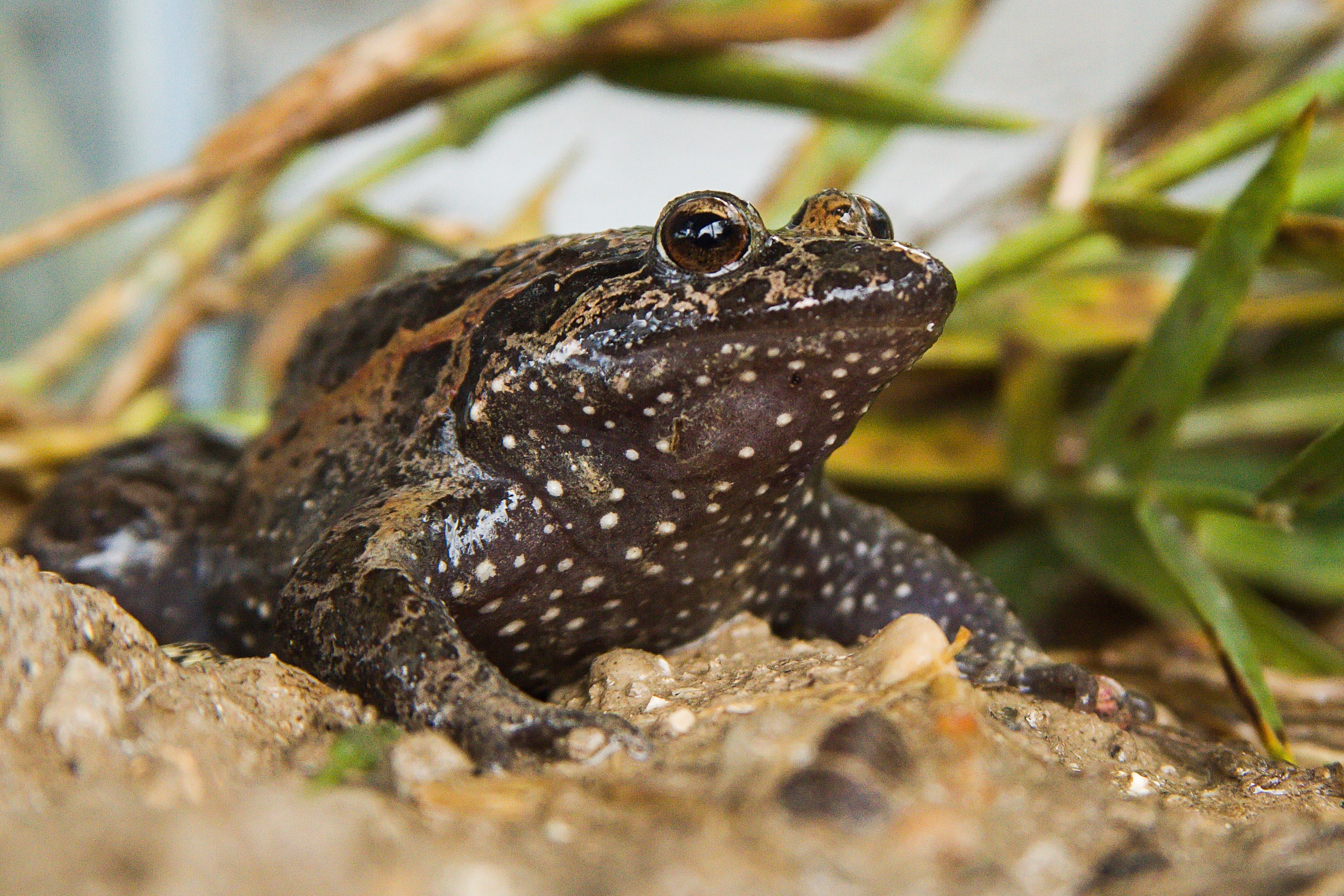
Meet the Hula painted frog (Latonia nigriventer), a small, colorful amphibian native to the Hula Valley in Israel, with a captivating history. Up until 2011, the species was thought to have been extinct for over six decades. But in October of that year, during a routine patrol in the Hula Nature Reserve, a team of scientists stumbled upon one male Hula painted frog just sitting out in the open. Several meters from him, hidden by brambles, was a small pond. Nine more individuals were found there, giving the species a seemingly miraculous “comeback” [1, 2]. In this article, we will take a closer look at the unique characteristics and conservation status of the Hula painted frog, considered a “living fossil,” as it is the only member of its genus alive today [2].
Adult Hula painted frogs measure a mere 5 to 7 centimeters (2-3 inches) in length, about the same as a playing card. Their backs have black and green spots, blotches, and stripes, creating patterns reminiscent of paint brush strokes and splatters, hence the name “painted frog”. This coloration allows the frog to blend seamlessly into its natural habitat of aquatic vegetation [3].
Beyond evading detection from scientists, blending in, also called camouflage, helps these frogs evade predators, like the white-throated kingfisher (Halcyon smyrnensis), a small but formidable bird whose range is actually expanding despite human impacts on their habitat [4]. Other predators of Hula frogs include fish, turtles, insects, and even larger frogs [3, 5]! When confronted by a predator, the frog enters the water or thick vegetation head first and holds still (see YouTube clip below) [3]. The scientists who re-discovered the frog have remarked that it is shy and skittish compared to other frog species in the area [3].
Additionally, Hula painted frogs are primarily nocturnal, meaning that the frogs seem to be active during the night, especially while foraging. Nocturnal activity is a common predator evasion strategy, keeping prey animals hidden from their attackers in the low light. All together, coloration, refuge-seeking behavior, and nocturnality are important anti-predator adaptations that allow this species to survive in a challenging environment.
To get a glimpse into the lives of these amphibians, let’s delve into their developmental stages. The female lays her eggs in shallow ponds, mostly from February through September [3]. Not long after hatching, the tadpoles begin to undergo metamorphosis. Over the following days and weeks, the tadpoles grow legs, preparing for the day they leave the water and carry on their life cycle. Both male and female frogs make sounds that are so low-pitched that it is challenging for humans to hear or identify them. These calls are thought to function in short-range communication [3]. Unlike some other frog species, the males do not have air sacs that could enable them to make loud calls to attract mates from far away [3].
Despite being a prey animal, the Hula frog is a carnivore, with a diet consisting of insects and small invertebrates, which are so abundant in its wetland surroundings that one of their main threats has been wetland draining as a result of mosquito control efforts [3]. This amphibian, although small in size, plays a significant role in maintaining a stable food web.
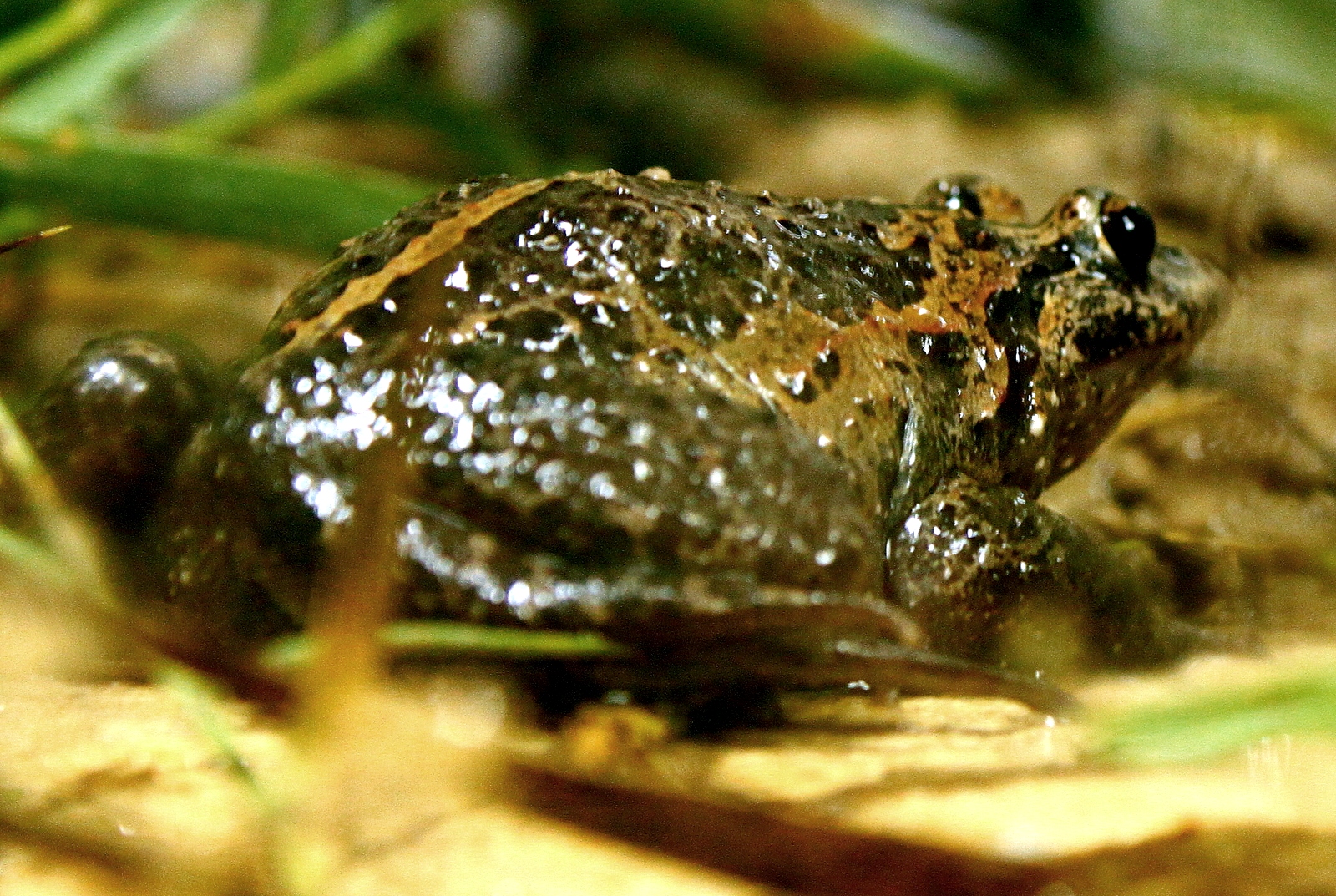
Classified as “Critically Endangered” by the IUCN despite its rediscovery, the Hula painted frog teeters on the brink of extinction due to numerous threats [6]. Wetlands across Israel are being drained for agriculture, urban development, and in an attempt to prevent the spread of malaria [1]. This has led to a decline in the frog’s natural habitat and reduced breeding sites, weakening the overall population. Additionally, large invasive predatory fish like Western mosquitofish and larger frog species prey on both frog eggs and tadpoles, causing devastation to the Hula painted frog population [3]. Pollution from waste, oil spills, and pesticides also has played a significant role in the frog’s decline, disrupting its breeding and feeding behaviors [3]. However, with concerted efforts towards habitat restoration, invasive species control, and public awareness, there is hope for the survival of this threatened species.
Feature photo by Uzi Paz [Source]
Written by: Assaf Levy is the Founder & CEO of BioDB.com – a group tasked with collecting conservation data, raising awareness for biodiversity loss and fundraising.
References:
[1] Hance, J. (2011, November 21). Extinct frog rediscovered in Israel. Mongabay Environmental News. https://news.mongabay.com/2011/11/extinct-frog-rediscovered-in-israel/
[2] Biton, R., Geffen, E., Vences, M., Cohen, O., Bailon, S., Rabinovich, R., … & Gafny, S. (2013). The rediscovered Hula painted frog is a living fossil. Nature Communications, 4(1), 1959.
[3] Perl, R. B., Gafny, S., Malka, Y., Renan, S., Woodhams, D. C., Rollins-Smith, L., … & Vences, M. (2017). Natural history and conservation of the rediscovered Hula painted frog, Latonia nigriventer. Contributions to Zoology, 86(1), 11-37.
[4] BirdLife International. (2017). Halcyon smyrnensis (amended version of 2016 assessment). The IUCN Red List of Threatened Species 2017: e.T22725846A119289544. https://dx.doi.org/10.2305/IUCN.UK.2017-3.RLTS.T22725846A119289544.en. Accessed on 15 September 2023.
[5] Mendelssohn, H. & Steinitz, H. (1943). A new frog from Palestine. Copeia, 1943(4), 231-233.[6] IUCN SSC Amphibian Specialist Group. (2021). Latonia nigriventer. The IUCN Red List of Threatened Species 2021: e.T6715A177694004. https://dx.doi.org/10.2305/IUCN.UK.2021-3.RLTS.T6715A177694004.en.
[Edited by Alice Michel and Jacob Johnson]
 theethogram.com