Do you behave exactly the same at work versus at home? In most cases, you adjust your behavior to suit the environment you are in. When you go to work, you probably change out of your pajamas and don’t watch as much TV. Your ability to adjust your habits from one environment to another is a form of behavioral plasticity. Behavioral plasticity underlies many important phenomena in animals as well.
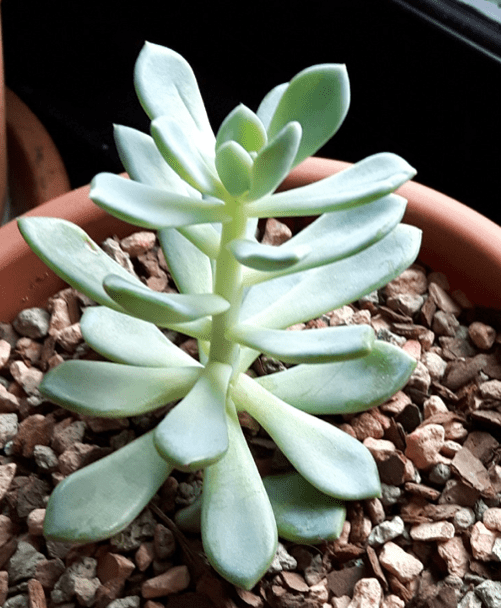
Formally, plasticity is the ability of one genotype to express multiple phenotypes. A genotype is the genetic makeup of an individual; it’s what’s in your chromosomes. A phenotype is an observable characteristic of an individual, like your height. For example, let’s say you take two cuttings from the same potted succulent. Because they come from the same exact plant, they both have the same genotype. You then plant them in two new pots and grow them under different lighting conditions. The one in the brighter light might grow more quickly and have denser leaves, whereas the one in the dimmer lighting might grow more slowly and have a ‘stretched’ appearance as it reaches for the little amount of light it receives. Even though they have the exact same genes, these two plants would look quite different side by side! The same genotype has grown into two different phenotypes because of the environments they were in.
Animals, including humans, exhibit plasticity when their behaviors change in response to changing environmental conditions. A rabbit might decrease their activity in response to a predator. Or birds might sing more in response to the days getting longer in spring. Or, you might stay up later on the weekend versus a weeknight. How a single plastic behavior evolves and affects the evolution and ecology of animals has been of interest to scientists for a long time [1].
However, animals rarely exhibit plasticity in just one behavior. When the days get longer in spring, birds might start singing and building nests, but they also might get more aggressive and territorial. A recent review by PhD student Kirsten Sheehy and faculty member Kate Laskowski delves into the potential drivers and consequences of correlated behavioral plasticities [2].

Their goal was to synthesize insights from several different fields and to suggest promising avenues of research for the future study of correlated behavioral plasticities. It is not surprising that animals can adjust multiple behaviors at the same time. However, identifying patterns of correlation may help generate testable hypotheses about the mechanisms which underpin these correlations. Similarly, this may help us better understand how correlated plasticities come to exist and how they may affect evolution.
In addition to outlining the potential drivers and consequences of correlated plasticities, their review highlighted some promising avenues of research and methodologies. For example, they suggest that behavioral plasticities are likely to be important in social contexts, such as sexual signaling. Additionally, the authors highlight the increased use of automated tracking software, which allows researchers to collect high resolution tracking data on multiple behaviors. These high resolution datasets will be important for disentangling correlated plasticities.
Overall, the authors hope that this review sparks interest in correlated behavioral plasticity. You can read the review in a recent Special Issue in the journal of Animal Behavior here.
Kirsten Sheehy is a PhD student in the Laskowski Lab at UC Davis. She is excited to be using the Amazon molly as a model organism to explore behavioral plasticity.
References:
[1] West‐Eberhard, M. J. (2003). Developmental plasticity and evolution. In Oxford University Press eBooks. https://doi.org/10.1093/oso/9780195122343.001.0001
[2] Sheehy, K. A., & Laskowski, K. L. (2023). Correlated behavioural plasticities: insights from plasticity evolution, the integrated phenotype and behavioural syndromes. Animal Behaviour, 200, 263–271. https://doi.org/10.1016/j.anbehav.2023.04.007
 theethogram.com