Every undergraduate begins their college education expecting to gain knowledge, but gaining hands-on experience in the field is just as important as learning in the classroom. In the biological sciences, undergraduate access to field research can be limited and highly sought after. It’s a prized jewel that many students yearn for. Reaching my final year as an undergraduate in Animal Science with plans to pursue graduate school, I was one of those students seeking experience doing field research. The summer after my junior year, after interning with several on-campus research projects, I was lucky enough to be given the opportunity to join PhD candidate Jessica Schaefer as a field assistant studying Spotted Sandpipers (a type of shorebird) in the Mono Basin.

Photo Source: Liv Rodriguez
I felt like I was handed the Olympic torch, flames of potential in the palm of my hand! I was elated, then soon petrified. I had the chance not only to assist with Jessica’s ongoing research, but to propose a research project of my own… Except I had no idea what to research! I felt clueless. As an undergraduate, I was not in the habit of freely thinking and questioning; my experience with developing research questions came from class projects where there was some goal or grade attached to my brainstorms, making them much more systematic than I would like. Now that I was freed from the shackles of a rigid rubric, I was left with the stalemate of “choice Paralysis.” Of course, the panic began to set in… if I wanted to make it in academia, shouldn’t I know what types of questions to ask?! Looking back on this, I realized I had overly high expectations of myself, but at the time I was spiraling.
So, I got onto my computer and went back to the fundamentals. I did background reading on Spotted Sandpipers, mating systems, and competition, and I dove into scientific papers until I was truly invested in what these little shorebirds had in store for me. My main scientific interests are competition and sexual selection. What was mind boggling to me was that the papers I found on competition, particularly in Spotted Sandpipers, had nothing on how competition was actually conducted! Furthermore, sexual selection has been so well-studied in the broader avian world, it was strange to me that the topic was barely touched in this species. The best part was that Spotted Sandpipers are polyandrous, meaning the females mate with multiple males and compete with one another for mates, taking on the roles typically performed by male birds. This unusual aspect of their behavior was the perfect idea to focus on. I started to incorporate my fascination with acoustics, which was fostered by working with PhD candidate Alice Michel and her research on gorillas in the Democratic Republic of the Congo. Spotted sandpipers are not songbirds, so their calls have been overlooked by researchers, probably because they have not made the Top 100 Hits list. Even though Spotted Sandpiper calls are not as elaborate as those of most songbirds, I was interested to find out more about how they use their vocalizations to potentially compete for and attract mates.
This was it! I had finally come up with a research question that combined my love of competition and focused on an “unusual” mating system in a type of bird that was not super well studied. I then drafted and submitted a proposal that combined all of my ideas and seemingly laid out a plan for my upcoming field season.
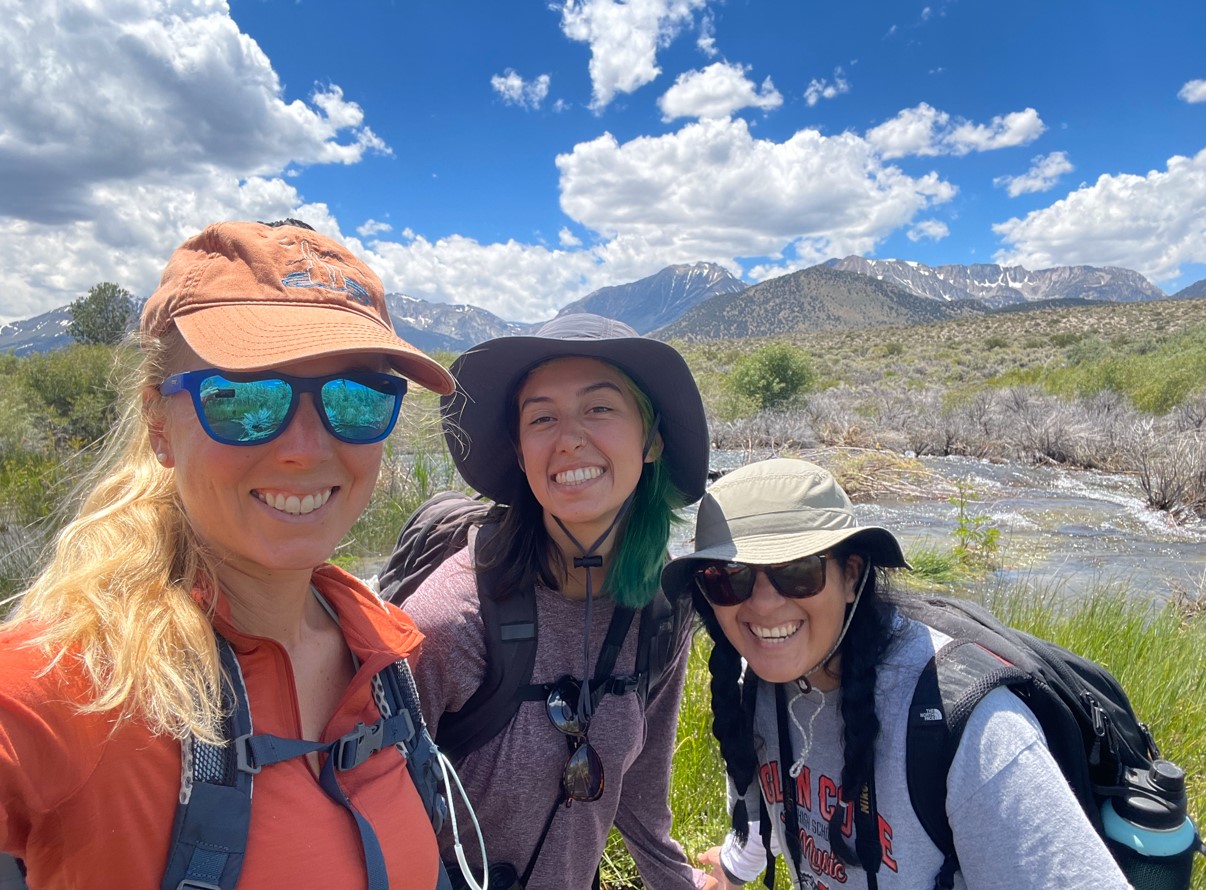
Photo Source: Liv Rodriguez
That was until I got into the field. The most glorious, well thought out research proposal was squashed by the enormous foot of the quarter system; apparently, sandpipers don’t wait for finals to finish before they start breeding. I arrived at the field site just as the birds were starting to nest, so I had missed the period in late spring when they vocalize most frequently to attract mates. Then and there, I had to return to square one and rethink my entire proposal. I was devastated. I arrived in Lee Vining 48 hours prior and had no idea what questions to ask. My very wise mentor told me to just observe the birds and give it time. I was skeptical, but seeing as I was the one here with absolutely zero experience, I took her word for it.
As the days passed on, I understood what Jessica meant by “giving it time.” With time and observation, you are able to see all the idiosyncrasies that scientific papers do not quite express. The methods and results sections will never tell you how some of the sandpipers end up having middle parts in their feathers, or how Sandpipers and Killdeers (another shorebird species) seem to nest near each other in certain areas. Spending time in the field, observing animals daily in their natural habitat, was like piecing together a puzzle that creates the landscape of a Spotted Sandpiper’s life in my mind; learning how they manage to survive and breed when so many odds are against them was a light to my curiosity’s flame.
Soon after I arrived, the dam of questions broke, ideas for potential projects rocketed through my mind, and it was hard to pick just one. Why do Killdeers nest so closely to the Spotted Sandpipers? Is there any benefit to either party? Are the calls they make context dependent? Why do some parents tend to freak out at the slight creak of a twig, while others are fine with aliens (i.e., researchers) abducting and drawing blood from their young? So many questions pestered my mind, which meant they pestered Jessica during our long hike back to the car. All these seeming patterns that came to light just by being in the field piqued my interest, to say the least.
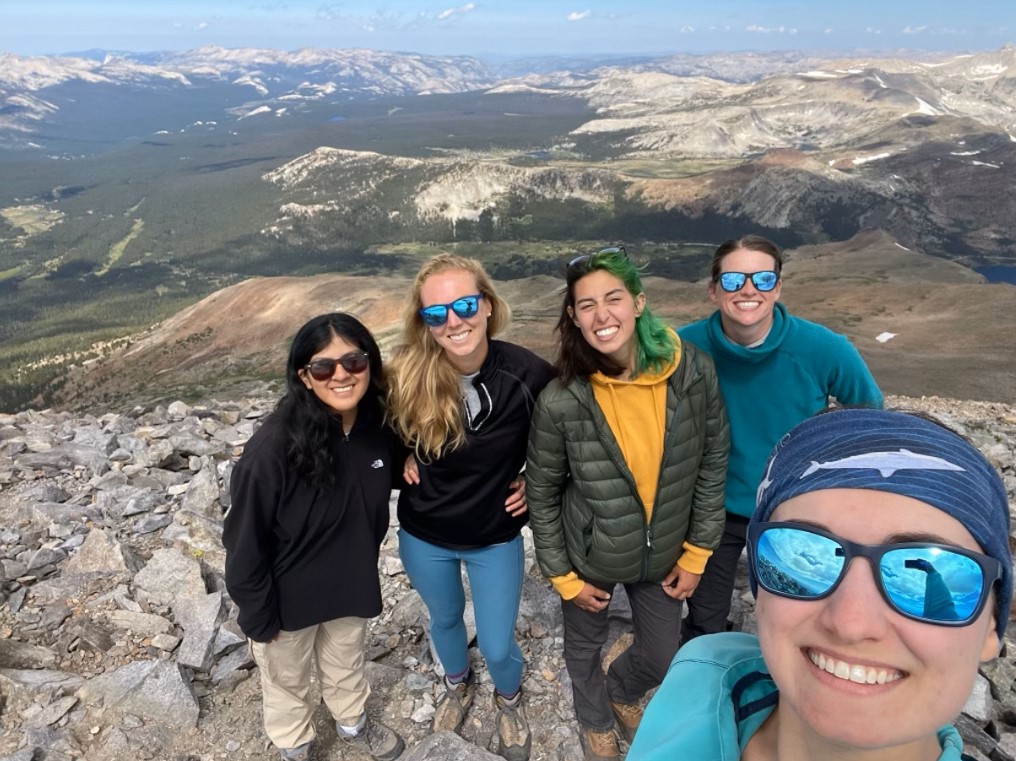
Photo Source: Liv Rodriguez
Over the summer I also met other researchers from all over, which meant I was able to pick their brains about their research. Seeing how others viewed the natural world opened even more avenues of study. These people were so kind in offering their advice about conducting research and their unique paths to graduate school. The academic process of research seems so clean cut from an outside perspective, when in reality it is just as messy as our field work. New people and surroundings have a way of opening one’s eyes to new questions that could not have come from just reading textbooks. I learned this from the sandpipers, and also from the people around me. None of the setbacks I faced during this field season mattered, in light of everything I gained by asking questions. I feel even more prepared for this next chapter of learning with my newfound ability to ask questions. We may never know everything about this world, but by asking questions we can get closer.
Liv Rodriguez is a senior Animal Science student who has an emphasis in Animal Behavior. She is interested in how animals in different mating systems compete using acoustics. She currently works with Jessica Schaefer on Spotted Sandpipers and their mating systems, and with Alice Michel on Gorilla chest beat acoustics. She plans on continuing her research in acoustics through graduate school once she graduates.
[Edited by Cassidy Cooper]
 theethogram.com