“I wish that the general public knew that any single scientific undertaking is a wonderful human adventure. It connects people from different cultures, different backgrounds, different interests, and so on. It brings joy, stress, pain, frustration, and satisfaction. This is real life, where things do not always work as expected. The challenge is to find a way to achieve our goals in all circumstances. Passion, perseverance, and agility are key to successful research.” – Inza Koné [1]
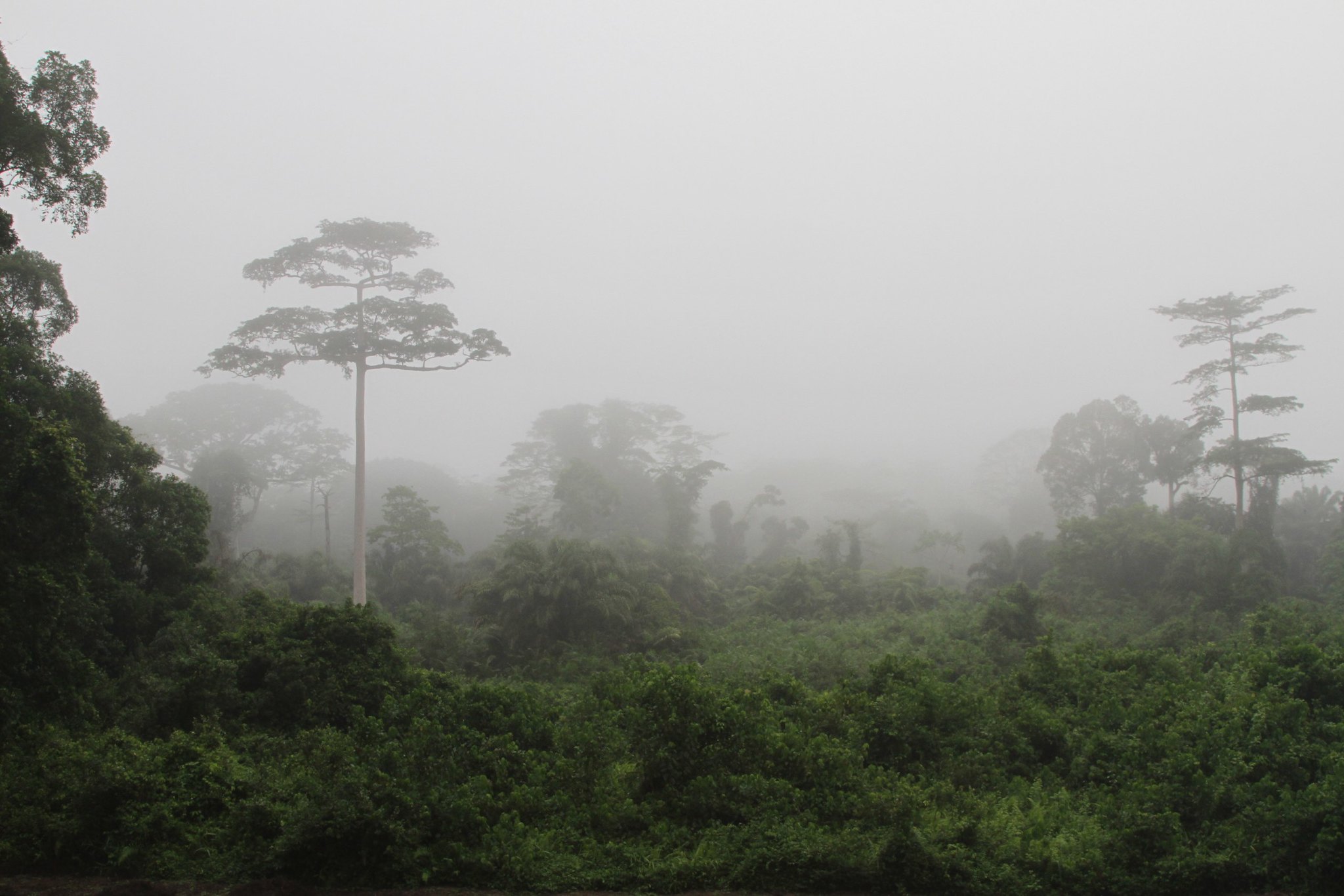
Growing up in Còte-d’Ivoire, Inza Koné’s father gifted him a baboon named Kouassi to keep him company [1]. Kouassi quickly became his best friend and taught him about the emotional maturity of primates. Despite their strong bond, living with Kouassi proved challenging as the baboon grew. He became difficult to take care of and the nearest zoo was too far away for rehoming. Seeing no better options, Koné’s father chose to euthanize Kouassi, a decision that felt traumatic for Koné, as he realized Kouassi should never have been taken from the wild. Because of this, he focused on studying how to protect primates in their natural habitats and formed a deep connection to them, fueling his research.
Now, Inza Koné is a Professor of Conservation Biology at the Université Félix Houphouët-Boigny in Abidjan, Côte d’Ivoire, where he attended university. In addition to his academic role, he has also been the Managing Director of the Centre Suisse de Recherches Scientifiques (CSRS or the Swiss Center for Scientific Research) since 2018 and is a part of multiple other organizations [1, 4]. The scope of his research is broad, but mainly focuses on primate conservation and natural resource management in the Taï Forest in West Africa [1]. Koné has received many awards in his career, including the Future for Nature Award in 2009, the Whitley Award for Nature Conservation in 2012, and the National Research Award in 2020 [1]. His work spans many species of primates, but perhaps most notable is Koné’s conservation work with colobus monkeys.
Inza Koné sought to understand the impact of commercial hunting on monkeys in the Taï National Park of Côte d’Ivoire. Primate meat is a favorite food in the area, making up 25–40% of total wild meat in restaurants in different parts of the Taï. Larger primate species are preferred as meat, which means red, white, and black colobus monkeys and mangabeys are the most impacted [2]. In collaboration with the scientist Johannes Refisch, and focusing on colobus monkeys, Koné found that harvesting of monkeys for food in the area was not sustainable for four out of the five species studied; harvesting of the fifth, the red colobus monkey (Procolobus badius), was not far off from being unsustainable [2]. These conclusions were based on harvesting data from wild meat used in restaurants in the area; the researchers compared harvested numbers to the estimated population size and growth rate of each species, and found that the current harvest far exceeded sustainable levels for these populations.
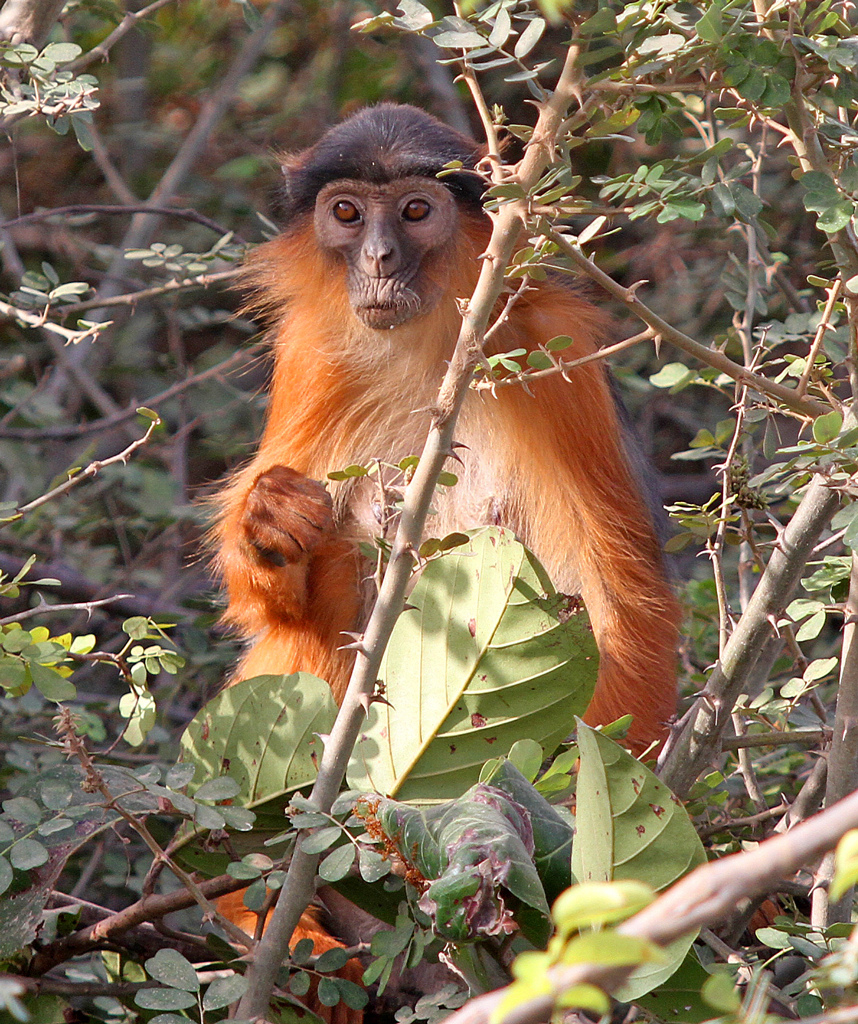
At another location similar to the Taï Forest, the Tanoé-Ehy Forest, Inza Koné sought to create a protected area for primate conservation. This forest provides habitat for rare species of primates such as the nearly (or possibly fully) extinct Miss Waldron’s red colobus (Piliocolobus badius waldronae), white-thighed colobus (Colobus vellerosus), and others [3]. The Tanoé-Ehy forest and wetland are threatened by unsustainable land use, including oil palm farming and chainsaw milling, and many monkeys were killed for bushmeat by local communities. An increased level of community and company involvement led to more awareness of the threats of oil and poaching, leading to new bylaws and committees whose purpose was to slow down or stop these practices. Despite these efforts to protect the Tanoé-Ehy, the project of turning it into an official community-managed protected forest has been held back by a lack of funding [3].
With a focus on conservation, Koné aims to bring awareness to lesser-known areas in need of protection. Koné’s origins provide a non-Eurocentric perspective on primatology and allow him to bring unique and valuable ideas to the field. Growing up in the place where he now works, with animals and land he feels a strong connection to, Koné surrounds himself with the nature that he studies and keeps wildlife and his community close to his heart. Continuing to learn from and about researchers from more diverse backgrounds will provide a deeper understanding of the intricacies of wildlife and the people who live alongside it.
WANT TO LEARN MORE ABOUT THIS SCIENCE HERO?

Have a Young Explorer who would benefit from knowing this Science Hero? Head over to the Sci Hero column on Animal Adventure Thursdays for printable Sci Hero Trading Cards featuring the Sci Hero’s “origin story” and super powers.
Q & A with Inza Koné from Current Biology, on his path to becoming a scientist.
Website of the Taï Chimpanzee Project, which promotes research and conservation of chimpanzees and other non-human primates of the Taï National Park.
Isabella Markell (she/her) is a senior at UC Davis, majoring in Design. While her career focus is on sustainable design, she has always had a deep love and understanding for animals. An Intro to Primates class in her junior year sparked an interest in the cognitive behavior of primates and the closeness that humans share with them, as well as the sustainability efforts of lesser-known primatologists. With this article, she wanted to raise up the voice of a scientist in need of more recognition, and all of the fantastic work that he has done and continues to do today.
References:
[1] Q & A: Inza Koné (2021). Current Biology, 31(17), R1022–R1024. https://doi.org/10.1016/j.cub.2021.07.068
[2] Refisch, J. & Koné, I. (2005). Impact of Commercial Hunting on Monkey Populations in the Taï region, Côte d’Ivoire. Biotropica, 37: 136-144. https://doi.org/10.1111/j.1744-7429.2005.03174.x
[3] Koné, I., Ouattara, K. & Koffi, D. A. (2015). A top priority site for primate conservation in Côte d’Ivoire soon designated as a protected area? African Primates, 10: 59-60. https://doi.org/10.1016/j.cub.2021.07.068
[4] Inza Koné (2020). Future For Nature. futurefornature.org/ffn_winner/inza-kone/
[Edited by Jessica Schaefer and Abigail Morris]
 theethogram.com