I remember getting the acceptance email, offering me a position as a research assistant, on a late January night. It was the type of silence in the house you only achieve when the world is asleep…until I shouted in excitement and scared my brother who was sitting next to me. That was the first note that began the song of what would be my journey of Mono Lake.
Fast forward to the end of May 2024 when I arrived in California and met Jessica, a PhD candidate studying Spotted Sandpiper reproductive behavior, for the first time in person. I was excited for the long four hour drive ahead of us to reach our final destination: Mono Lake, a large saline lake in the Eastern Sierra Nevada mountains. It’s through this drive I asked and learned a lot: how’s the weather at our field site? What’s a typical day of field work like? Why are Spotted Sandpipers the animal to study? Is it hard to adjust to the altitude, are we really getting up at 5 AM? . . . and more. But the key introduction made on this drive was the music playing from our field car stereo, which would play on many other drives that summer; to our different field sites, to the lovely town of Mammoth, to Yosemite National Park, to other field stations, and eventually back to the airport. So to aid reading during this next section as I delve more into my first experience of field work, I suggest listening to “Ultralife” by Oh Wonder or “Shake It Out” by Florence + The Machine (as we did for every early morning commute to begin the field day).

As the drive came to a close, I caught my first glimpse of Mono Lake through the car window. My first thoughts were this is HUGE and noticing how everything around the lake seemed to be both still yet alive. I was fortunate enough to see this lake up close (wading in it and admiring the brine shrimp) and from far away (from an elevation of 13,000 feet). From far it really just looked like a picture with still water and a quiet serene presence. But as you focus in, you begin to see the interactions with and caused by the lake. It was brimming with life and sounds that compiled into the music of Mono Lake.
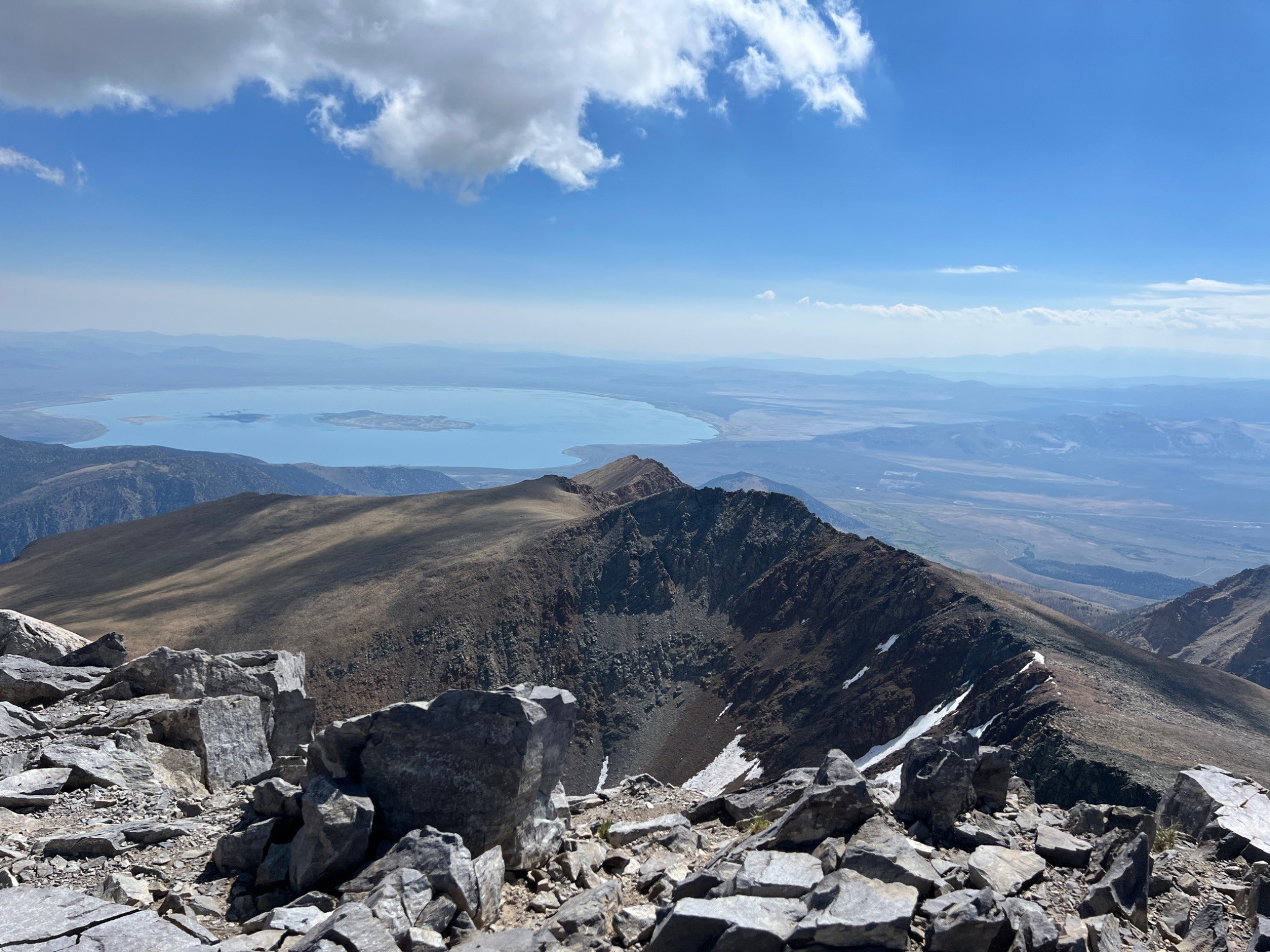
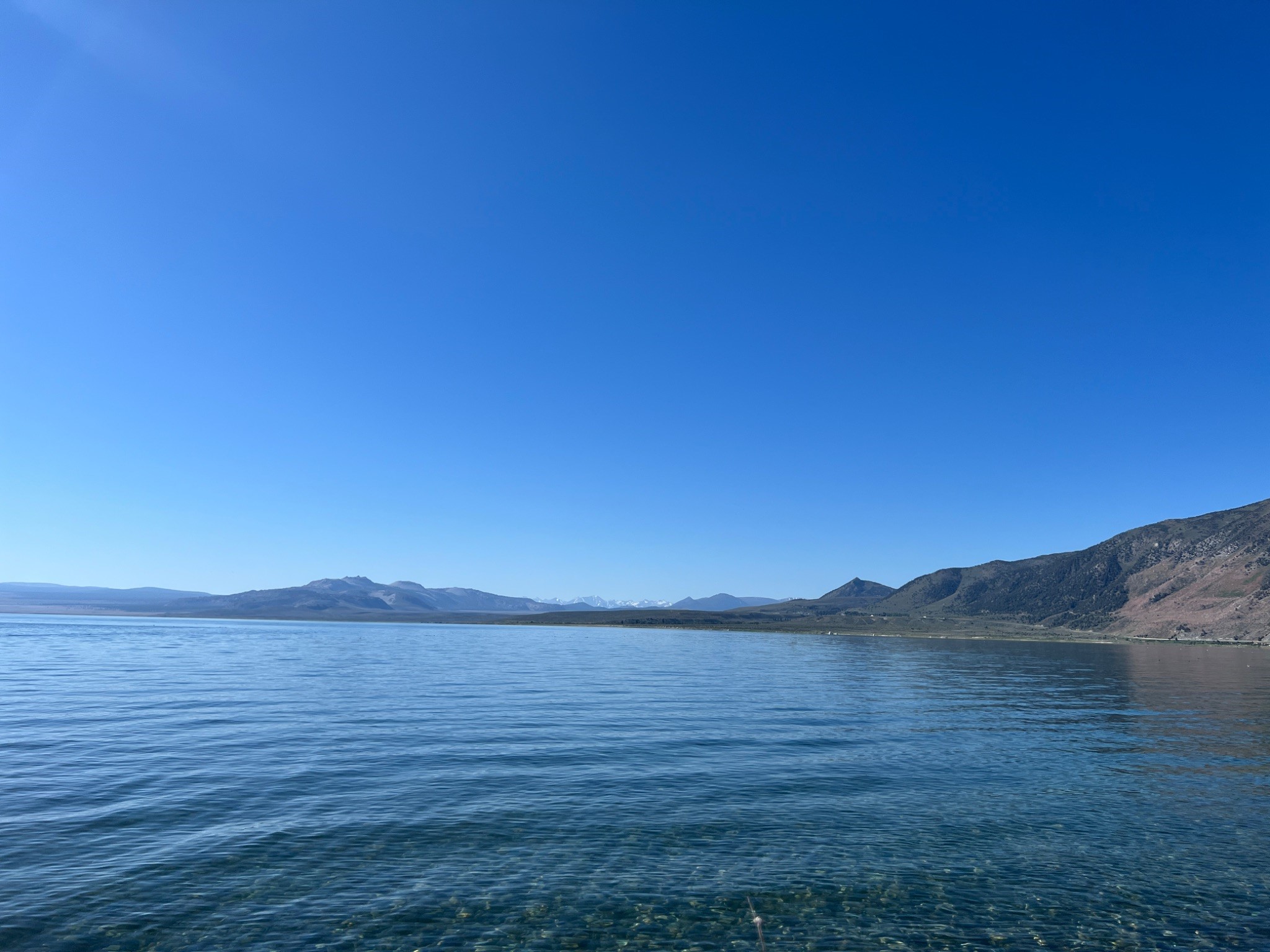
As previously mentioned, Jessica’s research is on Spotted Sandpipers (Actitis macularius) aka spotties and our goal was to explore how environmental conditions (food abundance, habitat composition, predation) affect their mating and parental behaviors. Spotties, a type of shorebird, are unusual in that they exhibit polyandry, a mating system where a female mates with multiple males, and males perform the majority of parental care [1]. To study their behavior, we observed spotties at their breeding sites in the Mono Basin at two primary field sites, called Rush Delta and Bottomlands. We occasionally visited a third site called Mill Creek, which had a beautiful view of Mono Lake. I, along with Olivia Rodriguez, a senior at UC Davis majoring in Animal Science and minoring in Anthropology, worked with Jessica as research assistants along with many special guests that would join us on our field excursions. Our tasks consisted of mist netting (a method of capturing birds for tag and release), finding and checking for nests, observing spotties, noting behaviors, assisting with blood sampling, bushwacking, and catching spottie chicks. Think of these tasks like instruments that allowed this song of Mono Lake to come alive.
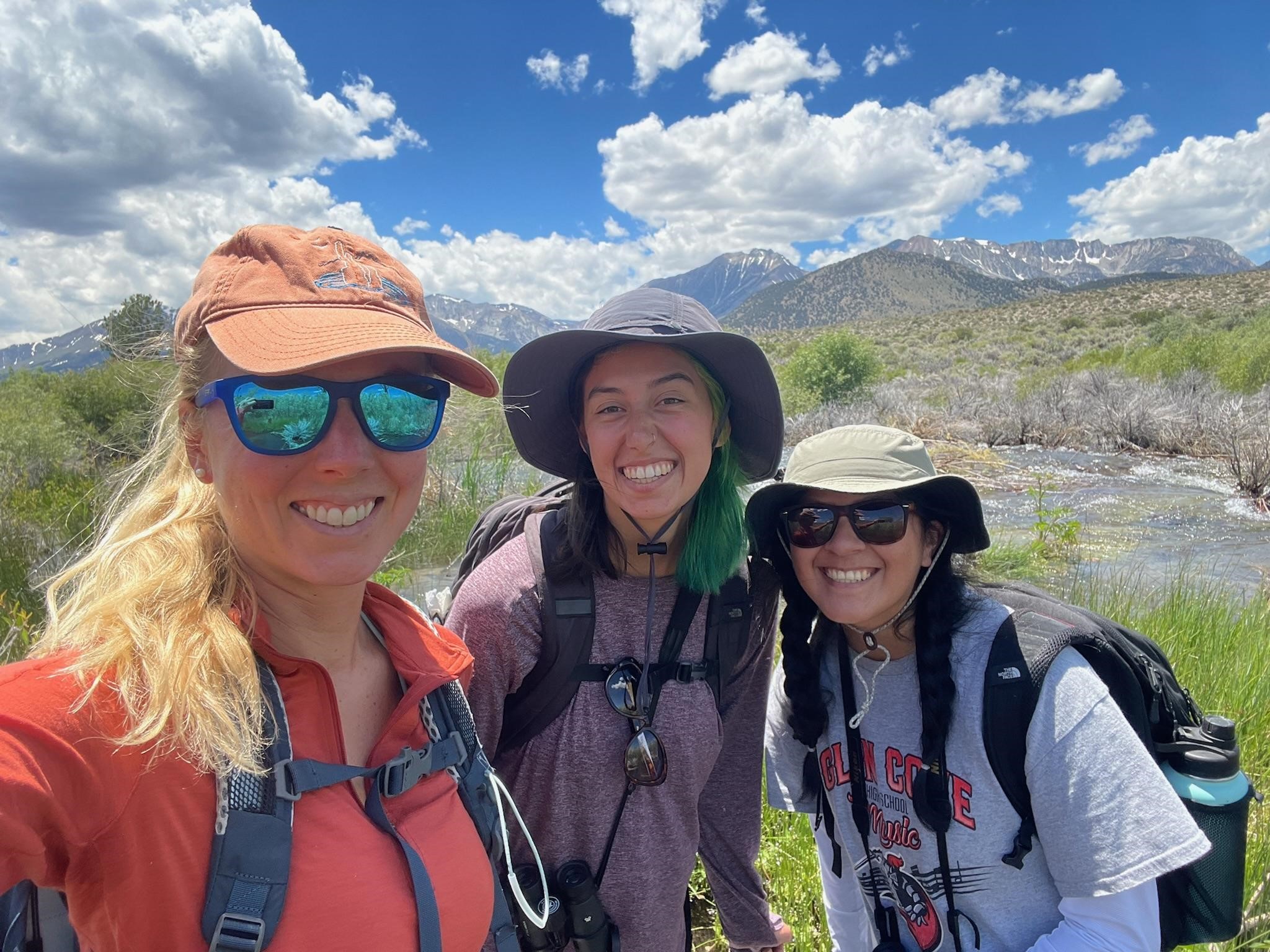
The first site I had the pleasure of exploring was Rush Delta. The only sounds heard came from animals and plants. A Killdeer’s rapid dee dee, a Mourning Dove’s coo coo, a Spottie chick’s peep peep peep, and a Virginia Rail’s kiddik kiddik; all of these and more created the harmony. Thus if Rush Delta provided the melodic voices, the second site we visited, Rush Bottomlands, provided the foundation of this song. The intense rushing of the stream hitting against logs, the maneuvering through tall marsh grass, constant fight against the mud and your shoe; the sounds formed a grounding and rhythmic earthy tone, intertwining with the voices of Rush Delta.
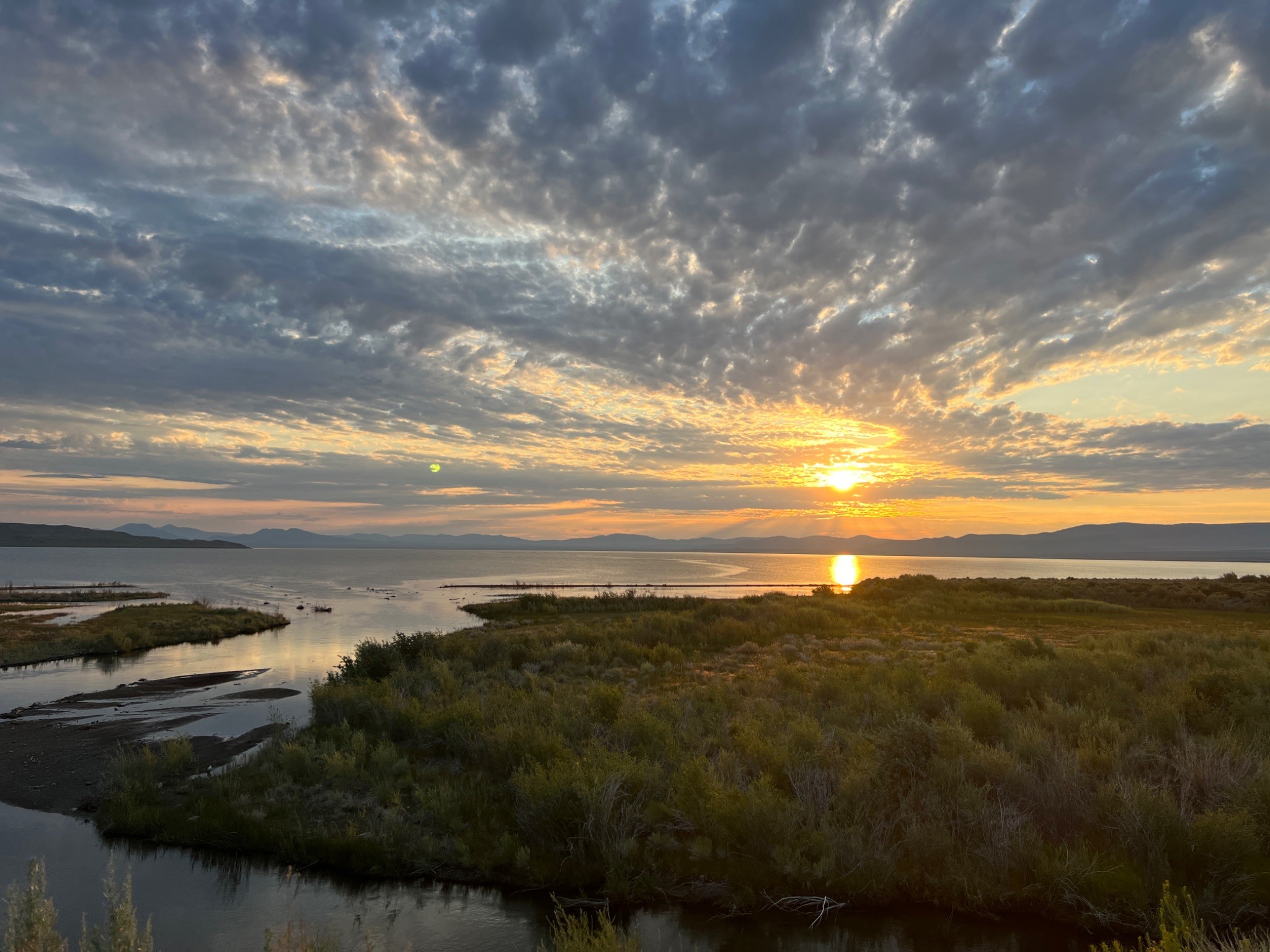
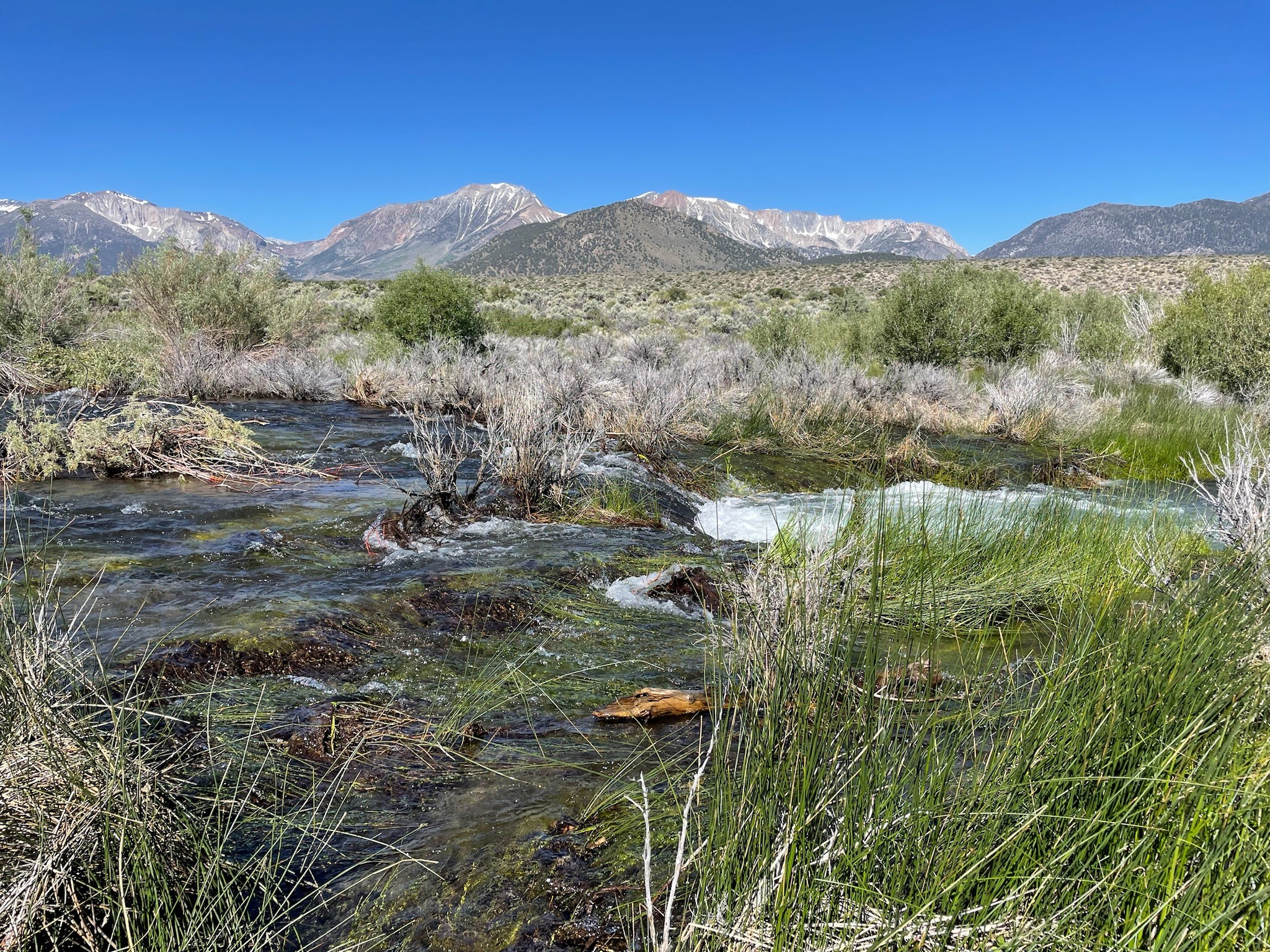
Looking back on it now, each morning when we set our plan for the day, we were unknowingly conducting and composing the score for this grand movement of the Mono Lake symphony. On days we decided to focus on mist netting, crouching in a bush silently for hours, we would gather the notes of Spotties, other unlucky birds that were caught in our net (Yellow Warblers and Violet-green Swallows did not have luck on their side) and of the birds around us. On days of exploring the terrain while observing where spotties hung out and searching for nests, we would bushwack (basically carving our own paths through grass or branches) our way to new locations and create a beat from our legs holding ground while crossing a rushing stream of water. On days of catching spottie chicks, we would gather a concentration of soprano-like notes. Our presence and actions directly impacted what sounds we’d hear as we moved through the landscape. Intertwining together with the wildlife, we conducted these sounds into a song that to me, captured the essence of Mono Lake.
Surprisingly though, I discovered more songs than just Mono Lake’s while there. I experienced the all-consuming intense song of Yosemite National Park, the lovely sweet summer song of Mammoth Lake, and the comforting heartwarming songs of Sacramento and Davis. After two months of becoming so comfortable with the music surrounding me during early mornings and hot afternoons, it was time for me to head back home.
It was a bittersweet moment, leaving my first taste of fieldwork, but I knew inside it wouldn’t be my last. Now back on the east coast in college, I still hear notes and symphonies from Mono Lake when walking to my dorm or even during class. There’s no way for me to play the song that Mono Lake and field work there created for me, but there is a real song that conveys the same emotions to me: “Bloom- Bonus Track” by The Paper Kites. I would like to thank Liv for making this connection as she reintroduced the song to me. I hope it gives you at least a hint of the wondrous feeling that Mono Lake gave to me.
Doris Serrano is a junior at Swarthmore College majoring in Biology and Medical Anthropology. She was introduced to field work through being a research assistant for Jessica Scheafer, a PhD candidate in the Animal Behavior Graduate Group at UC Davis, during summer 2024 working with Spotted Sandpipers and will be a research assistant in spring 2025 studying migration of shorebirds in Denmark.
[Edited by Cassidy Cooper and Clay Jones]
References:
[1] Maxson, S. J., & Oring, L. W. (1980). Breeding Season Time and Energy Budgets of the Polyandrous Spotted Sandpiper. Behaviour, 74(3/4), 200–263.
 theethogram.com