It was May 2024 and winter in Patagonia came early that year. The truck started to slowly drift sideways, no longer able to grip the once gravelly dirt road that had turned into sticky, squelchy wet clay after only an hour of barely drizzling. We got out and with a shovel or our bare hands scraped off the pounds of wet clay that had covered the truck’s wheels. So much mud had accumulated between the tire and the truck itself that the tires could no longer spin. We climbed back in and advanced another 50 meters before we had to repeat the process. At this rate it took us nearly 2 hours to get back to town, which was only 12 km away. Good thing that it wasn’t farther away, because the drizzle became a slight but steady rain and if we’d been just an hour later we might have had to leave the truck in the mud until things dried out almost a week later.
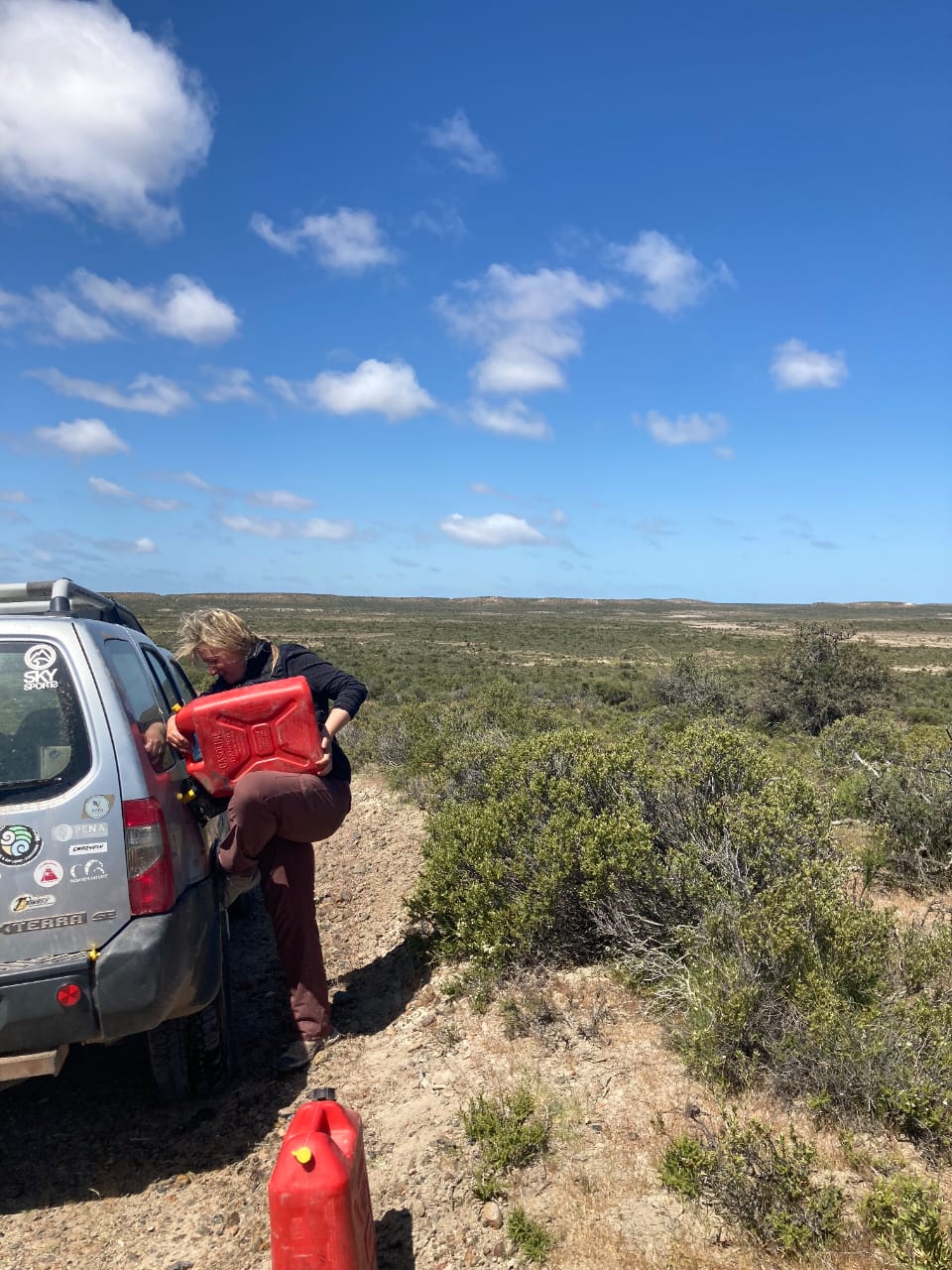
Photo Source: Olivia Feldman
Ironically, it was at my field site in coastal southeastern Argentina, part of the dry Patagonian steppe, that I learned to respect the rain and the mud it causes. In this corner of the world, rainfall averages 200mm a year [1]. It means my study area is pretty dry, but because the sediment throughout my study area is largely clay, even a light dusting of rain or snow turns the ground into wet cement, trapping vehicles. Before my first round of fieldwork in 2022, rain usually meant it was time to put on a rain jacket, cover my pack and keep walking unless there was lightning. But I quickly learned that if you stay out too long, the ground can go from soft and slippery to quicksand in just a couple hours, and in some areas in just minutes. On the reserve where I spent most of my time, I could walk to the main road within 10 km of most of the spots where I would set up camera traps, and NGO staff would eventually drive by. However, when I placed cameras out at the ranch, or when I went down little-used routes to reach ranchers for interviews, I didn’t have that same guarantee. And when there’s no cell signal or wifi, even being stranded 20 km from the field station or nearby town can be complicated.
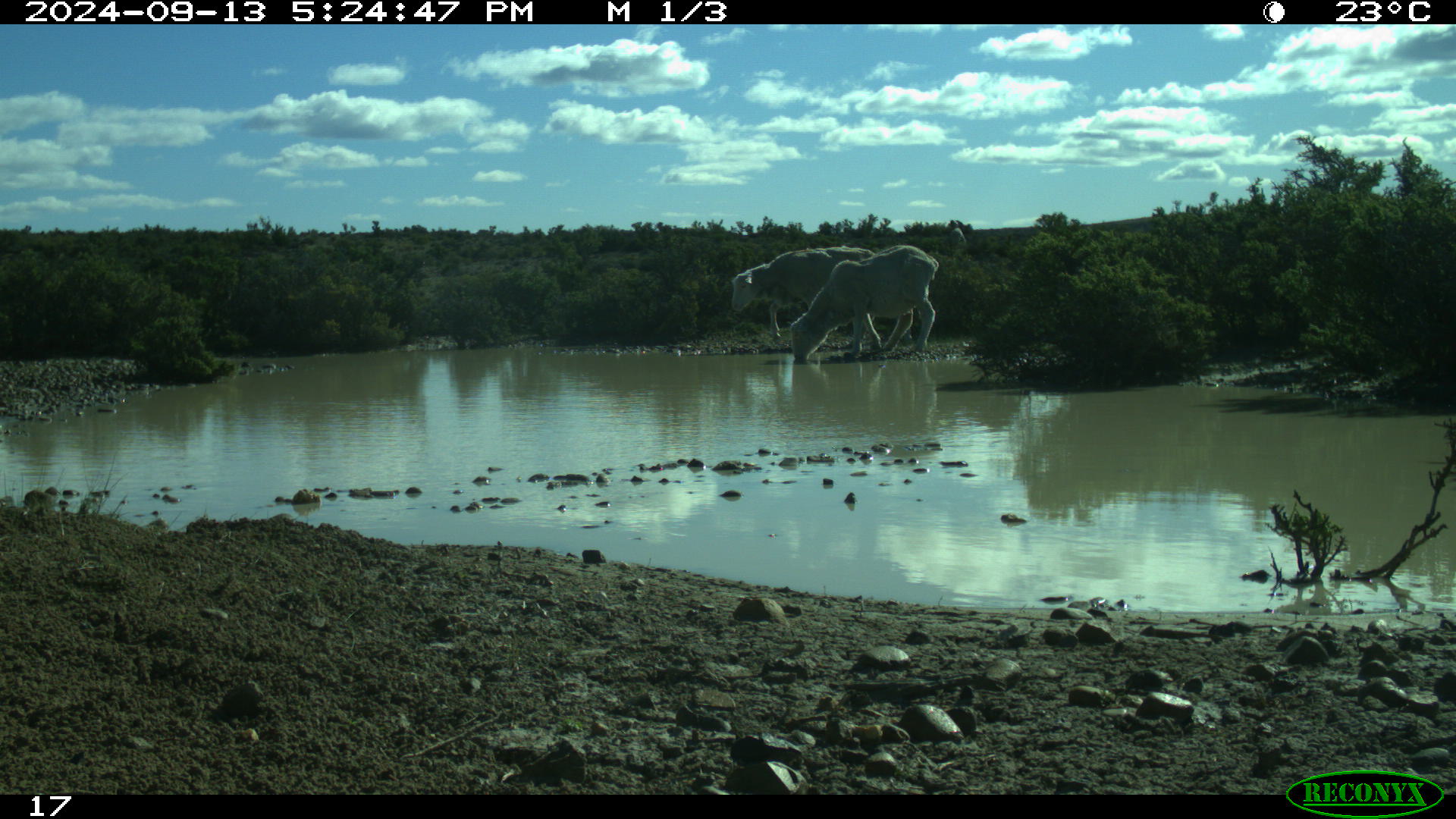
Photo Source: Olivia Feldman
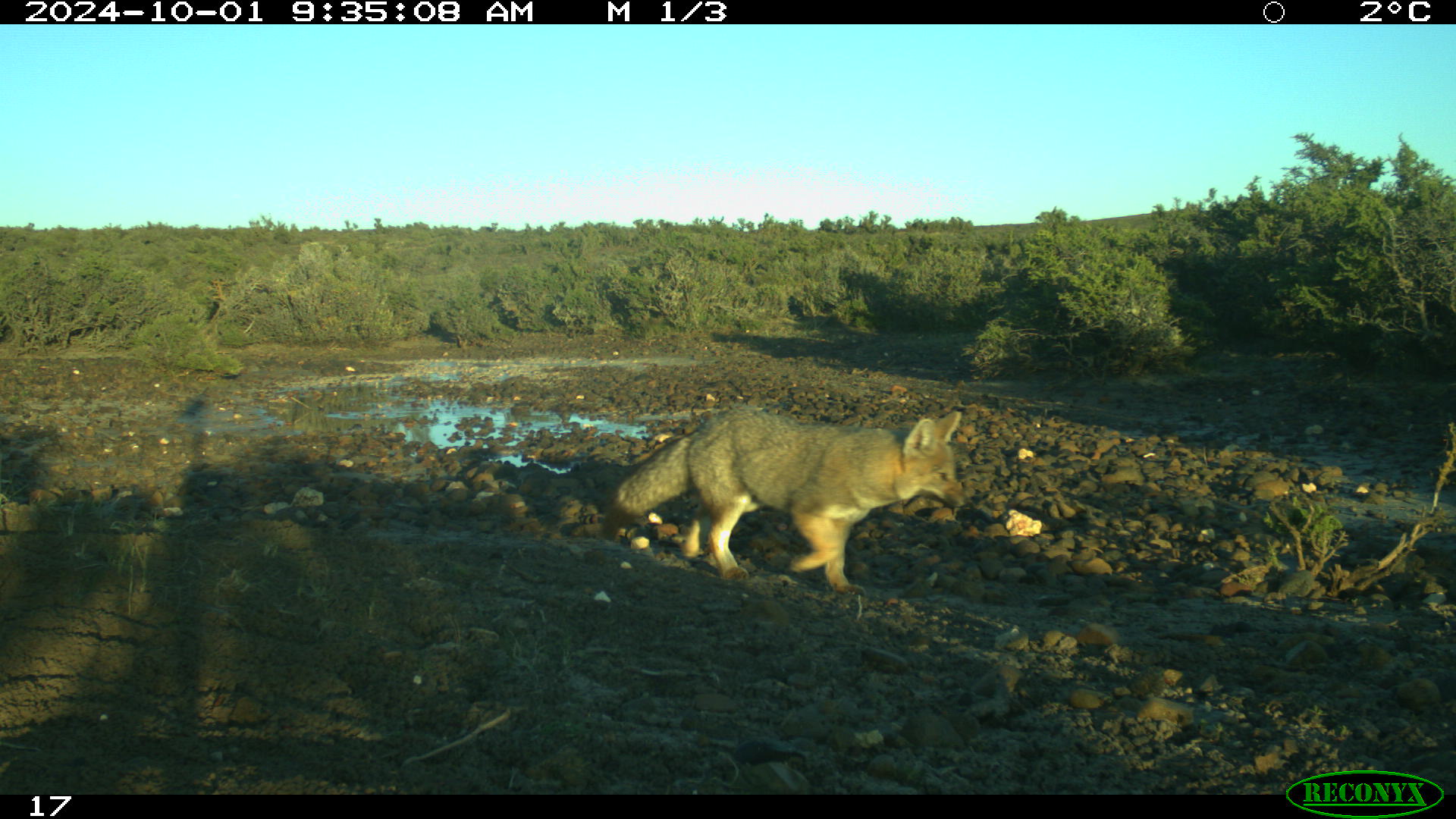
Photo Source: Olivia Feldman
So I learned to respect the rain, I learned to read the land, and most of all, I made mistakes and learned that getting stuck in the mud comes with fieldwork. The first time the truck got really stuck, it took several failed attempts to pull it out with two other trucks (which then also proceeded to get stuck) before a tractor came and rescued all three of us. The second time, I got cocky and got my brand new (to me) 4×4 stuck at the edge of a dried lagoon in the middle of summer – and it hadn’t rained in weeks. Turns out the clay is no joke, and only a few inches below the seemingly dry, cracked surface lay the squelching mud. That time, between patient, steady maneuvering, shoveling, and creating makeshift planks of rock and sticks, my tech and I managed to get the truck out on our own… after 4 hours of heavy work. And that brings me to the last time, when the truck was drifting and we barely made it back. That was because I made the call to put on our rain jackets and keep working because a light drizzle wouldn’t hurt us. I made this call after 2 years of working in the region. Sometimes you need to make the same mistake a few times before you really learn. It’s a part of fieldwork to have truck trouble, and it’s a part of fieldwork to learn how to manage it.
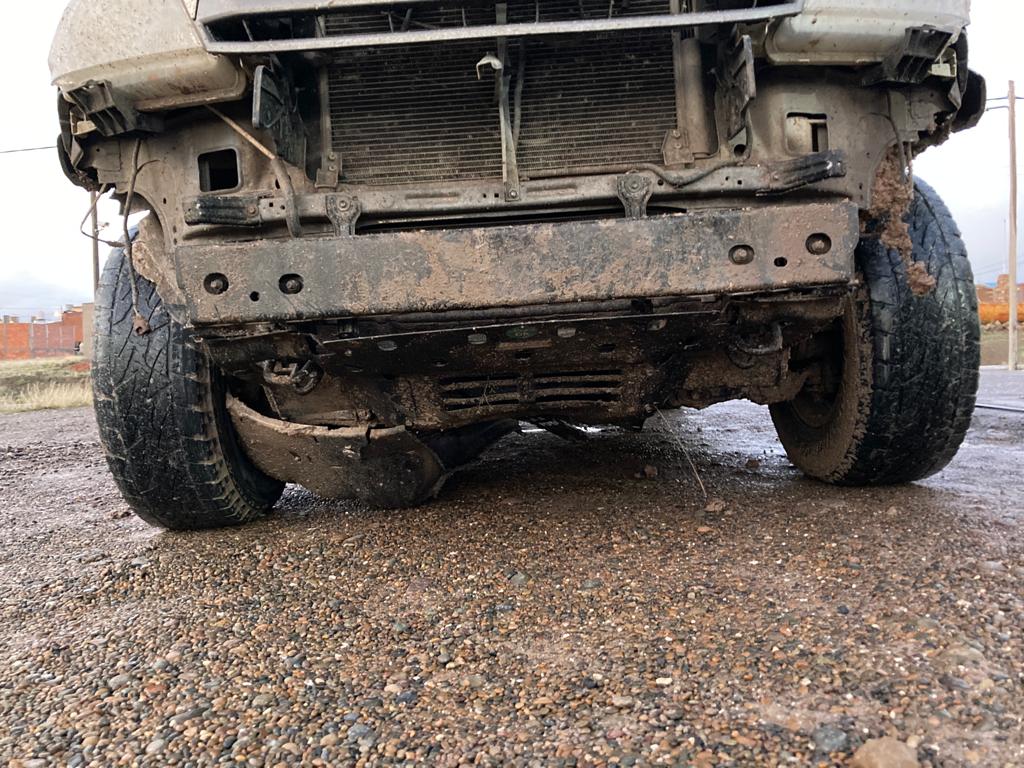
Photo Source: Olivia Feldman
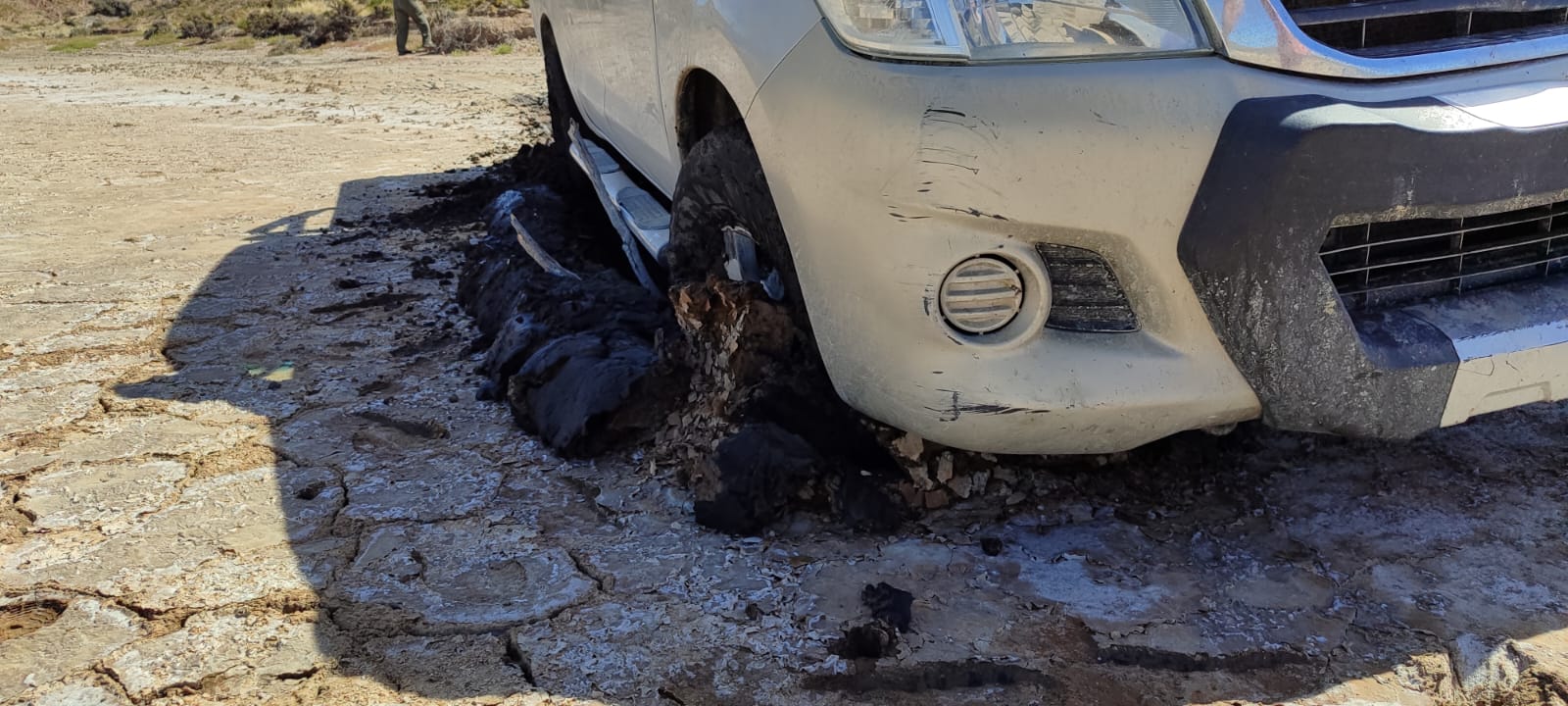
Photo Source: Olivia Feldman
Once you get this down in the field, you can finally appreciate that truck troubles and getting stuck in the mud can remind us to slow down and respect the realities of our natural terrain. These moments also remind us of the beauty of camaraderie, and in Argentina, getting stuck gave me many moments to appreciate the generosity of the many folks who taught me how to avoid getting stuck and when I did, helped get me unstuck.
Olivia Feldman is a PhD student in the Smith Lab. Olivia studies human-wildlife conflict between wild carnivores and Patagonian sheep ranchers in Argentina, and explores as much of Patagonia as she can in her free time. You can follow her on Intsagram @oli_felds or the adventures she and her partner and dogs get up to seeking out fossils, wildlife and abandoned ranches on Instagram @experiencia_patagonica.
[Edited by Clay Jones]
References:
1. Cabrera, Angel L. “Fitogeografia de La Republica Argentina.” Sociedad Argentina de Botánica XIV, no. 1–2 (November 1971).
 theethogram.com