Imagine a young boy combing the shores of Charleston, South Carolina, gathering seashells, his mind buzzing with questions about marine biology. That boy would grow up to be Ernest Everett Just, one of the most brilliant scientists of the 20th century. Born in 1883, Everett came into a world still reeling from the Civil War. His father died when he was just 4 years old, leaving his mother as the sole caretaker of their family. He attended a small school that his mother both founded and directed, work for which the community honored her for by renaming the town after her (Marysville, SC). Ernest showed signs of being a brilliant scholar at a young age, readily soaking up languages and science.
At the age of 12 Just left home to attend what is now called South Carolina State College, graduating at 15. He then headed North to attend Kimball Union Academy as the only Black student, finishing his coursework in a mere 3 years. He unsurprisingly excelled here, being selected to give the commencement speech, winning an orator contest, and editing the school paper. After his immense success, he was encouraged to apply to Dartmouth College. While at Dartmouth, his interests shifted from the Classics to Biology, and he graduated magna cum laude with a degree in Biology in 1907 and won the Grimes award for scholastic improvement.
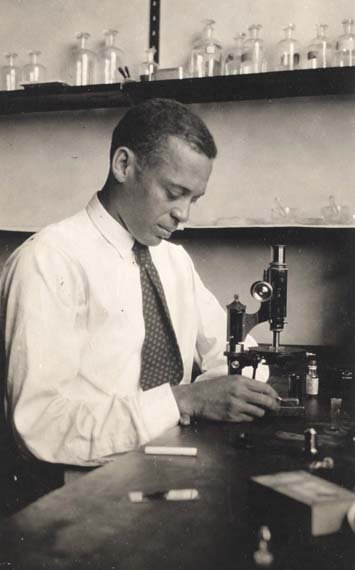
After graduating with his A.B., Just was offered a position at Howard University, working as a researcher and teacher in the English Department. His work at Howard would later earn him the Spingarn Medal of the NAACP, the organization’s highest honor, in 1915. In 1909, Just began teaching in the Biology Department at Howard, teaching physiology courses. His curiosity for science couldn’t be contained by the classroom, as Just yearned to do research in biology. He was recommended to Frank R. Lillie, head of the Zoology Department at the University of Chicago, who accepted Just as a researcher.
Under the guidance of Lillie, Just would quickly become one of the country’s leading biologists, performing research on sea invertebrates. Every summer starting in 1909, Just immersed himself in the world of marine biology, spending his time fertilizing sea urchin eggs, watching them divide, and taking careful notes. His first publication on the topic, “The relation of the first cleavage plan to the entrance point of the sperm,” attracted the talk of some of the most distinguished scientists of the time, skyrocketing his reputation. He went on to publish more than 70 articles in his lifetime.
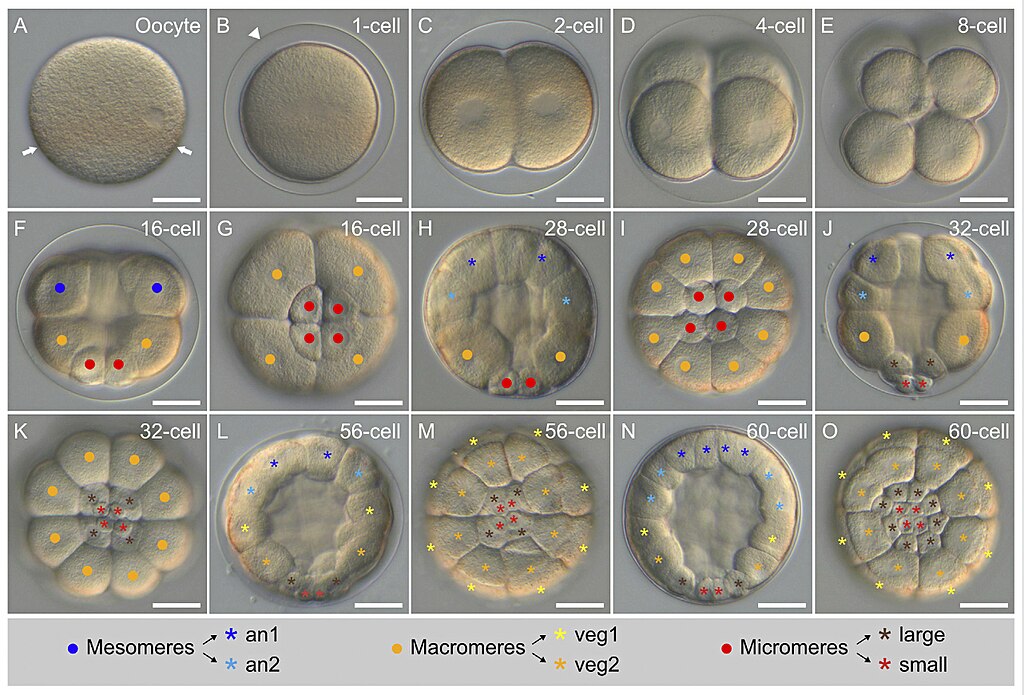
Just took a unique perspective in his studies of physiology and development. He believed that it was more important to study the whole organism in its natural state, rather than studying organisms in test tubes. He argued that we could better understand the way the cells operate in this way, which was a revolutionary outlook for his time. Just earned his Ph.D. from University of Chicago in 1916 with a focus on experimental embryology, but despite all of his success, barriers in academia and the world remained.
Dr. Just decided to journey across the Atlantic in 1929 to Stazione Zoologica in Naples, Italy, to continue examining the sea urchin, this time looking at fertilization and cortical changes (i.e., changes to the nervous system). Immediately following this, he received an invitation from Kaiser-Wilhelm-Institut in Berlin, Germany, to work with embryologists and study the amoeba ectoplasm (the outer layer of the cytoplasm of amoeba cells that is associated with movement). Dr. Just continued his work in pre-World War II Europe, working in France during the 1939 Nazi invasion. He was briefly imprisoned, but thanks to the help of friends he was able to escape back to the United States, returning to Howard University. Sadly, Dr. Just became ill around the time of his return to the U.S. and died of pancreatic cancer at the young age of 58, in 1941.
Today, scientists celebrate the contributions of Dr. Everett Just to the field of embryology and cell biology. Countless schools, fellowships and awards have the honor to bear his name, and his story reminds us that science is more than just facts and formulas. It’s about persistence, passion, and asking big questions, no matter who you are or where you come from.
WANT TO LEARN MORE ABOUT THIS SCIENCE HERO?

Have a Young Explorer who would benefit from knowing this Science Hero? Head over to the Sci Hero column on Animal Adventure Thursdays for printable Sci Hero Trading Cards featuring the Sci Hero’s “origin story” and super powers.
Book: Black Apollo of Science: The Life of Ernest Everett Just by Kenneth Manning
Children’s book: The Vast Wonder of the World: Biologist Ernest Everett Just by Mélina Mangal
Check out various Museum Exhibits on Dr. Just at the University of Chicago, the Marine Biological Laboratory (Woods Hole, Massachusetts), and the National Postal Museum (Washington, D.C.)
Read our previous feature of Ernest Everett Just.
Isabelle McDonald-Gilmartin is a Ph.D. candidate in the Animal Behavior Graduate Group at UC Davis. She studies the abnormal oral behaviors that dairy cattle perform from calves to adults. She’s also broadly interested in the relationship between behavior and captive animal welfare.
Edited by Jessica Schaefer
 theethogram.com