Nelore cattle (Bos indicus) originate from Ongole cattle and are an indigenous breed from India. They were brought to Brazil in 1868, and are known for their distinctive hump on their back and high heat tolerance. As an animal used for beef, the female cattle are bred to produce calves. An experiment found that when they measured the estrous behavior (also called “heat”, the state of sexual receptivity where female cattle would accept mounting from a male) in Nelore cattle, they perform it for shorter amounts of time than European breeds and a lot at nighttime. This makes it more challenging to perform artificial insemination on the females compared to other types of cattle.
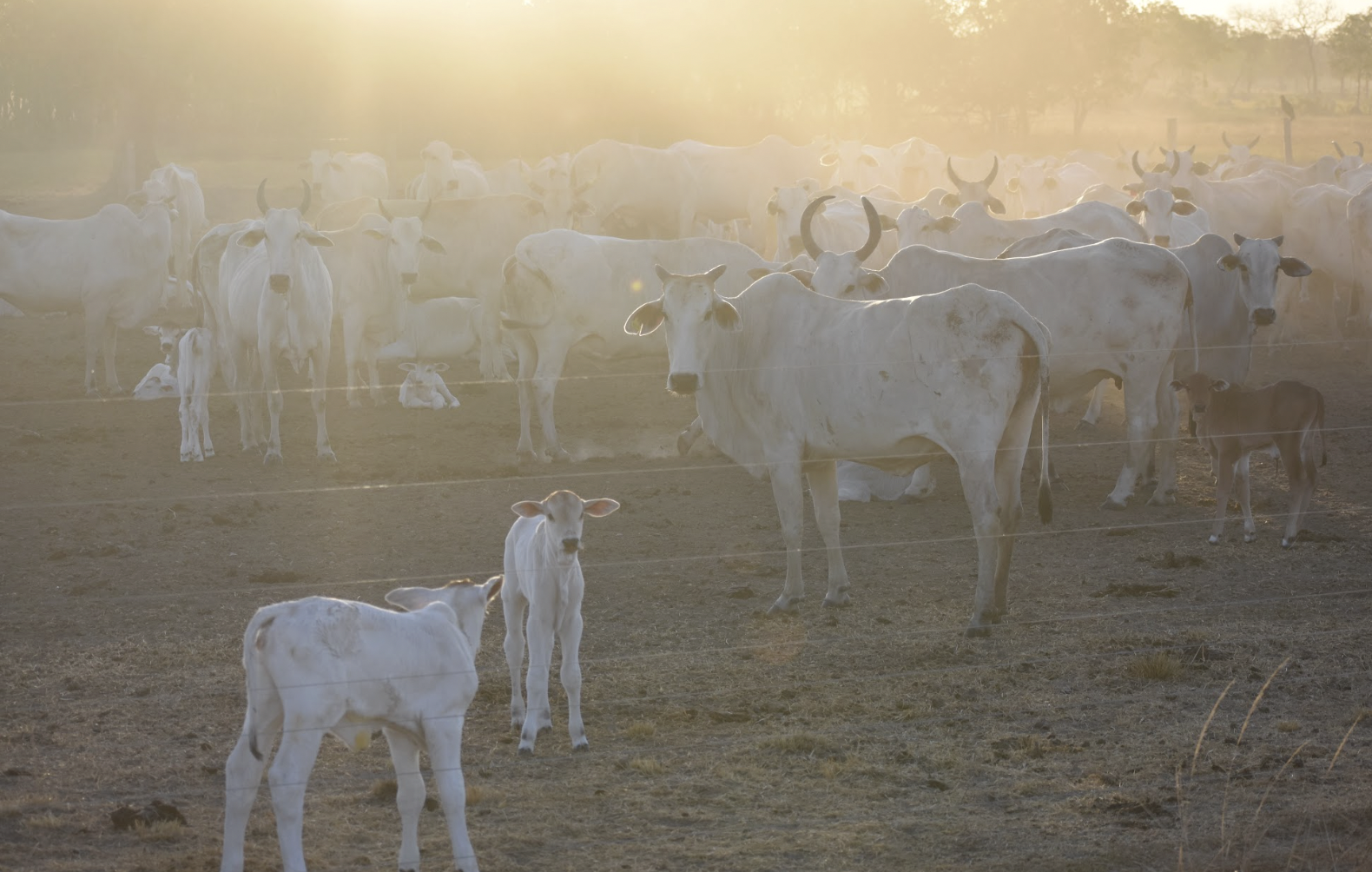
Photo by Alycia Drwencke
Edited by Isabelle McDonald
Reference:
Pinheiro, O. L., Barros, C. M., Figueiredo, R. A., Do Valle, E. R., Encarnação, R. O., & Padovani, C. R. (1998). Estrous behavior and the estrus-to-ovulation interval in nelore cattle (Bos indicus with natural estrus or estrus induced with prostaglandin F2α or norgestomet and estradiol valerate. Theriogenology, 49(3), 667-681.
 theethogram.com