Happy Jane Goodall Day!
Dr. Jane Goodall, the beloved primatologist and tireless conservation advocate, would have turned 92 years old today. People around the world, including many of us at The Ethogram, continue to be inspired by Goodall’s scientific contributions and her message of hope and empathy for all living organisms. Before she passed away in October 2025, Goodall said “I think I’d like to be remembered as someone who really helped people to have a little humility and realize that we are a part of the animal kingdom, not separated from it.” Here are some ways you can honor and continue Goodall’s legacy—today and every day:
[1] Find an animal in your surroundings (a squirrel in the park, birds in your yard, a hovering dragonfly, an elephant) . . . then sit, observe, and be curious about it.
Goodall once said she was never, ever bored because there were animals all around her. She described, for example, waiting in an airport and becoming completely absorbed in watching a romantic drama unfold between a pair of songbirds in the terminal. The simple act of noticing the natural world around you is a form of mindfulness that supports mental health.
[2] Take your dog for a walk. Allow them to sniff to their heart’s content, and imagine what it would be like to experience the world from your dog’s (or another species’) perspective.
Goodall repeatedly said that her favorite animal was not a chimpanzee, as people expected, but a dog. She dearly loved dogs and interacted with them whenever she had a chance. In an interview, Goodall recalled that her childhood dog, Rusty, was her first teacher about animal behavior. Many of the lessons she learned from Rusty are reflected in her later approach to studying chimpanzees: Goodall gave the chimps she studied names instead of numbers, recognizing that animals have distinct personalities and experience emotions similar to humans. She was also a fierce advocate for animal rights and spoke out against the use of captive chimpanzees for biomedical research.
[3] Donate to one of Goodall’s organizations: the Jane Goodall Institute and Roots & Shoots. Explore their websites to learn more about Goodall’s life and the incredible work she put in motion, which others now carry forward.
Goodall founded the Jane Goodall Institute in 1977 to support research and education, focusing on the interconnections of humans with non-human animals, environmental health, and social justice. Roots & Shoots supports young leaders around the world enacting positive change in their communities through conservation-focused service learning. Goodall often said the commitment and passion of young people gave her enormous hope, despite the many challenges facing humans and wildlife today.
[4] Participate in citizen science. Apps like eBird and iNaturalist allow anyone to contribute to science by recording animals they encounter in their local area. Go for a wildlife walk and record all the species you see! If you don’t yet recognize what lives in your area, apps including Seek (for plants, insects, and other organisms) and Merlin (for birds) can help you start identifying species.
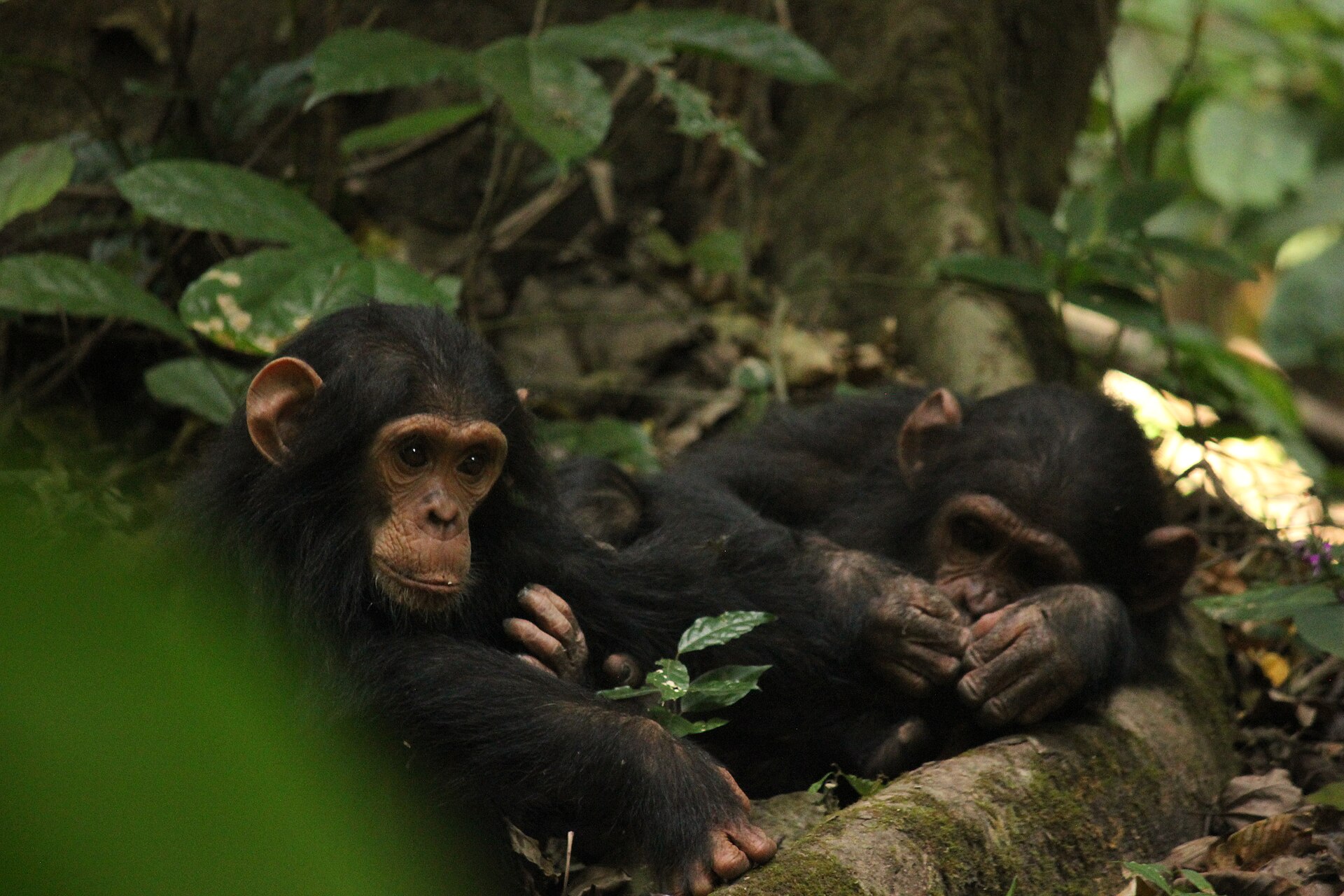
Goodall received her Ph.D. in Ethology (the study of animal behavior) from Newnham College, Cambridge in 1965, even though she had no undergraduate degree! However, you don’t need a degree to observe animals and ask questions about their behavior. When she first arrived at Gombe (in present-day Tanzania) in 1960, Goodall had little formal training in how to research behavior. She relied on her fascination with animals and immersed herself in their world, patiently observing and slowly getting to know the chimpanzees. Eventually, the chimps at Gombe accepted Goodall’s presence and she began making incredible discoveries that would reshape our understanding of primates, including ourselves.
[5] Learn about local conservation initiatives in your community, and consider getting involved. Large organizations such as the Audubon Society and The Nature Conservancy often have state or regional chapters, and their websites allow you to search for projects and events happening nearby. Or, you could volunteer at a state park or wildlife refuge.
Goodall grew up in a time when female scientists were few, and a young woman doing field research in a place as remote as Gombe was almost unheard of. Goodall yearned to go to Africa to study primates from a young age, and she recounted how her mother told her, “‘If you really want something and you work hard, if you take advantage of every opportunity and you never give up, you’ll find a way.”
[6] Invite creatures into your yard by creating a pollinator garden and growing native plants.
The Jane Goodall Institute works to protect and restore native trees and forests around the world, collaborating with local communities to ensure forests persist for both people and wildlife. Goodall herself was never afraid to get her hands dirty and plant a tree!
[7] Take one new action to promote environmental health.
Goodall strongly believed in the power of individuals to enact positive change. She said, “You cannot get through a single day without having an impact on the world around you. What you do makes a difference, and you have to decide what kind of difference you want to make.”
WANT TO LEARN MORE ABOUT THIS SCIENCE HERO?
Find more information and view media from Goodall’s life on the Jane Goodall Institute website.
View the Netflix special Famous Last Words with Jane Goodall.
Listen to an extended interview with Goodall on the podcast Wiser Than Me with Julia Louis-Dreyfus.
Read one of Goodall’s many books, such as My Life with the Chimpanzees (1988), an autobiography of her childhood through her time in Gombe, or The Book of Hope: A Survival Guide for Trying Times (2021), written by Goodall and Douglas Abrams.
Featured image of Jane Goodall by Nick Stepowyj [Source]
Jessica Schaefer is a PhD candidate in the Animal Behavior Graduate Group at UC Davis. She studies the reproductive behavior and mating systems of various creatures, from limpets to shorebirds. Jessica loves learning about new species through observing and writing about them.
 theethogram.com
