Think of a wolf: pack-living, broad-ranging, adept at taking down large prey cooperatively. Then give even the adults the playfulness, charisma, and expressive face of a puppy. Paint this creature’s coat with blotches of yellow, black, white, and brown, a unique splatter pattern for each one, and give it a pair of oversized, saucer-shaped ears: this is the African wild dog (Lycaon pictus), one of the world’s most critically endangered mammals. Also called “painted dogs” or “painted wolves,” they belong to the family Canidae along with grey wolves, domestic dogs, coyotes, jackals, and foxes.
African wild dogs are native to sub-Saharan Africa and were once numerous across this region. Today, the largest remaining populations are found in southern and southeastern Africa in grassland, woodland, and desert habitats. A wild dog pack typically includes 5–15 adults and consists of a dominant male-female pair plus other adults and young adults [1]. Packs maintain large territories and travel vast distances to hunt, moving an average of 8.5 km per day, though longer daily travel distances up to 42 km have been recorded [2].
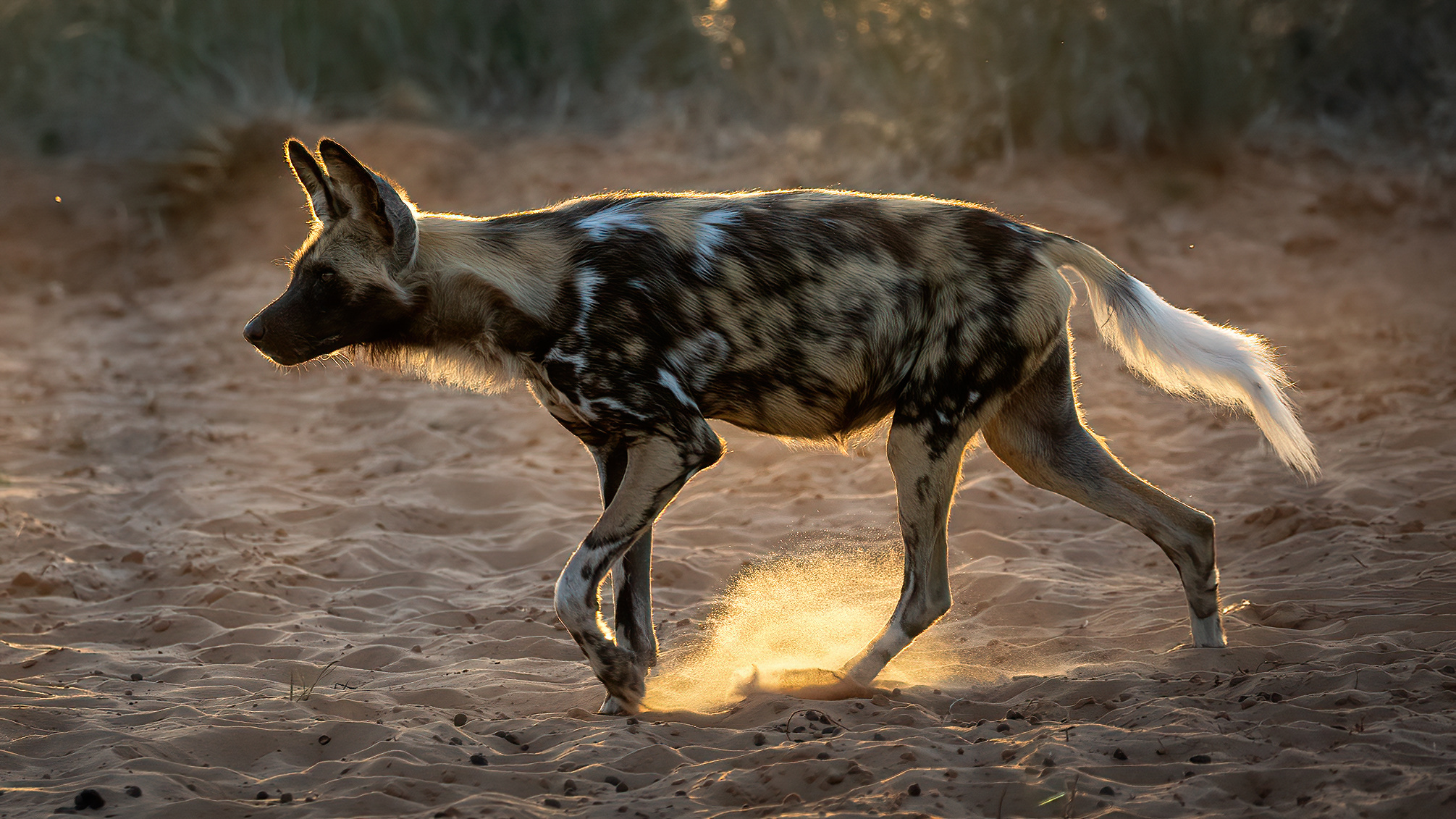
The African wild dog has been described as both the “most social canid” and the “most successful hunter,” and although both claims might stretch the truth, they reflect some of the species’ most fascinating characteristics.
Many canids live in social groups (like wolves and coyotes), so what distinguishes the sociality of wild dogs from the rest? African wild dogs display extreme levels of cooperation, and
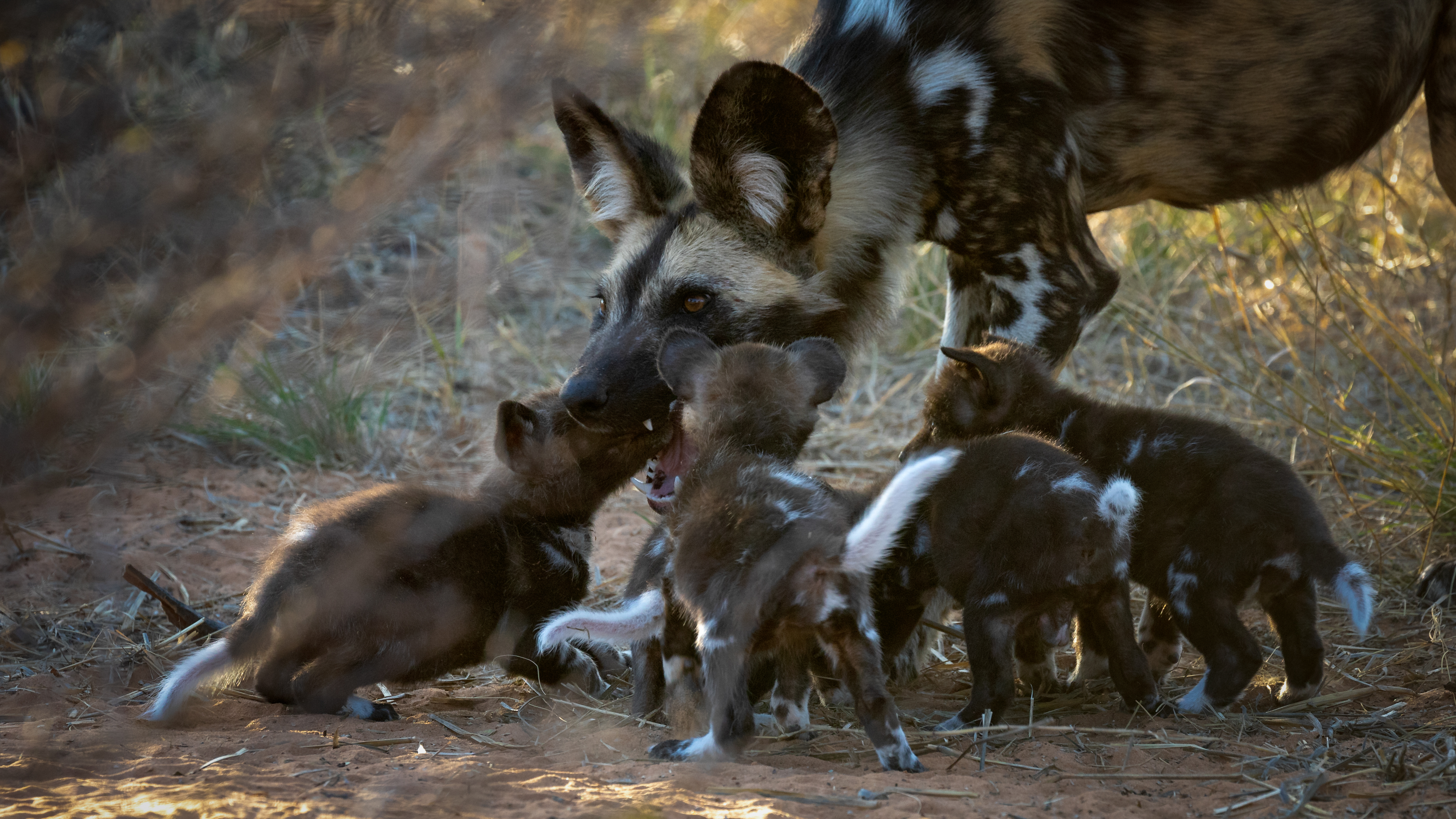
aggression within packs is relatively rare. Their cooperative nature manifests in how they share food: even when there is not enough for everyone, wild dogs usually behave submissively and give appeasement displays—licking each other’s mouths and whining—rather than fighting over food. Pack members regularly share food with pups, nursing mothers, and sick or injured individuals by regurgitating meat when they return from a hunt [3, 4].
The species is considered an obligate cooperative breeder, meaning that parents strongly rely on their pack mates—both male and female—to help babysit and feed pups. The pack’s dominant male and female breed annually; meanwhile, subordinate adults in the wild dog pack reproduce less often or not at all, but they still participate in rearing the pups [3]. For several months after birthing the lactating mother and her pups stay inside a den, such as an abandoned aardvark burrow, while the pack remains nearby and brings food back to them. African wild dogs produce litters of 3–16 (average = 10) pups [5], which is more than other similar-sized canids (e.g., gray wolves average ~6 pups), and this may be facilitated by their cooperative breeding system. Larger packs tend to produce larger litters with greater pup survival [1], emphasizing the importance of cooperative offspring care within the pack.
African wild dogs typically remain with their natal pack (the pack they were born into) for several years and assist with raising their siblings. Eventually, at around 1–3 years old, the young adults will disperse—leaving the natal pack either individually or in single-sex cohorts—and travel long distances in search of unrelated opposite-sex individuals with which to form a new pack [6]. Males and females depart at different times of year and males tend to disperse at older ages; this means the size of a pack fluctuates seasonally and year-to-year, depending on the timing of dispersal, litter sizes, and sex ratio [1,6].
African wild dogs also display a unique group behavior called social rallying. Rallies are described as “high energy, socially intricate pre-departure greeting ceremonies” [7] and are thought to reinforce social bonds as well as coordinate group activities [1, 8]. What does a rally look like? Imagine a group of dozing dogs, sprawled under a tree or near their den, all napping or resting. Then, for no obvious reason, one or two of them stand up and start nosing others awake. The instigators crouch slightly, drop their heads down, and fold their ears back; they approach their resting pack mates in this posture, mouths open as though half smiling. If they can successfully rouse others, the rally will progress to other energetic behaviors such as licking, mobbing, running in parallel, and urinating [1]; they vocalize and exhale through their nose rapidly, producing a sound like a sneeze [7]. To a human onlooker, it might appear as though the dogs are pumping each other up with their playful maneuvers and sneezing!
Rallies may eventually fizzle out, but if enough dogs participate, the pack will collectively move away from where they were resting and may initiate a hunt. A study of African wild dog packs in Botswana found that the outcome of rallies (whether or not the pack departed afterward) was predicted by the number of sneezes they made [7]. In other words, whether the pack stays or moves is decided by vote by sneezing!
Check out this external video on YouTube by PBS.
Sociality, communication, and feeding are tightly interwoven in many species. For African wild dogs, the size of a pack impacts its hunting strategy and outcomes. Wild dogs commonly target medium sized grazers like gazelles and impala, but larger packs can take down prey like wildebeest and are more likely to make multiple kills per hunt [1]. Larger packs also suffer lower rates of kleptoparasitism (i.e., having their food stolen by other species, especially spotted hyenas and lions) [1].
African wild dogs are cursorial hunters, meaning they are adapted for running. Their limbs are elongated, and they are the only canid with just four toes on each forepaw (they are missing the first digit, which corresponds with the dewclaw of domestic dogs and wolves) [9]. These anatomical changes help them run quickly (~60 kph or ~40 mph) for long distances in pursuit of prey; other canids may reach similar speeds but lack the same high-speed endurance. The teeth of wild dogs are highly specialized for their carnivorous diet: the molars are shaped to optimize shearing and slicing ability, and the premolars are extremely large relative to their body size [9]. These morphological adaptations, along with tight-knit social bonds and communication within a pack, contribute to their impressive hunting abilities.
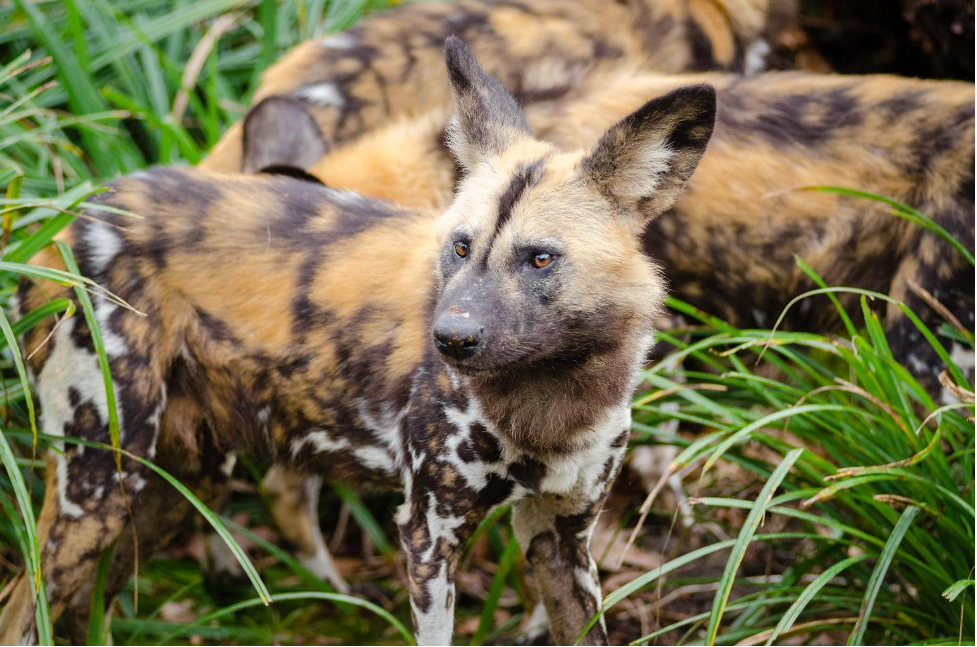
African wild dogs have been listed as endangered since 1990, and their populations continue to decline. In 2012, the International Union for Conservation of Nature estimated that only 6,600 wild dogs remained. Because each pack utilizes a vast home range, habitat loss and fragmentation impact them severely. The development of agriculture and human settlements reduces their hunting space and also brings wild dogs into more frequent conflict with humans: wild dogs are killed by farmers in retaliation for losing livestock, for which they blame the dogs (many wild predators occasionally kill goats, sheep, or cattle, especially in areas of reduced natural prey abundance) [1]. Furthermore, rising temperatures associated with climate change have negative impacts on the hunting ability and offspring survival of African wild dogs [10] and they suffer from diseases such as rabies and distemper, which can be transmitted from domestic dogs and other carnivores. Among animals of similar lifespans, generation times, and population sizes, African wild dogs are especially vulnerable because of their unique highly complex social system and reliance on cooperative breeding.
In the face of these substantial threats, organizations such as the World Wildlife Fund are working to create more protected areas and connect fragmented habitat patches in regions where African wild dogs still persist. Meanwhile, the African Wildlife Foundation is working with communities and farmers to build enclosures designed to protect livestock from predators. Other conservation efforts include captive breeding programs and translocations (moving animals from one suitable place to another, for example, in order to reintroduce them to part of their historic range from which they recently disappeared). Ultimately, conservation success for this species will require not only effective land and wildlife management—it will require shifting people’s perceptions from fear to appreciation, and learning how to coexist with these spectacularly social canids.
Main featured image: African wild dog in Chobe National Park, Botswana. Photo by Derek Keats [Source].
Written by: Jessica Schaefer is a PhD candidate in the Animal Behavior Graduate Group at UC Davis. She currently studies how ecology shapes reproductive behavior in shorebirds. Jessica loves learning about new species through observing and writing about them.
References:
[1] Jordan, N.R., Golabek, K.A., Marneweck, C., et al. (2023). Hunting behavior and social ecology of African wild dogs. In: Srinivasan, M., Würsig, B. (Eds.), Social Strategies of Carnivorous Mammalian Predators: Fascinating Life Sciences (pp. 177–227). Springer. https://doi.org/10.1007/978-3-031-29803-5_6
[2] Pomilia, M.A., McNutt, J.W., & Jordan, N.R. (2015). Ecological predictors of African wild dog ranging patterns in northern Botswana. Journal of Mammalogy, 96(6), 1214–1223. https://doi.org/10.1093/jmammal/gyv130
[3] Spiering, P.A., Somers, M.J., Maldonado, J.E., Wildt, D.E., & Gunther, M.S. (2010). Reproductive sharing and proximate factors mediating cooperative breeding in the African wild dog (Lycaon pictus). Behavioral Ecology and Sociobiology, 64, 583–592. https://doi.org/10.1007/s00265-009-0875-6
[4] African Wildlife Foundation (2025). African Wild Dog. https://www.awf.org/wildlife-conservation/african-wild-dog
[5] McNutt, J.W. & Silk, J.B. (2008). Pup production, sex ratios, and survivorship in African wild dogs, Lycaon pictus. Behavioral Ecology and Sociobiology, 62(7), 1061–1067. DOI: 10.1007/s00265-007-0533-9
[6] Behr, D.M., McNutt, J.W., Ozgul, A., & Cozzi, G. (2020). When to stay and when to leave? Proximate causes of dispersal in an endangered social carnivore. Journal of Animal Ecology, 89(1), 2356–2366. DOI: 10.1111/1365-2656.13300
[7] Walker, R.H., King, A.J., McNutt, J.W., & Jordan, N.R. (2017). Sneeze to leave: African wild dogs (Lycaon pictus) use variable quorum thresholds facilitated by sneezes in collective decisions. Proceedings of the Royal Society: Biological Sciences, 284, 20170347. https://doi.org/10.1098/rspb.2017.0347
[8] Rütten, S. & Fleissner, G. (2004). On the function of the greeting ceremony in social canids – exemplified by African wild dogs Lycaon pictus. Canid News, 7.3. https://canids.org/canidnews/7/Greeting_ceremony_in_canids.pdf
[9] Chavez, D.E., Gronau, I., Hains, T., Kliver, S., Koepfli, K., & Wayne, R.K. (2019). Comparative genomics provides new insights into the remarkable adaptations of the African wild dog (Lycaon pictus). Scientific Reports, 9, 8329. https://doi.org/10.1038/s41598-019-44772-5
[10] Woodroffe, R., Groom, R., & McNutt, J.W. (2017). Hot dogs: high ambient temperatures impact reproductive success in a tropical carnivore. Journal of Animal Ecology, 86, 1329–1338. https://doi.org/10.1111/1365-2656.12719
[Edited by Alice Michel]
 theethogram.com


