The Law of the Jungle. Nature, red in tooth and claw. Alpha males. It’s weird, isn’t it? When humans really want to justify being horrible to one another, they’ll point back towards the natural world.
“The blackpill, at its core, is just basic evolutionary science.” wrote one Reddit poster on an incel forum. “The people denying it are no different from creationists.” [1]
“Women are biologically programmed to seek out the strongest, most dominant males,” said manosphere influencer Andrew Tate.
“See?” influencers like to say, “The wolf fights for dominance. The chimpanzee goes to war with its neighbors. Conquest and dominance are natural. And how could “natural” be wrong?”
Our cultural obsession with brutality in nature is not new, and neither is using evolutionary biology to justify violence. In the years following Darwin’s publication of The Origin of Species, there were plenty of voices eager to adapt Darwin’s ideas into imperial dogma. Darwin’s cousin, Francis Galton, founded eugenics on the idea that, if left unchecked, “inferior” people would survive thanks to social welfare, thus weakening the gene pool [2]. People in Galton’s camp found it important to ensure that those they deemed genetically superior (that is, people who looked like them) survived and won out. Anglo-Saxon colonialism of the world, by their logic, wasn’t brutal at all. It was just nature taking its course. Eugenics justified all of it.
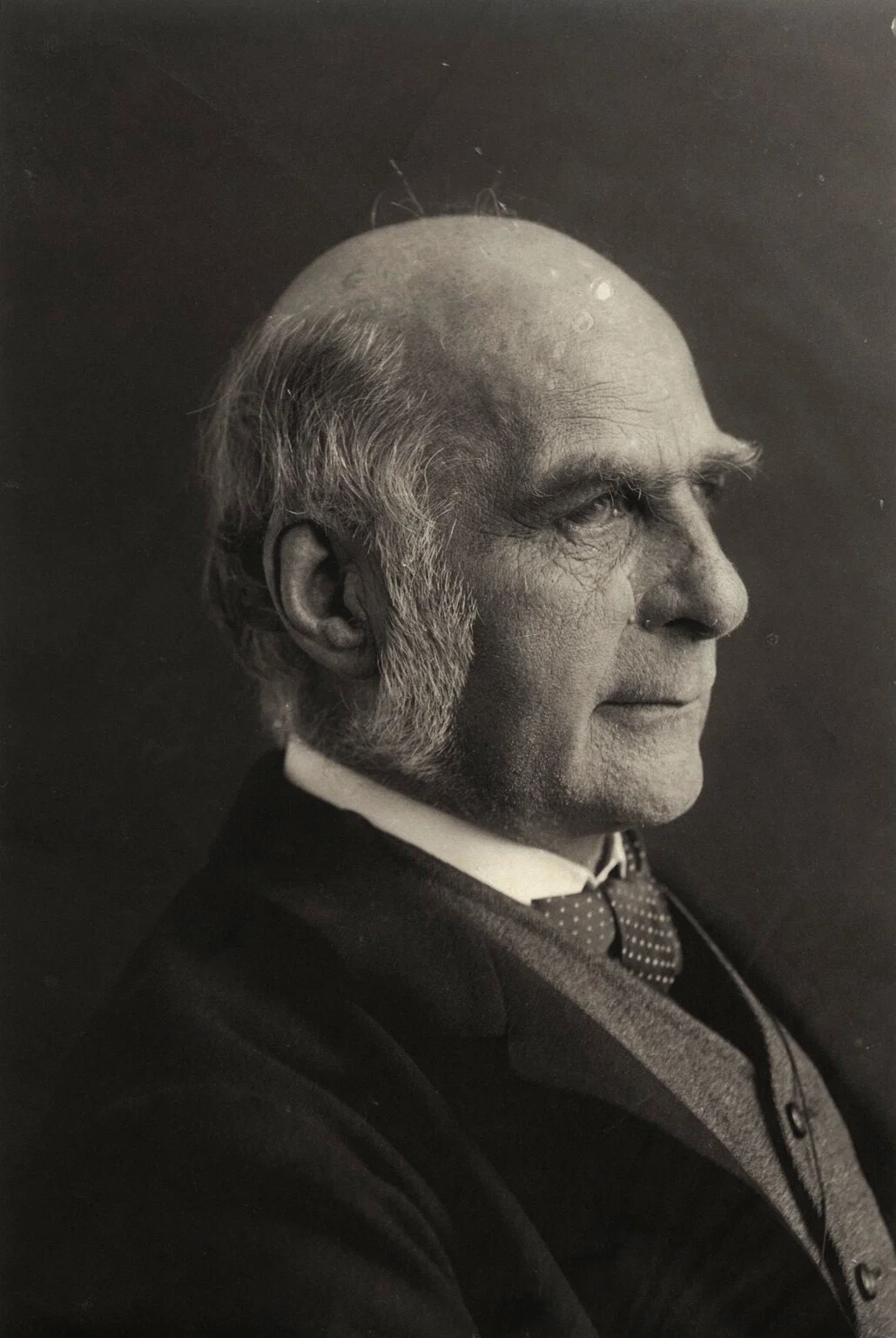
If you’re reading this in 2026, I hope you don’t think eugenics is cool, or for that matter “natural.” But it’s wild to think about how much of that narrative of “the weak die, the strong survive” still dominates the way we learn and think about evolutionary biology. Survival of the fittest, right? Except, Darwin never even said “survival of the fittest.” That was this other guy, Herbert Spencer [3]. And what Spencer (along with all those other social Darwinists) never learned is that evolution is a heck of a lot more complicated than “survival of the fittest.”
In fact, the deeper our understanding of ecology and evolution gets, the more we understand that those imperialist assumptions about the nature of Nature were wrong. The most important force in evolution isn’t competition. It’s cooperation.
Call me a “Beta” male if you want. But let me tell you a story.
We’re on Earth, 2-billion-ish years ago. Life, single-celled and microscopic, teems in our primordial oceans. The atmosphere has some relatively new stuff in it called Oxygen. Some microbes figured out how to make it a while back by taking energy from the sun, which is awesome [4].
But there’s a problem. Life has had billions of years to evolve, but it seems like everyone’s stuck being really, really small. In all that time, why hasn’t anything emerged resembling plants or animals or fungi?
If you were to take out a sampling kit, scoop up some of the little dudes floating around in the ocean, and look at them under a microscope, you might spot the problem. Life uses little chemical engines to sustain and make more copies of itself. If we pop the hood of one of the bigger cells floating around, we see that the engine is working as hard as it can. If we want more energy, we need a bigger engine. But if we want to make a bigger engine, we need more energy! So… we’re stuck. For millions and millions of years.
…Until one day, some 1.5 billion years ago, when a freak accident took place. A big cell from the domain of Archaea engulfs a much smaller cell from the domain of Bacteria. But, somehow, the bacterium doesn’t die. Instead, it takes up residence inside the bigger cell. It turns out that the bacterium can use the waste products of the larger cell as fuel to make even more energy. Voila! The engine paradox is solved. A new, powerful form of life is born [5].
You’re a descendant of that fateful encounter. That free-living bacterium was the ancestor of the modern day mitochondrion, which is (say it with me, everyone) the powerhouse of the cell. To this day, though, mitochondria have their own DNA blueprints, separate from the rest of our cells.
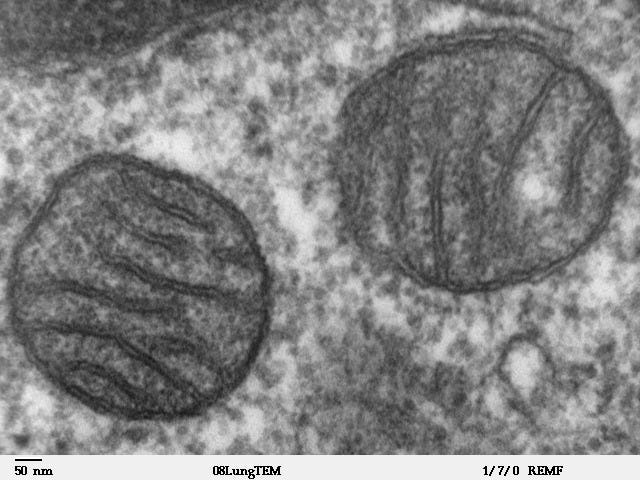
Countless forms of life came from different species merging into one another, a process called “endosymbiosis.” Plant cells, for instance, make food from sunlight using chloroplasts, which were once upon a time a species of photosynthetic bacteria. It’s not an overstatement to call endosymbiosis the most important process driving complex life on our planet.
We know about endosymbiosis largely thanks to a scientist named Lynn Margulis. In the late 60’s, she published on the endosymbiotic origins of mitochondria after being rejected well over a dozen times by scientific journals [6]. Her work was hugely controversial, largely because mainstream biology at the time was so obsessed with the norm of evolution being driven by competition, that the idea of endosymbiosis was dismissed by many as absurd. Overwhelming genetic evidence proved otherwise, and Dr. Margulis was vindicated.
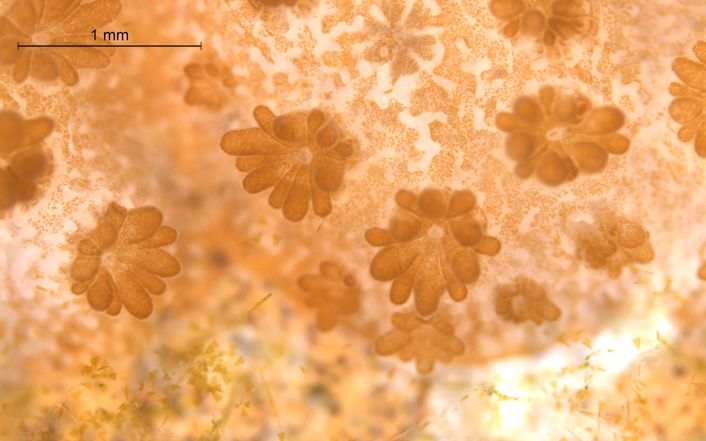
In the years following Lynn Margulis’ work, we’ve only deepened our understanding of how biodiversity hinges on incredible, complex systems of cooperation across the tree of life. Trees, speaking of which, are a great example. You might have heard of mycorrhizal networks, relationships between trees and fungi where fungi mine for minerals and trade them with trees for sugar. Trees even use these networks to communicate with one another and share resources [7]. Without the symbiosis between trees and fungi, there would be no forests.
Coral reefs are hotspots of diversity in our oceans, and depend on the relationship between coral and their zooxanthellae (single-celled algae symbiotes) to persist. Inside our own bodies, we’ve discovered a microbiome of thousands of bacteria that help keep us healthy. I could go on and on. Everywhere we look, there are layers and layers of cooperation. Cells working with cells. Species working with species.
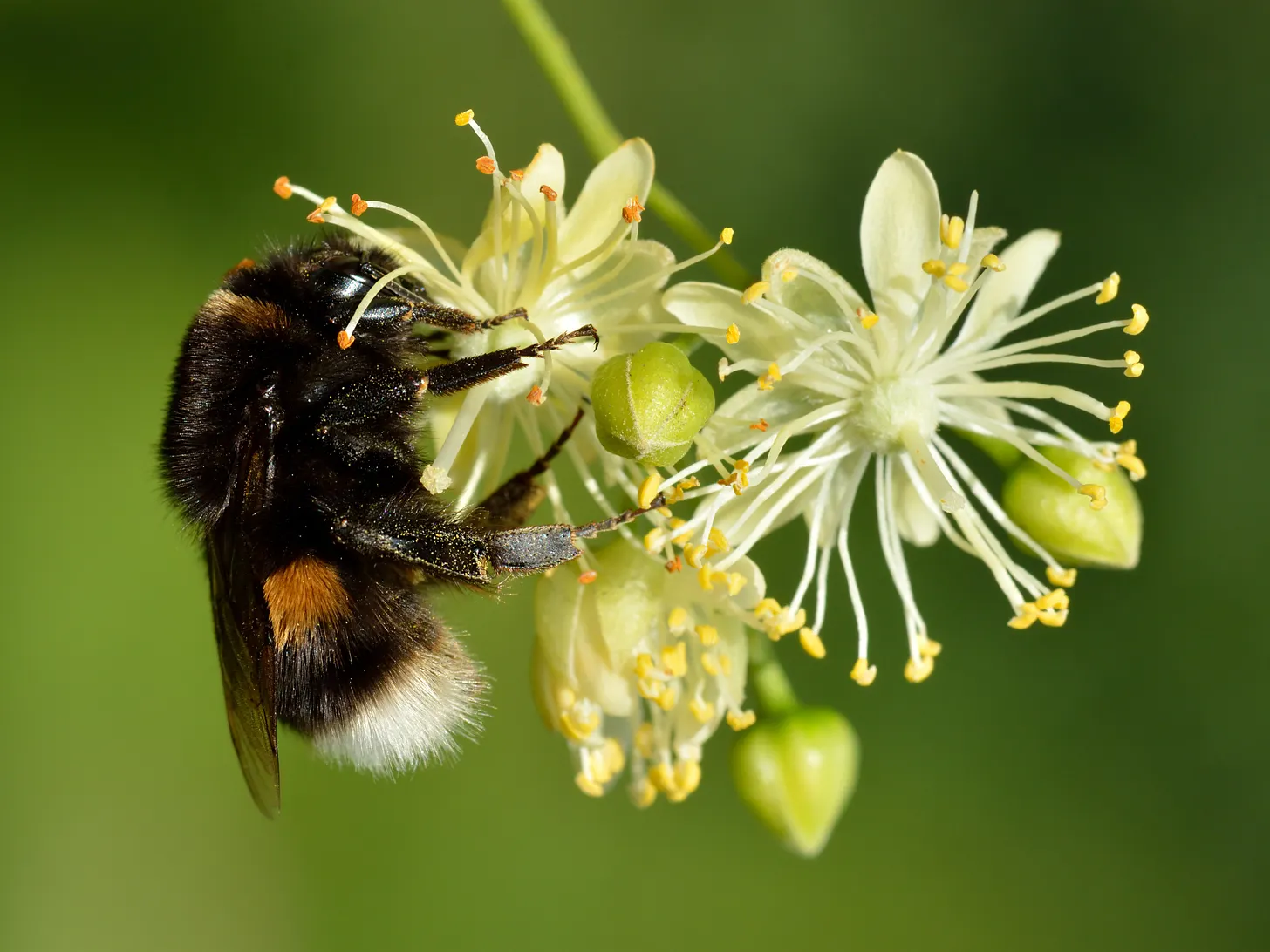
Consider this: if we went and weighed every single living thing on Earth by dry weight (a metric we call “biomass”), it would come out to roughly 550 gigatons (a gigaton is a billion tons). 450 of those 550 gigatons would just be plants [8]. The vast majority of these plants belong to a relatively new group called angiosperms: flowering plants. Flowering plants are actually much younger than both mammals and dinosaurs, but they absolutely cover our planet. And what do the vast majority of flowering plants need to reproduce? Pollinators.
Over millions of years, flowering plants cultivated relationships with vertebrates and invertebrates alike, allowing them to adapt and diversify in ways that would not be possible on their lonesome. Plants feed and shelter pollinators, and in turn pollinators help them reproduce. The sheer abundance of symbiotic relationships makes it clear: species which forge relationships with others are stronger, not weaker, in the long run of life.
All this is not to say that competition isn’t important for understanding biodiversity, or that “mutualistic” relationships are always a perfect two-way street. But how can we have learned so much about symbiosis and still place so much of the focus in pop evolutionary biology on competition? On who is “dominant,” and how the biggest and baddest wins in the end?
Sometimes, we see what we want to see in the natural world. Pop culture often portrays sharks as vicious, mindless predators. Sheep are thought of as followers with no agency of their own. Lions are used to represent confident, proud leaders. Research in animal behavior shows us that animals experience much more complex internal lives than their stereotypes, but those cultural perceptions affect how we treat both animals and one another.
Humans don’t have ‘alphas.’ Alpha wolves are, in fact, a myth [9]. Plenty of inflammatory online discourse today around “human nature” is built around the same distortion of evolutionary biology that justified eugenics. Evolution tells us how we came to be. We should never let it be used as an excuse for awful behavior.
The story of humanity is not about domination. Our true evolutionary heritage is that of individually-weak primates banding together to survive. Homo sapiens made it to where they are today because we have always cared about each other. We have always made sacrifices to protect our loved ones, and worked together to survive against overwhelming odds.
It is a delusion of individualism to think that any of us are entirely self-reliant. Our ancestors knew better. They focused much of their lives into building relationships, not just with other humans, but with other species, too, like dogs, horses, trees, bees, and all kinds of other domesticated plants and animals. The ability for us to see ourselves in other species and in one another, the capacity to widen our circle of kin– that has always been the superpower of humankind.
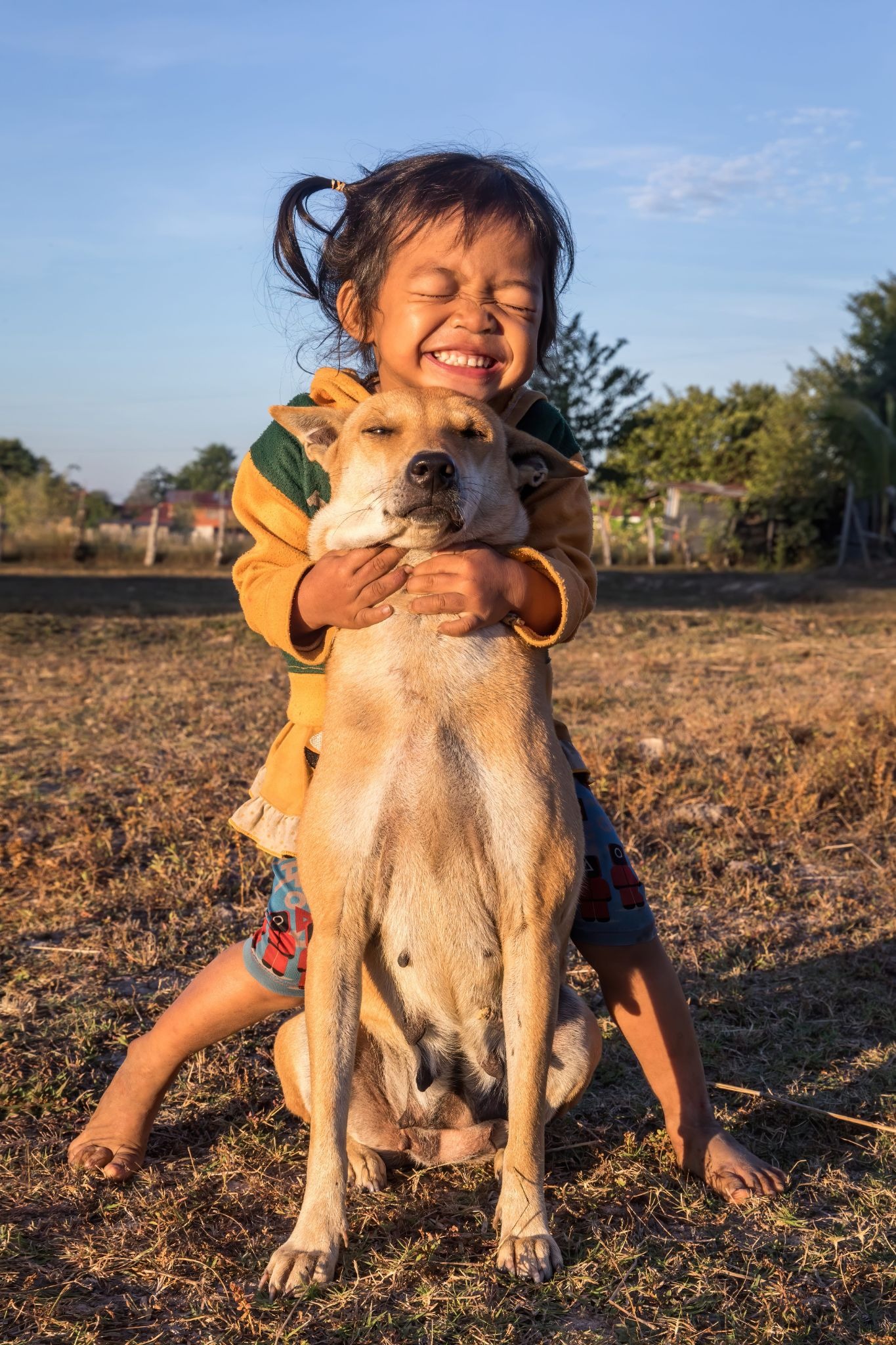
It’s time for us to wake up from this fantasy of “survival of the fittest.” There is another, better way of understanding both the natural world and our place within it. For human beings, there is no survival without cooperation. So, very truly, I say unto you: the Betas shall inherit the Earth.
Jacob Johnson is a PhD Candidate in the Animal Behavior Graduate Group at UC Davis studying how birds respond to wildfires and urbanization. His book, Are You There God? It’s Me, Darwin, is available now.
References
- Preston, K., Halpin, M., & Maguire, F. (2021). The Black Pill: New Technology and the Male Supremacy of Involuntarily Celibate Men. Men and Masculinities, 24(5), 823–841. https://doi.org/10.1177/1097184X211017954
- Gillham, N. W. (2001). Sir Francis Galton and the Birth of Eugenics. Annual Review of Genetics, 35(Volume 35, 2001), 83–101. https://doi.org/10.1146/annurev.genet.35.102401.090055
- Falk, D. (2020). The Complicated Legacy of Herbert Spencer, the Man Who Coined “Survival of the Fittest.” Smithsonian Magazine. Retrieved May 11, 2026, from https://www.smithsonianmag.com/science-nature/herbert-spencer-survival-of-the-fittest-180974756/
- Sánchez-Baracaldo, P., & Cardona, T. (2020). On the origin of oxygenic photosynthesis and Cyanobacteria. New Phytologist, 225(4), 1440–1446. https://doi.org/10.1111/nph.16249
- Roger, A. J., Muñoz-Gómez, S. A., & Kamikawa, R. (2017). The Origin and Diversification of Mitochondria. Current Biology, 27(21), R1177–R1192. https://doi.org/10.1016/j.cub.2017.09.015
- Gray, M. W. (2017). Lynn Margulis and the endosymbiont hypothesis: 50 years later. Molecular Biology of the Cell, 28(10), 1285–1287. https://doi.org/10.1091/mbc.E16-07-0509
- Gorzelak, M. A., Asay, A. K., Pickles, B. J., & Simard, S. W. (2015). Inter-plant communication through mycorrhizal networks mediates complex adaptive behaviour in plant communities. AoB Plants, 7, plv050. https://doi.org/10.1093/aobpla/plv050
- Bar-On, Y. M., Phillips, R., & Milo, R. (2018). The biomass distribution on Earth. Proceedings of the National Academy of Sciences, 115(25), 6506–6511. https://doi.org/10.1073/pnas.1711842115
- Pappas, S. (2023). Is the Alpha Wolf Idea a Myth? Scientific American. Retrieved May 11, 2026, from https://www.scientificamerican.com/article/is-the-alpha-wolf-idea-a-myth/
[Edited by Sabrina Seaborn- Mederos]

